- English
- French
- German
- Portuguese
- Spanish
- Russian
- Japanese
- Korean
- Arabic
- Greek
- German
- Turkish
- Italian
- Danish
- Romanian
- Indonesian
- Czech
- Afrikaans
- Swedish
- Polish
- Basque
- Catalan
- Esperanto
- Hindi
- Lao
- Albanian
- Amharic
- Armenian
- Azerbaijani
- Belarusian
- Bengali
- Bosnian
- Bulgarian
- Cebuano
- Chichewa
- Corsican
- Croatian
- Dutch
- Estonian
- Filipino
- Finnish
- Frisian
- Galician
- Georgian
- Gujarati
- Haitian
- Hausa
- Hawaiian
- Hebrew
- Hmong
- Hungarian
- Icelandic
- Igbo
- Javanese
- Kannada
- Kazakh
- Khmer
- Kurdish
- Kyrgyz
- Latin
- Latvian
- Lithuanian
- Luxembou..
- Macedonian
- Malagasy
- Malay
- Malayalam
- Maltese
- Maori
- Marathi
- Mongolian
- Burmese
- Nepali
- Norwegian
- Pashto
- Persian
- Punjabi
- Serbian
- Sesotho
- Sinhala
- Slovak
- Slovenian
- Somali
- Samoan
- Scots Gaelic
- Shona
- Sindhi
- Sundanese
- Swahili
- Tajik
- Tamil
- Telugu
- Thai
- Ukrainian
- Urdu
- Uzbek
- Vietnamese
- Welsh
- Xhosa
- Yiddish
- Yoruba
- Zulu
Why Nickel Alloy Capillary Tubes Are Ideal for Aerospace Hydraulic Systems
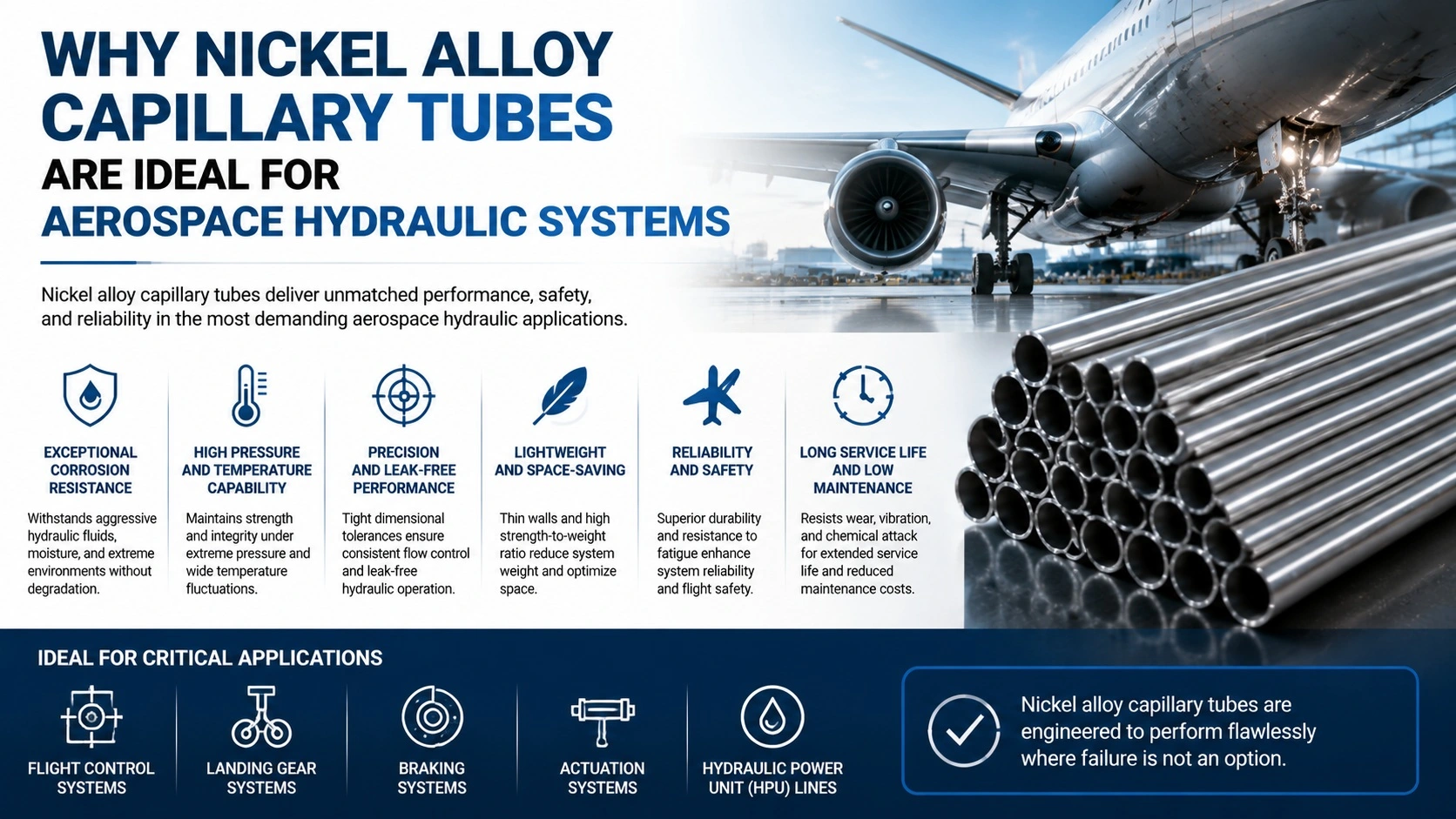
Aerospace hydraulic systems require materials that can perform reliably under extreme conditions. Aircraft components must handle high pressure, temperature changes, vibration, and limited maintenance opportunities. A Nickel Alloy Capillary Tube provides the strength, corrosion resistance, and dimensional accuracy needed for many aerospace hydraulic applications.
Hydraulic systems control essential aircraft functions, including flight control surfaces, landing gear, braking systems, and other critical mechanisms. The tubing used in these systems must maintain stable performance throughout long service periods.
Nickel alloys are widely selected because they combine excellent mechanical properties with resistance to demanding environments. Their ability to maintain strength at elevated temperatures and resist corrosion makes them suitable for aerospace fluid systems.
At TSM Technology, we manufacture nickel alloy tubing solutions for industries requiring precision, reliability, and long-term performance. Our nickel alloy tubes support applications in aerospace, chemical processing, energy, and other demanding fields.
Why Aerospace Hydraulic Systems Need High-Performance Tubing Materials
Aircraft hydraulic systems operate under strict performance requirements.
These systems often experience:
· High operating pressure
· Temperature fluctuations
· Continuous vibration
· Limited inspection access
· Weight reduction requirements
A tubing failure in an aircraft hydraulic system can affect system operation and safety.
Engineers select tubing materials based on several factors:
· Mechanical strength
· Corrosion resistance
· Fatigue performance
· Weight efficiency
· Dimensional stability
The material must provide reliable performance while meeting aerospace design requirements.
What Is a Nickel Alloy Capillary Tube?
A Nickel Alloy Capillary Tube is a precision tube made from nickel-based alloys with a small diameter and controlled wall thickness.
Unlike standard pipes, capillary tubes are designed for applications requiring accurate fluid transmission.
Key characteristics include:
· Precise outside diameter control
· Uniform wall thickness
· Smooth internal surface
· High corrosion resistance
· Strong mechanical properties
These features make nickel alloy capillary tubes suitable for aerospace hydraulic systems where accuracy and reliability are important.
Why Nickel Alloys Are Used in Aerospace Hydraulic Systems
Nickel alloys provide a combination of properties that are difficult to achieve with many conventional materials.
High Strength-to-Weight Performance
Aircraft designers focus on reducing weight while maintaining structural reliability.
Nickel alloys provide high mechanical strength, allowing engineers to design durable tubing systems.
Excellent Corrosion Resistance
Aircraft hydraulic systems may face exposure to:
· Moisture
· Hydraulic fluids
· Temperature variations
· Atmospheric conditions
Nickel alloys help protect tubing from corrosion-related damage.
High Temperature Capability
Aircraft systems may experience elevated temperatures near engines and other heat sources.
Many nickel alloys maintain their mechanical properties under high-temperature conditions.
Long-Term Reliability
Aerospace components require materials that can perform consistently over many operating cycles.
Nickel alloy tubing supports this requirement through stable material performance.
Role of Nickel Alloy Capillary Tubes in Aircraft Hydraulic Systems
Hydraulic systems use fluid pressure to control mechanical movement.
Common aerospace hydraulic applications include:
· Flight control systems
· Landing gear systems
· Brake systems
· Actuator systems
· Hydraulic control units
Nickel alloy capillary tubes support these systems by providing reliable fluid pathways.
Their small size and precision dimensions make them suitable for compact aircraft designs.
Advantages of Nickel Alloy Capillary Tubes for Hydraulic Applications
Aerospace engineers select tubing materials based on performance requirements.
Nickel alloy capillary tubes offer several advantages.
Pressure Resistance
Hydraulic systems operate under high pressure.
A properly manufactured nickel alloy tube provides the strength needed for demanding pressure conditions.
Dimensional Accuracy
Aircraft hydraulic systems often use precision fittings and connectors.
Accurate dimensions help ensure:
· Proper installation
· Reliable sealing
· Stable operation
Vibration Resistance
Aircraft experience continuous vibration during operation.
Nickel alloy tubing provides mechanical stability under repeated stress conditions.
Corrosion Protection
Resistance to corrosion helps reduce the risk of leakage and premature replacement.
Common Nickel Alloy Grades Used in Aerospace Tubing
Different aerospace applications require different material properties.
Inconel 625 is widely recognized for its:
· High strength
· Excellent corrosion resistance
· Good fatigue performance
It is commonly considered for demanding aerospace and industrial environments.
01
Inconel 718 provides:
· High strength at elevated temperatures
· Good fatigue resistance
· Stable mechanical performance
It is widely used in aerospace components.
02
Inconel 600 provides:
· Good oxidation resistance
· High-temperature stability
· Corrosion resistance
It is suitable for various aerospace and industrial applications.
03
Hastelloy grades are selected when strong resistance against aggressive chemicals is required.
The correct alloy depends on:
· Hydraulic fluid type
· Temperature
· Pressure
· Service environment
04
Manufacturing Process of Aerospace Nickel Alloy Capillary Tubes
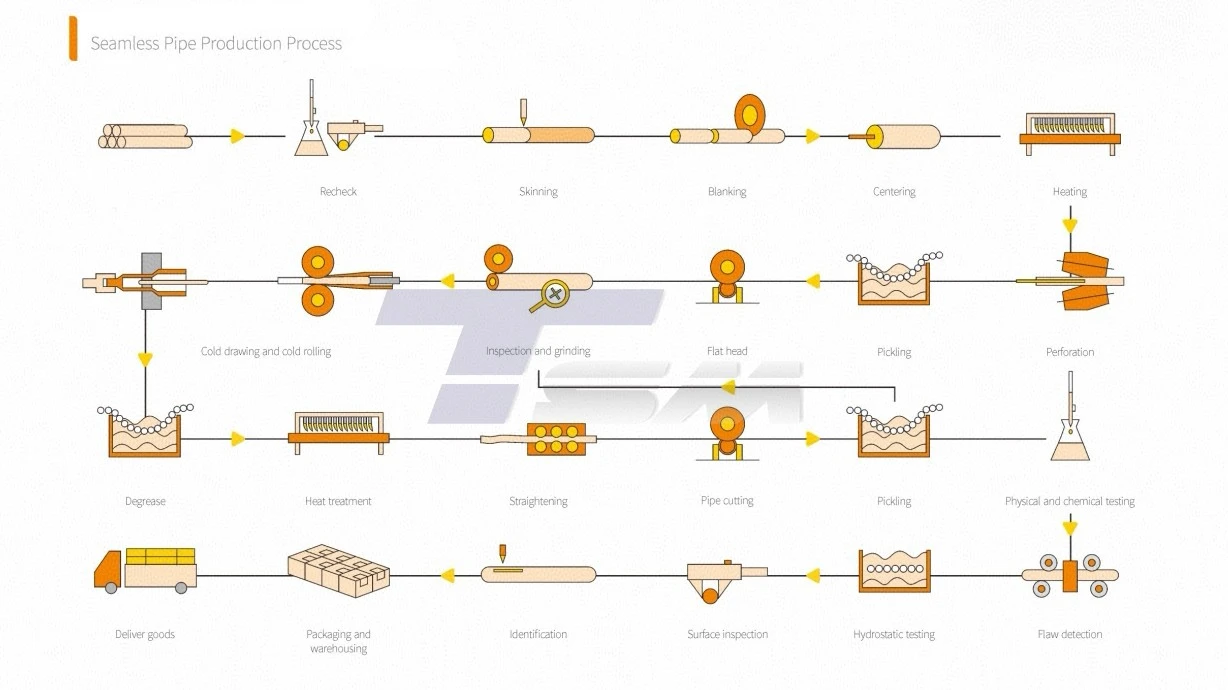
Producing aerospace-grade tubing requires precise manufacturing control.
The typical process includes:
· Material preparation
· Tube forming
· Cold drawing
· Heat treatment
· Surface finishing
· Precision inspection
Each stage affects the final tube performance.
How Cold Drawing Improves Aerospace Tubing Performance
Cold drawing is a key process in producing precision nickel alloy capillary tubes.
During cold drawing, the tube passes through a die to reduce its size.
This process improves:
Dimensional Accuracy
Aerospace hydraulic systems require precise tube dimensions.
Cold drawing helps control:
· Outside diameter
· Inside diameter
· Wall thickness
Surface Quality
A smooth surface supports reliable fluid flow and connection performance.
Mechanical Strength
Cold working can improve material strength and hardness.
Manufacturers carefully control the process to balance strength and ductility.
Why Heat Treatment Is Important After Cold Drawing
Cold drawing creates internal stress in the material.
Heat treatment helps restore material balance.
The process provides benefits such as:
· Reduced residual stress
· Improved ductility
· Stable mechanical properties
· Better service reliability
Proper heat treatment ensures the tubing performs consistently during aerospace operation.
Quality Requirements for Aerospace Hydraulic Tubing
Aerospace applications require strict inspection procedures.
Important quality checks include:
Chemical Composition Testing
Confirms the alloy meets required material specifications.
Mechanical Testing
Includes evaluation of:
· Tensile strength
· Yield strength
· Elongation
· Hardness
Dimensional Inspection
Measures:
· Outside diameter
· Wall thickness
· Length
· Straightness
Non-Destructive Testing
Common methods include:
· Eddy current testing
· Ultrasonic testing
· Hydrostatic testing
These inspections help verify tubing reliability before delivery.
Standards Related to Aerospace Nickel Alloy Tubing
Aerospace projects often require compliance with recognized specifications.
Common standards may include:
· ASTM material specifications
· AMS aerospace material specifications
· Customer-specific engineering requirements
These standards define requirements for:
· Material quality
· Mechanical performance
· Testing procedures
· Manufacturing processes
Buyers should confirm the required specifications before selecting tubing.
Comparing Nickel Alloy Capillary Tubes With Stainless Steel Tubes
Stainless steel is used in many industries, but aerospace systems may require higher performance materials.
|
Feature |
Stainless Steel Tube |
Nickel Alloy Capillary Tube |
|
Corrosion Resistance |
Good |
Excellent |
|
High Temperature Strength |
Moderate |
Excellent |
|
Fatigue Performance |
Good |
High |
|
Extreme Environment Performance |
Limited |
Strong |
|
Aerospace Critical Use |
Application dependent |
Widely considered |
Material selection depends on the aircraft design, operating conditions, and engineering requirements.
How to Choose a Nickel Alloy Capillary Tube Supplier
A reliable supplier should provide more than standard material availability.
Important considerations include:
Manufacturing Experience
The supplier should understand:
· Nickel alloy processing
· Precision tube production
· Aerospace requirements
01
Quality Documentation
Aerospace customers often require:
· Material certificates
· Inspection records
· Traceability documents
02
Production Capability
Look for suppliers with:
· Cold drawing capability
· Heat treatment facilities
· Precision inspection equipment
03
Customization Support
Different aerospace projects may require customized:
· Alloy grades
· Tube dimensions
· Surface conditions
· Testing requirements
04
Why Nickel Alloy Capillary Tubes Support Aerospace Reliability
Aerospace hydraulic systems depend on components that can perform under pressure, vibration, and temperature changes.
A Nickel Alloy Capillary Tube provides important advantages:
· High mechanical strength
· Excellent corrosion resistance
· Accurate dimensions
· Reliable long-term performance
Through controlled manufacturing processes such as cold drawing, heat treatment, and inspection, nickel alloy tubing can meet the demanding requirements of aerospace applications.
At TSM Technology, we supply precision nickel alloy tubes for customers requiring dependable performance in critical industrial applications.
For technical specifications, quotations, or customized aerospace tubing solutions, contact us at info@tsmnialloy.com.
Frequently Asked Questions
Why are nickel alloy capillary tubes used in aerospace hydraulic systems?
They provide high strength, corrosion resistance, and dimensional accuracy required for reliable aircraft hydraulic performance.
What nickel alloys are commonly used for aerospace tubing?
Common grades include Inconel 625, Inconel 718, Inconel 600, and other nickel-based alloys selected according to operating conditions.
Can nickel alloy capillary tubes handle high pressure?
Yes. Properly manufactured nickel alloy tubing can provide excellent pressure performance in demanding systems.
How does cold drawing improve capillary tube quality?
Cold drawing improves dimensional accuracy, surface finish, and mechanical properties.
Are nickel alloy tubes suitable for aircraft environments?
Yes. Their corrosion resistance and high-temperature capability make them suitable for many aerospace applications.
References
1. ASTM International. ASTM B444 Standard Specification for Nickel-Chromium-Molybdenum-Columbium Alloy Tubes.
2. ASTM International. ASTM B163 Standard Specification for Seamless Nickel and Nickel Alloy Condenser and Heat-Exchanger Tubes.
3. SAE International. Aerospace Material Specifications (AMS) for Nickel-Based Alloys.
4. ASM International. Properties and Selection: Nonferrous Alloys and Special-Purpose Materials.
5. Davis, Joseph R. Nickel, Cobalt, and Their Alloys. ASM International.
6. Donachie, Matthew J. Superalloys: A Technical Guide. ASM International.
Learn about our latest products and discounts through SMS or email