- English
- French
- German
- Portuguese
- Spanish
- Russian
- Japanese
- Korean
- Arabic
- Greek
- German
- Turkish
- Italian
- Danish
- Romanian
- Indonesian
- Czech
- Afrikaans
- Swedish
- Polish
- Basque
- Catalan
- Esperanto
- Hindi
- Lao
- Albanian
- Amharic
- Armenian
- Azerbaijani
- Belarusian
- Bengali
- Bosnian
- Bulgarian
- Cebuano
- Chichewa
- Corsican
- Croatian
- Dutch
- Estonian
- Filipino
- Finnish
- Frisian
- Galician
- Georgian
- Gujarati
- Haitian
- Hausa
- Hawaiian
- Hebrew
- Hmong
- Hungarian
- Icelandic
- Igbo
- Javanese
- Kannada
- Kazakh
- Khmer
- Kurdish
- Kyrgyz
- Latin
- Latvian
- Lithuanian
- Luxembou..
- Macedonian
- Malagasy
- Malay
- Malayalam
- Maltese
- Maori
- Marathi
- Mongolian
- Burmese
- Nepali
- Norwegian
- Pashto
- Persian
- Punjabi
- Serbian
- Sesotho
- Sinhala
- Slovak
- Slovenian
- Somali
- Samoan
- Scots Gaelic
- Shona
- Sindhi
- Sundanese
- Swahili
- Tajik
- Tamil
- Telugu
- Thai
- Ukrainian
- Urdu
- Uzbek
- Vietnamese
- Welsh
- Xhosa
- Yiddish
- Yoruba
- Zulu
When to Specify Monel 401 Bar over Constantan?
When picking materials for tough industrial uses, people who work in procurement and materials need to carefully compare how well different alloys work. Most of the time, the environment and the needs of the machine determine whether to use Monel 401 bar or Constantan. There are a lot of places where Monel 401 bar needs to be strong against corrosion. These include chemical processing plants and naval areas where it is often exposed to salt water, acids, and high temperatures. Its mix of nickel and copper makes it very strong, with a minimum tensile strength of 760 MPa. So, it's great for businesses that need something that will last, like those in the oil and gas, power generation, and airplane industries.
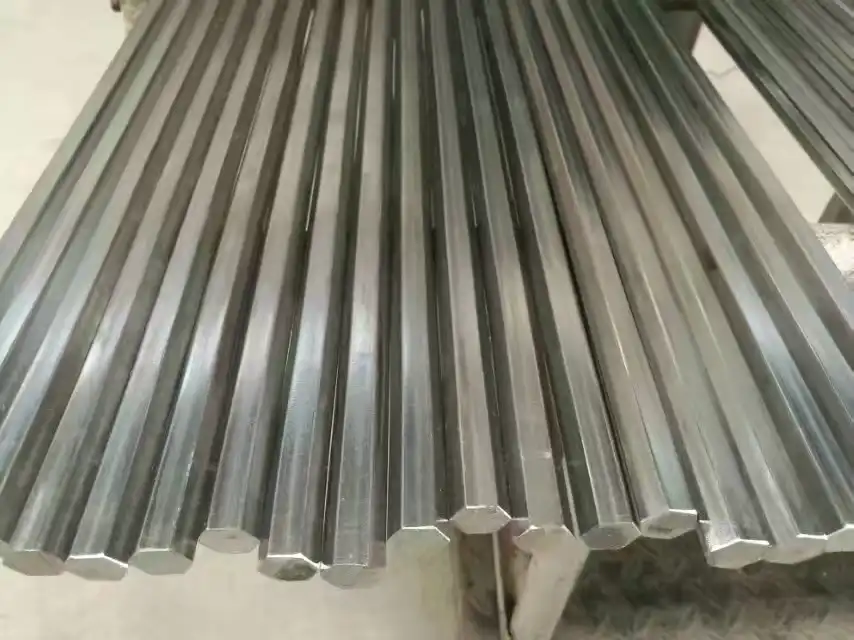
Understanding the Core Differences Between Monel 401 Bar and Constantan
The biggest difference between these metals is the stuff they are made of and what they are used for. It is a combination of nickel and copper that is mostly used in building where things need to be strong and not rust. About 63% of it is nickel and 28% to 34% is copper. The way the material is made makes it very strong in hard conditions while still being easy to shape and join.
Chemical Composition and Mechanical Properties
Constantan, on the other hand, is made up of about 55% copper and 45% nickel, and it is meant to be good at electrical properties rather than mechanical ones. This copper-nickel metal is stable at high temperatures and has a low temperature coefficient of resistance. This makes it good for thermocouples and electrical tools that need to be precise. The mechanical properties of this steel are not as good as those of Monel 401, though. Its tensile and yield strengths are much lower.
Monel 401 is technically better when you look at some speed tests. This nickel-copper metal can keep its shape even when it's under a lot of stress. Tensile strength must be at least 760 MPa, and yield strength must be at least 345 MPa. These traits don't change with the temperature, even at very low temperatures or high temperatures of up to 300°C. In other words, they will always do a good job even when things get tough.
Corrosion Resistance Characteristics
The fact that these materials don't rust is another important difference between them. Monel 401 can handle seawater, hydrofluoric acid, and other reducing conditions well, which makes it useful in chemical processing and marine applications. An oxide layer formed by the nickel makes it strong. This layer stops rust from getting worse.
Even though Constantan doesn't rust as much as Monel 401, it's not as strong when used in hard conditions. It is more likely to be damaged by some acidic chemicals because it has a lot of copper in it. This is especially true near the coast, where salt can make things break down faster.
Evaluating Performance Advantages of Monel 401 Bar in Industrial Applications
A lot of the time, Monel 401 is used in high-performance businesses where reliability can't be compromised. The airplane industry has very strict rules about safety and performance. This metal is used for important parts like heat exchanger elements, structural bolts, and engine parts.
Marine and Offshore Engineering Applications
Marine settings have unique problems that show off the great things about Monel 401. People use this metal to make propeller blades, pump parts, and things that move water around on ships and underwater bases. Along with the material's high mechanical strength, its outstanding resistance to rust in salt water makes it very useful in these tough conditions.
Recent case studies from offshore drilling activities show how Monel 401 bar can help with reliability. After five years of being in seawater all the time, parts made of this metal had very little corrosion-related wear and tear, while parts made of other materials had a lot. Because of this, marine engineering projects will cost less to maintain and run more easily.
Chemical Processing and Petrochemical Industries
Things that are used in chemical plants need to be strong enough to handle different poisons without breaking down. Monel 401 is a great material for tanks, valves, and pipes because it doesn't react with hydrofluoric acid or other strong chemicals. The metal stays good at high temperatures, which makes it even better for chemical reactions that happen at high temps.
Monel 401's efficiency traits make it very useful for oil and gas work. The material is good for downhole tools, wellhead parts, and the frames of processing plants because it can work in high-pressure and sulfur-containing settings.
Comparative Analysis for Procurement Decision-Making
People in charge have to think about a lot of things when they buy goods, like how much they cost at first, how much they'll become worth over time, and how reliable the supply chain is. At first, Constantan may be cheaper, but Monel 401 generally costs less in the long run because it lasts longer and needs less maintenance.
Cost-Benefit Analysis and Value Proposition
There is a price difference between Constantan and Monel 401 because it takes longer and more work to make Constantan. Being able to buy things in bulk can make them much cheaper, especially when you need a lot of them for big projects. The 300 tons of goods that TSM Technology can make every month make sure that the needs of big businesses are always met.
When picking out products, it's very important to think about the supply line. This metal is safe to buy because it is made by many well-known companies. The material also meets foreign standards like ASTM, JIS, AISI, GB, DIN, and EN. This means that it can be used anywhere in the world and is in line with what is needed for approval.
Competitive Material Comparison
Monel 401 is a high-performance metal that is different from Inconel, Hastelloy, and some types of stainless steel. It has a unique set of properties that make it perfect for certain uses. It's cheaper than some specialized superalloys, like Inconel, and works better in marine areas than many types of stainless steel. This makes it a good choice for projects that need to be corrosion-resistant but don't want to spend a lot of money.
It's easier to shape and machine this material than it is to work with harder superalloys. This cuts down on the cost of production and processing time and makes the project run more smoothly overall. These traits come in handy for custom manufacturing jobs that need difficult forms or tight tolerances.
When to Specify Monel 401 Bar Over Constantan?
How the materials will be used and how well they need to work physically tell us a lot about what materials to use. It is much better to use Monel 401 bar than Constantan when working in acidic places, seas, or hot temperatures. Load-bearing parts need this metal because it has such good mechanical properties. If the structure fails, it could be dangerous or make processes difficult.
Environmental and Operational Conditions
Setting up a ship is the best place for Monel 401 standard. The material is very strong and doesn't respond badly with seawater, so it has to be used for parts that will be wet, sprayed with salt water, and hit by waves. When it comes to efficiency, this alloy works great for offshore platforms, boats, and buildings on the land.
It is also clear that Monel 401 is useful when it is used in hot conditions. At high temperatures, the material keeps its mechanical properties and its ability to keep metals from rusting. On the other hand, it can be used in places where Constantan might not work well enough, like heat exchanges, steam systems, and high-temperature chemical processing equipment.
Risk Mitigation Considerations
When it matters, picking Monel 401 over Constantan can lower a number of running risks. Because the material has a higher wear strength, it is less likely to break down under stress when it is loaded and unloaded many times. Because it doesn't crack easily under stress, it doesn't break quickly like materials that aren't as strong can in acidic conditions.
Because it lasts longer, Monel 401 is a better choice when changing a part would be pricey or stop activities from running smoothly. Anyone has used this stuff before in tough situations, so you know it will work well in the long run. This lowers the chance that you'll need to fix it or replace it before it's time.
Procurement Guidance and Partnering with Trusted Suppliers
To find good Monel 401 bars, you need to carefully check out sources to make sure the ingredients are good, they follow the rules, and they can deliver on time. You should get full material certificates from suppliers you can trust, like Mill Test Certificates (MTC) and reports from third-party tests, like SGS proof.
Supplier Evaluation Criteria
You should look at how well a source can make things, how well they handle quality, and how easy it is for them to give you professional help. Modern factories use vacuum arc furnaces and precise forging tools to make sure that the materials they use are of the highest quality and that the measures they give are correct. There are eight production lines and more than 100 tools in TSM Technology's 3,200㎡ production center. This lets them make a lot of different things.
Part of the review process that is very important for Monel 401 bar is the quality assurance steps. It's important for suppliers to show that they can test products thoroughly, including looking at the chemicals that make up the product and its qualities, and that they can do this without hurting the product. Because of these quality checks, the products are sure to meet certain goals and international standards.
Logistics and Technical Support
Logistics skills that work well help get things done on time and for as little money as possible. When it comes to meeting the needs of different uses, providers who offer a range of sizes, tolerances, and surface finishes are helpful. The fact that TSM Technology can give unique services with non-standard sizes and strict standards (±0.05mm) shows that they can make anything that a project needs.
Technical support makes the relationship between a seller and a customer better by helping the customer choose the right material, make sure it works in the right situation, and figure out the best way to handle it. When working on hard projects, picking the right tools can make all the difference in how well the project turns out.
Company Introduction & Our Monel 401 Bar Offering
Since 2011, TSM Technology has been one of the world's best at making nickel metals that work well. Their main business is making things out of Monel, Inconel, Incoloy, and Hastelloy for the world's precision industrial industries. As part of our strict quality control system, professional testers keep an eye on every step of the production process. This makes certain that all products meet the strictest rules set by governments around the world.
Manufacturing Capabilities and Product Range
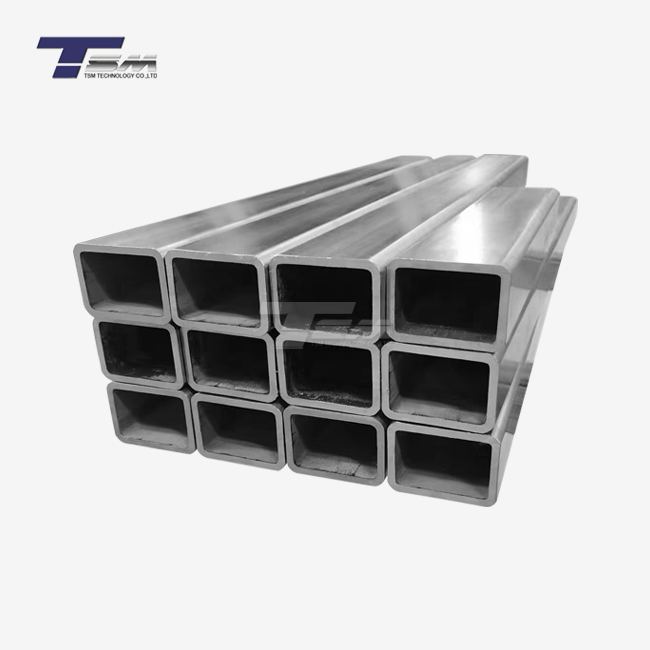
We have three plants with more than 100 specialized tools that run eight production lines. This is our modern industrial infrastructure. We can make Monel 401 bars that are 5 mm wide, 300 mm long, or 6000 mm long because we can do so many things. We can also turn, peel, or shine the bars' surfaces to make them look different.
At our factory in Shaanxi, vacuum arc furnaces and 2,500-ton forging presses work together to make sure that all of our processes are fully combined and that our goods are the best they can be. We can safely meet the needs of large industrial projects while having high quality standards because we can make 1,200 tons of steel per year.
Value-Added Services and Customer Support
Not only do we sell standard items, but we can also fully customize them to fit your needs, even if the size or tolerances aren't standard. We want our customers to be pleased, so we give them free samples of the stuff before they buy it in bulk.
Test reports from both MTC and SGS are part of the material approval support. This makes sure that everything can be tracked and meets customer needs. As part of our technical advice, we help clients pick the best materials for their needs. This helps them complete great projects and keep working with them for a long time.
Conclusion
When deciding whether to use Monel 401 bar or Constantan, the needs of the product come first. Strength and resistance to rust are more important than electrical properties. Monel 401 is the best metal for tough industrial uses in the chemical processing, naval, and airplane industries because it is stiff, doesn't rust, and can withstand high temperatures. While Constantan works well for some electrical tasks, because of how it's made, it can't be used in buildings that need to be strong and not rust. So that a project turns out well, procurement staff should work with experienced sellers who can offer full technical support, quality testing, and on-time delivery.
FAQ
1.What are the primary advantages of Monel 401 bar over Constantan in industrial applications?
The tensile strength of Monel 401 bar is much higher than that of Constantan. It is at least 760 MPa stronger, and it also doesn't rust as easily in chemical and saltwater environments. The metal doesn't change mechanically when heated to high temperatures, and it doesn't crack easily from stress rust. Because of this, it is great for building things where the electrical qualities of Constantan are not the most important thing.
2.How do I verify the certification and quality of Monel 401 bar suppliers?
You should only believe sites that give you Mill Test Certificates (MTC) and reports of independent tests, such as SGS verification. Among other things, check to see if it meets EN 10204, ASTM B164, JIS H4551, and DIN 17743. Suppliers should also show that they can use modern ways to make things, methods for checking quality, and paperwork that makes it easy to keep track of supplies.
3.What are typical lead times and minimum order quantities for Monel 401 bar?
How long it takes to get a lead depends on the specs and the amount, but most known sources keep popular sizes in stock. There are many ways for TSM Technology to fill orders since they can make 300 tons of things every month. Minimum order amounts depend on the size needed and any unique requests. Before you buy a lot of something, many sellers let you try it out for free to make sure it's right for the job.
4.In which specific environments should I choose Monel 401 over Constantan?
Choose Monel 401 when you need something that can handle high temperatures (above 200°C), seawater, chemical processing, or parts of structures that need to be very strong. If you compare Monel 401 to Constantan, it works better and can be used in more places, such as coastal settings, offshore platforms, chemical processing equipment, and airplanes.
Partner with TSM Technology for Premium Monel 401 Bar Solutions
TSM Technology can help you with your material needs because we make a lot of Monel 401 bars and know a lot about how they work. We can promise you a steady supply of approved materials that meet your exact needs because we have 14 years of experience doing business abroad, state-of-the-art production sites, and strict quality control systems. We are a reputable company that sells Monel 401 bars. We offer customization choices, low prices for bulk orders, and full expert help from picking out the material to shipping it.
You can talk to our materials research team about your specific needs and get more detailed quotes by emailing info@tsmnialloy.com. Because we care about quality, reliability, and customer happiness, we are the best company to work with when you need high-quality nickel-copper alloy solutions for important business tasks.
References
Davis, J.R. (2000). Nickel, Cobalt, and Their Alloys. ASM International Materials Park, Ohio.
Folkhard, E. (1988). Welding Metallurgy of Stainless Steels and Nickel-Base Alloys. Springer-Verlag Wien New York.
Rebak, R.B. (2019). Corrosion Resistance of Nickel Alloys in Marine Environments. NACE International Conference Proceedings.
Smith, G.D. & Patel, S.J. (2004). The Role of Nickel-Containing Materials in Desalination Plant Construction. Nickel Development Institute Technical Paper.
Special Metals Corporation. (2018). Technical Handbook of Nickel-Copper Alloys: Properties and Applications in Industrial Environments.
Wright, I.G. & Pint, B.A. (2006). High-Temperature Corrosion Behavior of Nickel-Base Alloys in Complex Gas Atmospheres. Materials Science and Engineering Research Papers.
Learn about our latest products and discounts through SMS or email