- English
- French
- German
- Portuguese
- Spanish
- Russian
- Japanese
- Korean
- Arabic
- Greek
- German
- Turkish
- Italian
- Danish
- Romanian
- Indonesian
- Czech
- Afrikaans
- Swedish
- Polish
- Basque
- Catalan
- Esperanto
- Hindi
- Lao
- Albanian
- Amharic
- Armenian
- Azerbaijani
- Belarusian
- Bengali
- Bosnian
- Bulgarian
- Cebuano
- Chichewa
- Corsican
- Croatian
- Dutch
- Estonian
- Filipino
- Finnish
- Frisian
- Galician
- Georgian
- Gujarati
- Haitian
- Hausa
- Hawaiian
- Hebrew
- Hmong
- Hungarian
- Icelandic
- Igbo
- Javanese
- Kannada
- Kazakh
- Khmer
- Kurdish
- Kyrgyz
- Latin
- Latvian
- Lithuanian
- Luxembou..
- Macedonian
- Malagasy
- Malay
- Malayalam
- Maltese
- Maori
- Marathi
- Mongolian
- Burmese
- Nepali
- Norwegian
- Pashto
- Persian
- Punjabi
- Serbian
- Sesotho
- Sinhala
- Slovak
- Slovenian
- Somali
- Samoan
- Scots Gaelic
- Shona
- Sindhi
- Sundanese
- Swahili
- Tajik
- Tamil
- Telugu
- Thai
- Ukrainian
- Urdu
- Uzbek
- Vietnamese
- Welsh
- Xhosa
- Yiddish
- Yoruba
- Zulu
Corrosion Resistance of Inconel 686 vs. 625 in FGD Systems
The difference between Inconel 686 and Inconel 625 in terms of how long they last and how much they cost to keep is important for Flue Gas Desulfurization (FGD) systems. If you use FGD, Inconel 686 will not rust as easily because it has more molybdenum and tungsten. Because of this, it fights sulfur molecules and chlorides very well. Under these tough conditions, the Inconel 686 flange works amazingly well, lasting longer and requiring less upkeep than other options. Even though it costs more at first, it ends up being a better purchase for business uses.
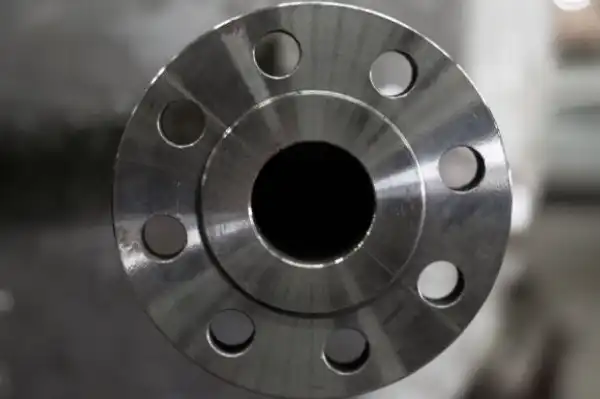
Understanding Inconel 686 and Inconel 625 Flanges in FGD Systems
Chemical Composition and Metallurgical Properties
These superalloys are different from one another because they are made of different chemicals. 20 to 22% of Inconel 686 is molybdenum, 15 to 17% is chromium, and 3 to 4.4% is tungsten. The rest is made of nickel. With this mix, you get a strong passive film that can stand up to both oxidizing and reducing conditions. Another metal called Inconel 625 has 20–23% chromium, 8–10% molybdenum, and 3.15–4.15% niobium found in it. It doesn't rust very easily, but it doesn't work as well when FGD is very strong.
It is very important to know how the two metals are made to understand how well they work. You can heat and cool Inconel 686 many times, which happens a lot in FGD systems, and it still keeps its austenitic structure. Because it has more molybdenum, it is also less likely to pit or corrode in cracks. Adding tungsten to the material makes it even harder and less likely to rust in the lower conditions that happen in FGD processes.
Standard Specifications and Dimensional Requirements
Both types of metal meet well-known worldwide standards that make sure they always work well in FGD applications. Inconel 686 flanges are made to meet the requirements of ASME B16.5, B16.47, and EN 1092, and they can be designed in several ways, including weld neck (WN), slip-on (SO), socket weld (SW), blind (BL), and lap joint (LJ). Any size from 1/2" to 24" and any pressure class from 150# to 2500# will work with these flanges, which means they can be used with many FGD systems.
These materials are strong enough to be used in tough FGD settings because of how they are made. It is possible to stretch Inconel 686 at least 655 MPa and it is also possible to bend it at least 310 MPa. At temperatures from -200°C to 1000°C, it can keep these strengths. These parts make sure that the FGD always works, even when the temperature changes and there are mechanical stresses.
Corrosion Resistance Performance: Inconel 686 vs. Inconel 625
FGD Environment Challenges and Material Response
In different ways, sulfur dioxide, hydrogen sulfide, chlorides, and changes in pH levels can all make FGD devices rust. Things break down quickly in these places because of the oxidizing and lowering conditions. People who are around chlorides see pitting and stress corrosion cracks happen more quickly. People who are around sulfur compounds see general corrosion and hydrogen embrittlement happen more quickly.
Tests done in the lab show that Inconel 686 flange still works better in real-life FGD situations. Tests by ASTM G28 show that when Inconel 686 is introduced to the sulfuric acid conditions that are typical in FGD systems, it corrodes much less quickly than Inconel 625. Inconel 686 has more tungsten and molybdenum than any other metal. This makes the passive film stronger so it doesn't break down quickly when strong chemicals hit it.
Comparative Analysis of Corrosion Mechanisms
If you look at certain attack methods, you can see that Inconel 686 is better at stopping rust. In FGD settings with salt, pitting corrosion is a big problem. But in these metals, it works in a very different way. It takes about 65 PREN to pit Inconel 686, while it only takes about 47 PREN to pit Inconel 625. For this reason, Inconel 686 is much less likely to rust.
Another reason why Inconel 686 is a good choice for FGD uses is that it protects against stress corrosion cracking. The alloy's structure makes it less likely to crack when salt comes into contact with it. This is very important at FGD sites near the coast, where cooling systems that use seawater put the metal in contact with more salt. It has been shown that Inconel 686 parts need to be repaired more often than Inconel 625 parts in power plants that use FGD systems.
Real-World Performance Data and Case Studies
A lot of power companies around the world have written about how Inconel 686 works better in FGD. Inconel 686 flanges lasted 40% longer than Inconel 625 flanges in the wet limestone FGD system of a big coal-fired power plant in the southeast of the United States. Even though the materials cost more at the start, better performance meant fewer repair shutdowns and lower lifetime costs.
Different performance is caused by chemicals that have been used on parts for a long time. When working in the same way, Inconel 686 parts don't show much surface wear and tear and their protective oxide layer stays whole. On the other hand, Inconel 625 parts show signs of selective attack and the oxide layer breaking down.
Choosing the Right Flange Material for FGD Applications
Site-Specific Assessment Framework
You need to carefully look at the working conditions that are unique to each FGD location in order to choose between these superalloys. How well and how long a material lasts can be changed by changes in temperature, chemical ratios, and how it is loaded mechanically. It is more likely that Inconel 686 will not rust in plants that use high sulfur coal. Also, Inconel 625 might be enough in situations where there is less sulfur and only a little salt contact.
A close study of the FGD chemistry profile should be a part of the review process. In this, you should list pH values, salt amounts, and trends of temperature changes. By knowing these things about the types of rust that will most likely happen in service, you can pick materials that will work the best and give you the most for your money.
Comparative Benchmarking Against Alternative Materials
During FGD, both types of Inconel metal are much better than typical metals like carbon steel and stainless steel. But when things get harder, Inconel 686 flange doesn't work as well as other materials. 316L stainless steel flanges need to be changed every two to three years in FGD work that is very rough. When used in the same way, Inconel 625 may last for five to seven years. Between 8 and 12 years, most Inconel 686 plates don't break. The fact that they don't need to be fixed up as often makes up for their higher initial cost.
The idea of the total cost of ownership is very important when looking at these items. Even though Inconel 686 costs more, it usually ends up being cheaper in the long run when you add up the costs of replacement labor, system downtime, and missed output over its longer life.
Quality Assurance and Inspection Protocols
To get the most out of the goods you buy, you need to be very careful about quality control and checking. Some of the tests that should be done on each flange are a non-destructive study, a chemistry analysis, and proof of how it moves. We can learn a lot about how things might work in FGD settings in the long run from the ASTM G28 intergranular rust tests.
A lot of the time, you need third-party proof records and Material Test Certificates (MTC) to apply for a FGD. This paper makes sure that everything is recorded and that the project needs are met. This gives people trust in the material's performance and makes it easier to plan maintenance over the part's entire lifecycle.
Procurement Insights for Inconel 686 Flanges
Market conditions and things to think about in the supply chain
High-performance nickel alloys are very special and are used for a lot of different things. The world market for them shows this. Inconel 686 costs 20 to 30 percent more than Inconel 625 because it is harder to work with and has more alloy in it. Nickel and molybdenum prices can change a lot on the market. To keep costs low, it's important to buy in a smart way and have good relationships with sellers.
How long it takes to get Inconel 686 flanges depends on their size, quantity, and other needs. It usually takes 10 to 25 days to deliver standard sizes in popular pressure classes. Custom designs, on the other hand, can take up to 8 weeks. You should plan your shopping around these dates if you want the project to go well, especially during set times for planned breaks for repairs.
Supplier Evaluation and Certification Requirements
If you want to find good companies, you should look at their producing skills, quality methods, and credentials in the field. They should show that they follow the right ASTM and ASME standards, keep their ISO 9001 approval up to date, and have good experience with FGD applications. Inconel 686 is very hard to make, so the people who do it need to be very good at melting and shaping to keep the material's traits.
It's even more important to check what sources say about Inconel 686 flange because FGD uses are so important. To be sure of a seller's honesty, you can ask for examples to be checked by a third party, call the seller's sources, and find out how they handle quality. You will get regular product quality and on-time delivery from providers if you take the time to carefully screen them.
Strategic Sourcing Approaches
Building relationships with a number of qualified suppliers is a regular part of getting things that you need. This helps make sure there is a steady supply and low prices. Deals that last a long time can keep prices fixed and let people get things before anyone else when demand is high. But these contracts should include claims about quality and ways to measure performance to make sure providers are held accountable.
Inventory management methods need to find a balance between carrying prices and the need for access. To make sure that there is always the right amount of critical spare parts inventory for Inconel 686 flanges, wait times, failure trends, and upkeep plans should all be taken into mind.
TSM Technology: Your Trusted Partner for High-Performance Inconel Solutions
When it comes to FGD, we at TSM Technology know how important it is to pick the right material because it can have a big impact on your business. We've been committed to being the best for 14 years, ever since we started doing business abroad in Hong Kong in 2011. Over the years, we've grown to become one of the best companies that makes and sells high-quality nickel metals. In the superalloy business, no one can beat our reputation for quality, reliability, and new ideas.
The fact that we can make things shows that we want to meet the highest FGD standards. Three specialized plants, eight specialized production lines, and more than 100 high-tech tools help us keep up a supply of 300 tons per month. This strong infrastructure makes sure that you can always get Inconel 686 flanges when your projects need them.
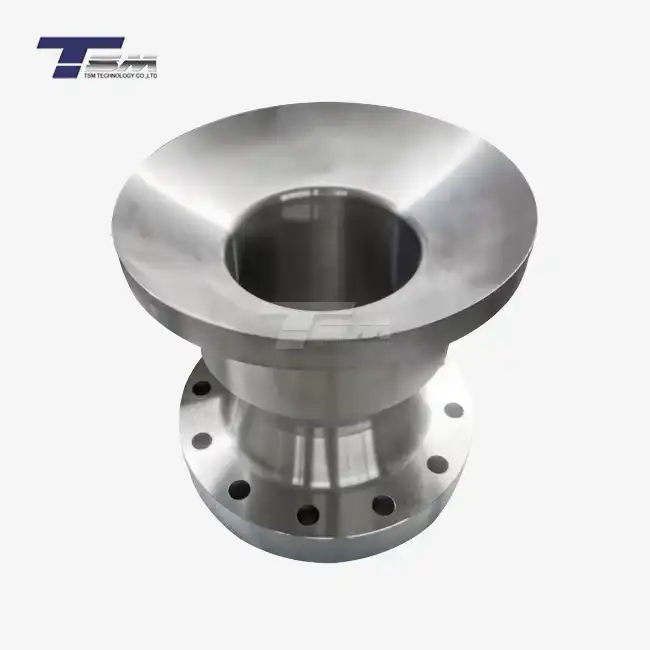
It's clear that we care about quality and accuracy by the way our Inconel 686 flanges are made. When we make things to UNS N06686 grade specs, we follow the rules set by ASME B16.5, B16.47, and EN 1092. We have WN, SO, SW, BL, and LJ flanges in stock, as well as all the other major types, from 1/2" to 24". To make sure the rust protection works best, high-tech surface treatments like grinding, electropolishing, and chemical passivation are used.
The quality assurance program at our company goes above and beyond what the market needs. It does this by using thorough testing and certification methods. According to ASTM E213 and ASME Section V, every product has to go through a thorough inspection process. This includes using X-ray fluorescence spectrometry to check the chemistry make-up, testing the material properties, and looking at it without hurting it. We give you all the information you need, like Material Test Certificates and SGS test reports, so you can keep track of everything and make sure it's legal.
The way we make things shows how much we care about technical quality. We use vacuum induction melting and vacuum arc remelting to make sure the chemicals are all the same and get rid of any flaws in the metal that could make it rust more easily. Precision hot forging at temperatures between 1150°C and 1200°C makes the grain structure better for the best performance. A solution annealing method gets rid of any leftover stresses and makes the material more resistant to rust.
Conclusion
Whether to use Inconel 686 flange or 625 for FGD has a big impact on both how reliable it is and how much it costs to maintain. Other metals don't rust as well as Inconel 686, even though it costs more at first. It works really well against sulfur compounds and chlorides, which are common in FGD settings. It is very immune to pitting, crevice corrosion, and stress corrosion cracking because it has a lot of molybdenum and tungsten. In other words, it will last longer and need less care. To get the best performance and lifetime costs, you need to carefully look at the site conditions, the quality control processes, and the skills of the seller when choosing the right materials.
FAQ
In FGD systems, why is Inconel 686 better than Inconel 625?
It is less likely to rust because it has more molybdenum (15–17% vs. 8–10%) and tungsten (3–4.4%). These parts make things stronger against sulfur compounds and chlorides, which are common in FGD settings. It means the things last longer and cost less to keep up.
How can I be sure that the Inconel 686 flanges I'm buying are real and of good quality?
You should ask for Material Test Certificates (MTC) and SGS test reports from a third party to make sure of the chemical make-up and mechanical properties. Make sure that the service providers follow the rules set by ASTM and ASME and can show proof of testing that doesn't damage the product.
How long do most projects take to get Inconel 686 flanges?
When you order something special, it may take up to 8 weeks instead of 10 to 25 days for standard sizes. Lead times depend on the project's size, number, and specific needs, so it's important to plan to buy early on.
What should affect the choice of material between these alloys?
Check out the FGD chemistry maps. They show things like the chlorine and sulfur levels, the pH, changes in temperature, and the mechanical loads. You should think about the total cost of ownership when making your choice. This includes the cost of the materials, how long they are expected to last, and the maintenance that needs to be done.
Partner with TSM Technology for Superior FGD Solutions
If you need help with your FGD system, TSM Technology can help. They offer a range of high-quality Inconel 686 flange choices and have 14 years of experience in the field. Our many years of experience making things, strict quality control systems, and commitment to customer happiness mean that our products will work reliably even in the toughest conditions. Contact our expert team at info@tsmnialloy.com to talk about your specific needs and find out how our high-quality alloy choices can help your FGD system work better. If you need an Inconel 686 flange made, we can help. We offer unique options, low prices, and on-time delivery that fits your project's schedule.
References
Davis, J.R. "Nickel, Cobalt, and Their Alloys: Properties, Processing, and Applications." ASM International Materials Reference Series, 2000.
Rebak, R.B. "Corrosion Performance of Nickel Alloys in Flue Gas Desulfurization Systems." Journal of Materials Engineering and Performance, Vol. 15, 2006.
American Society of Mechanical Engineers. "ASME Boiler and Pressure Vessel Code Section II: Materials Specifications." ASME Press, 2021.
Crook, P. "Corrosion Characteristics of Nickel-Chromium-Molybdenum Alloys in FGD Systems." Materials Performance Magazine, NACE International, 2005.
Streicher, M.A. "Chemical and Physical Metallurgy of Molybdenum-Bearing Stainless Steels and Nickel Alloys." Climax Molybdenum Technical Bulletin, 1998.
Hodge, F.G. "Performance of High-Alloy Materials in Wet Limestone FGD Systems." Power Engineering International Conference Proceedings, 2008.
Learn about our latest products and discounts through SMS or email