- English
- French
- German
- Portuguese
- Spanish
- Russian
- Japanese
- Korean
- Arabic
- Greek
- German
- Turkish
- Italian
- Danish
- Romanian
- Indonesian
- Czech
- Afrikaans
- Swedish
- Polish
- Basque
- Catalan
- Esperanto
- Hindi
- Lao
- Albanian
- Amharic
- Armenian
- Azerbaijani
- Belarusian
- Bengali
- Bosnian
- Bulgarian
- Cebuano
- Chichewa
- Corsican
- Croatian
- Dutch
- Estonian
- Filipino
- Finnish
- Frisian
- Galician
- Georgian
- Gujarati
- Haitian
- Hausa
- Hawaiian
- Hebrew
- Hmong
- Hungarian
- Icelandic
- Igbo
- Javanese
- Kannada
- Kazakh
- Khmer
- Kurdish
- Kyrgyz
- Latin
- Latvian
- Lithuanian
- Luxembou..
- Macedonian
- Malagasy
- Malay
- Malayalam
- Maltese
- Maori
- Marathi
- Mongolian
- Burmese
- Nepali
- Norwegian
- Pashto
- Persian
- Punjabi
- Serbian
- Sesotho
- Sinhala
- Slovak
- Slovenian
- Somali
- Samoan
- Scots Gaelic
- Shona
- Sindhi
- Sundanese
- Swahili
- Tajik
- Tamil
- Telugu
- Thai
- Ukrainian
- Urdu
- Uzbek
- Vietnamese
- Welsh
- Xhosa
- Yiddish
- Yoruba
- Zulu
Monel K500 Tube: Uses, Composition, Properties
When engineers work in harsh sea settings or chemical processing systems that are easy to corrode, the material they choose for tubing is very important. Monel K500 tube is unique because it is made of a nickel-copper metal that has been precipitation-hardened and is very strong and resistant to rust. Unlike regular Monel 400, this age-hardened version has aluminum and titanium added to it, which gives it almost three times the yield strength while still being very resistant to seawater, hydrofluoric acid, and alkaline solutions. Understanding this alloy's structure and performance traits is important for procurement workers working on aircraft, offshore, petrochemical, or power generation projects. It helps them choose materials that are durable, meet regulations, and have long-term operating value.


What is Monel K500 Tube
Alloy Classification and Composition
Additionally, Monel K500 (UNS N05500) is a nickel-copper superalloy that was specifically created for uses that need high mechanical strength and resistance to rust. About 63-67% of the base makeup is nickel and 27-33% is copper. Aluminum (2.3-3.15%) and titanium (0.35-0.85%) are important strengthening elements. These additions allow precipitation hardening through γ' phase formation (Ni₃(Al,Ti)), which changes the mechanical properties of the material by carefully heating it. The carbon content is kept low (0.25% at most) on purpose to keep the metal's weldability and flexibility. Small amounts of iron and manganese are added to help the metal be processed in factories.
Manufacturing Processes and Quality Standards
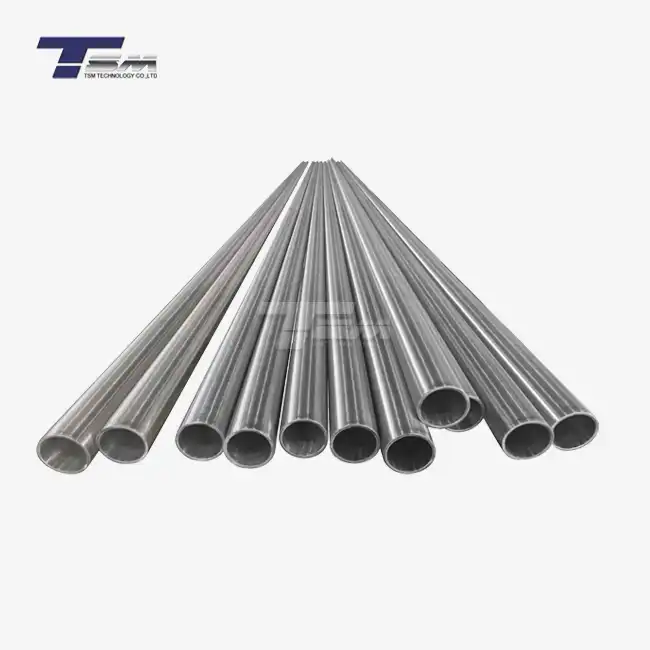
We use both smooth extrusion and welding to make Monel K500 tube that meets the standards set by ASTM B163/ASME SB163 and ASTM B165/ASME SB165. Seamless tubes are made by hot piercing and cold drawing, which create uniform wall thicknesses between 0.5 and 15 mm and outside widths between 6 and 114 mm. Our factories can make lengths of up to 15,000 mm for specific mixtures of width and wall. Positive material identification (PMI) makeup analysis and non-destructive testing, such as ultrasonic (UT) and radiographic (RT) examination, are done on every production batch. This strict quality procedure makes sure that measurements are correct, materials aren’t damaged, and things can be tracked back to their source. These are all important for aerospace OEM certification packages and offshore platform paperwork.
Mechanical Properties and Performance Benchmarks
Age-hardened Monel K500 has a tensile strength of over 1100 MPa and a yield strength of around 790 MPa. This makes it about 2.5 times stronger than annealed Monel 400 while still allowing it to stretch 30%. After the right precipitation process, the hardness usually hits HRC 35. The metal stays structurally stable over an amazing temperature range, from -240°C to 650°C. This means it can be used in cold LNG systems and high-temperature turbines. It is more resistant to fatigue than regular austenitic stainless steels, especially when loaded and unloaded repeatedly, like in pump shafts and rotor parts. These mechanical benefits come from the consistent γ' precipitates that stop dislocations from moving without reducing hardness or ductility. This is a balance that is hard to achieve in stainless steel grades.
Monel K500 Tube Properties in Detail
Corrosion and Oxidation Resistance
Marine experts really like that Monel K500 tube doesn't rust in salt water, and it doesn't rust in general or in specific spots. Nickel-copper mesh protects and makes a steady passive film that can heal itself even after being damaged by mechanical means. In warm seawater, chloride-induced stress corrosion cracks 316 stainless steel, but this nickel metal stays strong in offshore platform pipes that are constantly sprayed with salt water and submerged in it. Chemical processing plants use it because it is very resistant to hydrofluoric acid, which is known for being very active and quickly breaking down most metals. In low amounts and temperatures, the alloy can also stand up to sulfuric and phosphoric acids. Alkaline surroundings, such as solutions of caustic soda, don't pose much of a threat to properly chosen Monel K500 components.
Heat Treatment Effects on Performance
Controlled heat processing called precipitation hardening changes the mechanical qualities of Monel K500 in a big way. For a Monel K500 tube, solution annealing at 980°C, quick cooling, and then aging at 593°C for 16 hours make up the normal age-hardening cycle. This process spreads out tiny γ' particles all over the matrix, making it stronger while still being resistant to rust. Too much aging or the wrong cooling rates can cause grain boundary precipitation, which lowers the material's ability to bend and resist corrosion. This shows how important it is to have approved heat treatment paperwork. The most flexible material is solution-annealed material, which is best for cold forming. The strongest material is fully aged material, which is best for structural uses. Intermediate tempers can be changed to meet special needs for strength and flexibility.
Welding Considerations and Recommendations
To keep the mechanical qualities and corrosion protection of Monel K500 tubing, the joining process needs to be carefully controlled. When done correctly, gas tungsten arc welding (GTAW) with ERNiCu-7 filler metal makes joints that are very good. The heat-affected zone ages naturally, which can make it less flexible. For important uses that need to contain pressure, post-weld heat treatment is recommended. When you prepare to weld, you should get rid of any surface contaminants, especially sulfur-containing chemicals that make hot cracks more likely. Interpass temperature limits (no more than 150°C) stop grains from growing too much and keep the microstructure refined. Radiographic checking and pressure tests are often required by aerospace and nuclear standards to make sure that joints are solid before they are put into service.
Operational Temperature and Pressure Limits
Monel K500 keeps its mechanical strength and resistance to rust even in harsh thermal conditions. When the temperature drops close to absolute zero, the metal stays flexible and doesn't turn rigid. This makes it better for use in LNG service than ferritic steels. Continuous operation up to 480°C keeps most of the mechanical qualities intact. However, contact to temperatures above 540°C for a long time may lead to premature age. Pressure values rely on the wall thickness, diameter, and service conditions. However, in water service at room temperature, most seamless tubes can handle working pressures over 10,000 psi. Monel K500 is often used in power plant heat exchangers for 150-bar steam situations because copper-nickel alloys are better at conducting heat than stainless steel options.
Typical Applications of Monel K500 Tubes
Marine and Offshore Engineering
This nickel-copper metal is used by shipbuilders for propeller shafts, pump shafts, and seawater pipe systems that need to be strong and resistant to rust. Monel K500 tubes are used in process equipment on offshore oil rigs that is subject to both seawater corrosion and hydrocarbon conditions at the same time. Because it is not magnetic, the metal is useful in places where ferromagnetic materials would damage sensitive instruments, like in compass binnacles and minesweeping gear. Marine heat exchangers are very good at moving heat and don't get biofouling or erosion-corrosion, which are common problems in fast-moving saltwater.
Chemical and Petrochemical Processing
This material is used in hydrofluoric acid alkylation units in refineries and chemical plants for heat transfer tubes, including Monel K500 tube, because other alloys break down quickly. For process pipes that carry acidic media at high pressures, Monel K500 is the best choice because it is both strong and resistant to rust. Pressure tanks used to make chlorine have parts inside that are made of this metal that can handle both mechanical stress and strong chemical attacks. Monel K500 is what the oil industry uses for drill collar parts that work in sour gas wells with hydrogen sulfide.
Aerospace and Power Generation Applications
Monel K500 tubing is used in aircraft fuel systems because it is strong, doesn't catch fire, and doesn't corrode when it comes in contact with flight oils. Landing gear parts use the alloy's high yield strength and tolerance to wear. Power plants use this material for turbine parts, boiler feedwater systems, and nuclear reactor uses that need to be reliable for a long time in harsh circumstances. Manufacturers of steam turbines like the metal because it doesn't crack easily when exposed to high-temperature water that contains salt, which can damage stainless steels.
Material Comparison with Alternatives
Compared to Inconel 625, Monel K500 is better at resisting rust in reducing acids and has enough high-temperature strength at a lower cost. Compared to 316 stainless steel, this nickel metal is much more resistant to chloride stress corrosion cracking and becomes stronger over time. Titanium metals are just as resistant to rust in many situations as Monel K500, but they are harder to weld and can't be machined as easily. Even though cupronickel 90/10 is very good at resisting seawater, it is not strong enough for high-pressure or structural uses. This comparison helps procurement teams find the best mix between performance needs, price limits, and manufacturing issues.
Procurement Insights for Monel K500 Tubes
Pricing Dynamics and Cost Factors
The prices of nickel and copper change around the world, which makes it hard to get the materials you need for nickel-copper alloys without careful planning. The cost of making seamless Monel K500 tubes is higher than normal stainless steel because it requires special tools and more than one working step. Age-hardening heat treatment costs more, but it gives metals qualities that can't be achieved with work hardening alone. Orders over 1,000 kg usually get savings for quantity, while small-lot sales are charged extra. By understanding these economic factors, procurement pros can find the best times and amounts to place orders while keeping inventory levels low.
Supplier Evaluation Criteria
Certifications prove that a company can do what they say they will do and is committed to quality. ISO 9001 recognition shows that quality management is systematic, and industry-specific approvals (like NADCAP for aircraft or PED for pressure tools) show that the company has specialized knowledge. Instead of relying on a lot of different suppliers, a manufacturing capacity review should check to see if the company can melt, shape, and heat treat materials like Monel K500 tube in-house. The reliability of lead times depends on the infrastructure for distribution. Suppliers with a lot of stock can meet pressing needs that single-source makers can't. How quickly technical help responds is important when there are questions about the specifications or when non-standard measurements need to be looked at by engineers.
Lead Times and Order Management
Standard-sized seamless tubing usually ships between 4 and 6 weeks after stock is created. Depending on the mill's schedule, custom sizes that need specific production runs make lead times 10 to 14 weeks longer. Minimum order numbers depend on the size. For example, for common sizes, the minimum order quantity may be 50 kg, but for odd sizes, it must be 250 kg or more. We keep a large stock of popular sizes (12–76 mm outside widths, 1.5–6 mm wall thicknesses) so that we can quickly fill orders for operations, maintenance, and repairs. For project-based buying, blanket orders with planned releases are helpful because they balance the costs of keeping inventory with the efficiency of production.
Quality Assurance and Compliance Documentation
Material test records (MTRs) prove the chemical make-up, the mechanical properties, and the heat treatment. They also show how each production lot was treated and can be tracked. When the project requirements say so, third-party inspection services like Bureau Veritas, TÜV, and Lloyd's Register can do an independent check. To export aerospace products that are limited by ITAR, you need to be careful with your paperwork and get shipper approval. European pressure equipment needs EN 10204 3.1 certificates, while NACE standards are for oil and gas sour service conditions. Understanding these quality standards keeps projects from being delayed or rejected, which costs a lot of money.
Making the Right Choice – Monel K500 Tube Advantages and Limitations
Core Advantages in Demanding Environments
The material that has been precipitation-hardened has great strength-to-weight ratios that make structures lighter for use in spacecraft. Corrosion resistance in naval settings gets rid of the need for protective coatings and makes the service life decades longer than coated steel options. Because they aren't magnetic, they can be used in sensitive measuring tools where ferromagnetic materials would make the results less accurate. Being thermally stable from very low temperatures to high temperatures gives designers more options than when using age-hardening aluminum or precipitation-hardening stainless steel. These performance characteristics support higher material prices by lowering repair needs, extending the time between replacements, and improving the reliability of operations.
Limitations and Practical Considerations
If you want to use materials that are more expensive than stainless steel, you should look at their lifecycle costs instead of just the original buy price. When machining austenitic steel grades, carbide tools are needed and cutting speeds must be slower. This makes manufacturing more work. When compared to materials like 304 stainless steel, which is easier to work with, welding requires more skill and training. It's hard to find small-diameter thin-wall Monel K500 tubes (OD less than 8 mm, walls less than 1 mm), which limits its uses in miniature instruments. When you work with cold steel, it quickly becomes more rigid, which makes heavy shaping tasks more difficult than they are with warmed steel.
Decision Framework for Material Selection
The people who work in procurement should look at three important factors: the harshness of the surroundings, the amount of mechanical load, and the length of the product's lifespan. Even though it costs more, Monel K500 is better for marine splash zones, hydrofluoric acid service, and high-cycle wear loads. If you only need a moderate amount of power and rust resistance, stainless steel may be a better choice. Applications that need to weld a lot or do a lot of complicated shaping might benefit from Inconel types that make manufacturing easier. When figuring out long-term costs, it's important to include things like how often to maintain, how often to replace, and how much it costs to have to shut down operations. This is where the sturdiness of Monel K500 often makes up for its higher starting cost. Talking to materials engineers during the development of specifications keeps expensive redesigns from having to be done after the promises to buy have been made.
Conclusion
Monel K500 tube has been used for a long time to solve tough problems where corrosion protection and mechanical power meet. This nickel-copper alloy that has been precipitation-hardened works better than regular stainless steels in naval settings, chemical processing, aircraft systems, and power generation equipment. When reviewing suppliers and specs, procurement workers can do a better job if they know about the alloy's makeup, manufacturing standards (ASTM B163/B165), heat treatment needs, and performance traits. Even though the prices of materials are higher than those of commodity types, lifecycle analysis always shows value through longer service lives, less upkeep, and reliable operations. Strategic buying from qualified makers with strong quality systems, expert support, and large inventories improves the results of projects in the energy, offshore, aircraft, and petrochemical industries.
FAQ
1. What distinguishes Monel K500 from Monel 400?
The addition of aluminum and titanium to Monel K500 causes it to precipitation harden, which gives it a tensile strength of over 1100 MPa compared to 550 MPa for Monel 400. Both K500 and Monel 400 are very good at resisting corrosion in seawater and many acids, but Monel K500 tube is nearly three times as strong, which means it can be used in high-stress structure uses where Monel 400 would need too thick of walls.
2. Can Monel K500 tubes handle extreme temperature fluctuations?
The metal stays structurally sound from very cold temperatures (-240°C) to high temps (650°C). This thermal stability works well in LNG systems, steam engines, and aircraft uses where temperatures change a lot. While thermal cycling doesn't weaken corrosion protection, long-term contact above 540°C may change the mechanical qualities of age-hardened materials due to over-aging.
3. How does welding affect Monel K500 tube performance?
When ERNiCu-7 filler metal is properly welded, the rust resistance stays the same, but the heat-affected zone becomes less flexible over time. In important situations, a 16-hour post-weld heat treatment at 593°C returns the best mechanical qualities. Radiographic inspection and pressure tests are often required by aerospace and pressure tank rules to make sure that welds are strong before they are put into service.
Partner with TSM Technology for Premium Monel K500 Tubes
Choosing the right Monel K500 tube maker has a direct effect on the time it takes to complete your job, the quality of the work, and how well it runs. TSM Technology sells Monel K500 tubeing that is ISO-certified and made to ASTM B163 and ASME SB165 standards. The tubing goes through full PMI testing, non-destructive examination, and can be tracked back to its source. Serving the aerospace, naval, industrial, and power generation industries for 14 years shows that we are dedicated to precise engineering and dependability. We keep a large stock of seamless, welded, and thin-wall configurations (6–114 mm OD, 0.5–15 mm walls). We can also customize your order by heat treating it, cutting it, bending it, and welding it. Get in touch with our technical team at info@tsmnialloy.com to get personalized quotes, help with your specifications, and fast shipping options. We can help you power your most important uses with materials that meet the strictest industry standards.
References
1. Davis, J.R. (2000). Nickel, Cobalt, and Their Alloys. ASM International Handbook Committee, Materials Park, Ohio.
2. American Society for Testing and Materials. (2021). ASTM B163/B163M-21: Standard Specification for Seamless Nickel and Nickel Alloy Condenser and Heat-Exchanger Tubes. ASTM International, West Conshohocken, PA.
3. Boyer, H.E., and Gall, T.L. (1985). Metals Handbook: Desk Edition. American Society for Metals, Metals Park, Ohio.
4. Special Metals Corporation. (2004). Monel Alloy K-500 Technical Bulletin. Publication Number SMC-066, Special Metals Corporation.
5. Schweitzer, P.A. (2010). Fundamentals of Corrosion: Mechanisms, Causes, and Preventative Methods. CRC Press, Boca Raton, Florida.
6. Donachie, M.J., and Donachie, S.J. (2002). Superalloys: A Technical Guide, Second Edition. ASM International, Materials Park, Ohio.
Learn about our latest products and discounts through SMS or email