- English
- French
- German
- Portuguese
- Spanish
- Russian
- Japanese
- Korean
- Arabic
- Greek
- German
- Turkish
- Italian
- Danish
- Romanian
- Indonesian
- Czech
- Afrikaans
- Swedish
- Polish
- Basque
- Catalan
- Esperanto
- Hindi
- Lao
- Albanian
- Amharic
- Armenian
- Azerbaijani
- Belarusian
- Bengali
- Bosnian
- Bulgarian
- Cebuano
- Chichewa
- Corsican
- Croatian
- Dutch
- Estonian
- Filipino
- Finnish
- Frisian
- Galician
- Georgian
- Gujarati
- Haitian
- Hausa
- Hawaiian
- Hebrew
- Hmong
- Hungarian
- Icelandic
- Igbo
- Javanese
- Kannada
- Kazakh
- Khmer
- Kurdish
- Kyrgyz
- Latin
- Latvian
- Lithuanian
- Luxembou..
- Macedonian
- Malagasy
- Malay
- Malayalam
- Maltese
- Maori
- Marathi
- Mongolian
- Burmese
- Nepali
- Norwegian
- Pashto
- Persian
- Punjabi
- Serbian
- Sesotho
- Sinhala
- Slovak
- Slovenian
- Somali
- Samoan
- Scots Gaelic
- Shona
- Sindhi
- Sundanese
- Swahili
- Tajik
- Tamil
- Telugu
- Thai
- Ukrainian
- Urdu
- Uzbek
- Vietnamese
- Welsh
- Xhosa
- Yiddish
- Yoruba
- Zulu
Strengthening Mechanisms in Monel K500 Alloyed with Al and Ti
Monel K500 is different from other nickel-copper alloys because it has been strategically mixed with aluminum and titanium, which has made it a powerhouse that has been strengthened by precipitation. When procurement teams choose Monel K500 tube for important uses, they're investing in material science that gives it tensile strength above 1100 MPa and excellent corrosion resistance in settings with seawater, acids, and high temperatures. The addition of Al-Ti causes γ' phase intermetallic precipitates to form during controlled aging processes. This significantly changes the alloy's microstructure, giving it mechanical performance unmatched by standard nickel-copper grades.


Understanding the Strengthening Mechanisms in Monel K500 Alloyed with Al and Ti
The Role of Aluminum and Titanium in Precipitation Hardening
About 2.35 to 3.15 percent of Monel K500 (UNS N05500) is aluminum, and 0.35 to 0.85 percent is titanium. It is made up of a nickel-copper mesh that has 63 to 70% nickel and 27 to 33 percent copper. These carefully planned additions have a specific mechanical purpose: they allow precipitation hardening by making intermetallic compounds of Ni₃(Al,Ti). During solution annealing at temperatures between 900 and 980°C, the aluminum and titanium atoms mix evenly into the nickel-copper matrix that is face-centered. After that, these elements settle down as coherent γ' phase particles 10 to 50 nanometers in size during an aging heat treatment at 480 to 650°C. This is when the magic happens.
These tiny precipitates make it very hard for dislocations to move around inside the crystal structure. When mechanical force tries to change the shape of the material, mobile dislocations run into these stiffened areas and have to either cut through them or find a way to get around them, which both require a lot more energy. This basic process changes Monel K500 from a fairly soft and malleable metal into one that can withstand huge mechanical loads while still being tough.
Aging Kinetics and Microstructural Evolution
Temperature and length of aging have a big effect on the end mechanical qualities of Monel K500 tube. When engineers define nickel-copper alloy tube, they should know that the normal aging cycle for Monel K500 tube is to hold it at 593°C for 16 hours, but this can be changed based on the properties that are wanted. Shorter aging times make the precipitate patterns finer, which increases hardness but decreases ductility. On the other hand, longer processes make the precipitates coarser, which lowers strength slightly but increases fracture toughness. When something is underaged, its strength potential isn't reached, and when it's overaged, its traits get worse because too many precipitates form and harmful grain border phases form.
The changes that happen with getting older happen over time instead of all at once. Materials engineers can use this feature to change the qualities of materials so they work better in certain situations. This is especially helpful when they need to balance different needs, like the highest yield strength and the longest fatigue life for parts of spinning machinery.
Synergistic Effects on Corrosion Resistance
Precipitation hardening is the main way that the materials get stronger, but the adding of Al-Ti also changes how they react to rust. The nickel-copper base naturally prevents stress corrosion cracks caused by chloride and works very well in reducing conditions. In oxidizing conditions, aluminum helps protective oxide bands form, and titanium makes grain boundaries more stable, making them less vulnerable to attack between grains. This mix makes the alloy very useful in a wide range of chemical conditions, such as those found in petrochemical processing, offshore platforms, and naval uses.
Detailed Mechanical and Chemical Properties of Monel K500 Tubes
Mechanical Performance Parameters
Understanding the measurable mechanical qualities helps buying professionals choose materials based on data. The features we talk about here are for properly aged material that meets the requirements of ASTM B163/ASME SB163 and ASTM B165/ASME SB165:
- Tensile Properties: The tensile strength of aged Monel K500 is usually between 1035 and 1170 MPa (150 to 170 ksi), and the yield strength is between 725 and 790 MPa (105 to 115 ksi). Compared to heated Monel 400, which has tensile strengths of about 517–579 MPa, this is about twice as strong. The extension in 50 mm is between 15 and 30 percent, so the material is still sufficiently flexible even though its strength has increased significantly. This balance is very important for parts that are exposed to both steady loads and dynamic cycling.
- Hardness: Material that has been aged properly has a Rockwell C hardness of 30 to 40 HRC, while heated Monel 400 has a Rockwell B hardness of 60 to 85 HRB. This increase in hardness directly leads to better wear resistance in situations where the part is used in gritty slurries or where the stem of a valve is repeatedly touched.
- Fatigue and Impact Resistance: The structure that has been precipitation-hardened makes it much more resistant to fatigue. Rotating bending failure studies show that the material can handle about 40% more stress than solution-annealed material. Charpy impact values, which are lower than soft annealed conditions, are still good enough for most structural uses at room temperature (41–54 J, or 30–40 ft-lbs).
These mechanical properties stay the same at service temperatures ranging from -240°C to 480°C, and some strength is still maintained at 650°C. This means that the material can be used in power generation and aircraft for both low- and high-temperature uses.
Corrosion Resistance Across Industrial Environments
When materials engineers look at nickel-copper pipe systems for use in corrosive environments, they should know that Monel K500 keeps the corrosion-resistance properties of nickel-copper while making them stronger. The metal is very resistant to seawater and brackish water at all speeds, which is why it is used for marine heat exchanger tubing, condenser tubes, and pipe systems on remote sites. Most of the time, corrosion rates in moving seawater are less than 0.025 mm/year.
The alloy can handle hydrofluoric acid at concentrations of up to 60% and temperatures up to boiling when it is used in chemical processes, including applications involving Monel K500 tube. It works well in sulfuric acid when the conditions are reducing, and it doesn't react badly with alkaline solutions like sodium hydroxide. Stress corrosion cracking caused by chloride doesn't happen in this material, but it does in austenitic stainless steels in similar conditions. In pipelines and petrochemical plants, where even small amounts of chlorides can cause less durable metals to fail catastrophically, this property is very useful.
Monel K500 is stronger than 300-series stainless steels at resisting stress corrosion cracking. It is also cheaper than high-nickel superalloys like Inconel 625 for mild temperature uses and stronger than copper-nickel alloys like 90/10 or 70/30 grades.
Fabrication and Machining Considerations
Compared to austenitic stainless steels, precipitation-hardened steels are not too hard to machine. Good surface finishes can be achieved with carbide or high-speed steel tools that are cut at the right speeds (15 to 25 m/min for turning operations) and are cooled down enough. When you cut something, the material gets harder, so use sharp tools and positive rake angles to keep this from happening.
It is still possible to weld using gas tungsten arc welding (GTAW) or gas metal arc welding (GMAW) with filler metals that match. To get the bonded area back to its original properties, it needs to be heated again after the welding process. TSM Technology gives expert advice on welding settings and post-weld treatment plans to make sure the quality of the weld joint meets the needs of the application.
If you bend, shape, or do any other kind of production work on the metal while it is still solution-annealed, it is easy to do. With this processing order, normal tools can be used to make complicated shapes before precipitation hardening gives them their full strength.
Standards Compliance and Available Specifications
Chemical and mechanical qualities are always the same in materials that meet ASTM B163/B165 standards. The UNS N05500 number makes it possible to track items on foreign markets. TSM Technology keeps full records of all the materials it uses. These records include mill test reports that show the chemicals that were used and were confirmed through PMI (Positive Material Identification) analysis, as well as mechanical test results and full traceability to heat numbers.
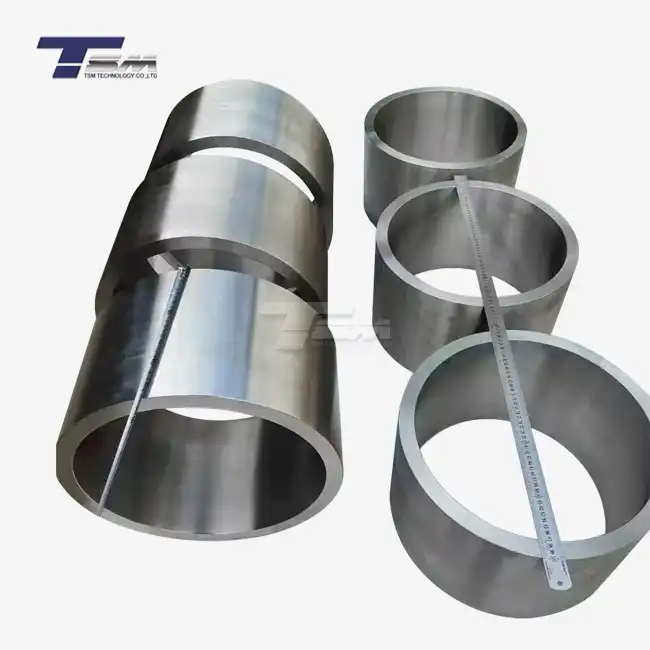
The outside diameter of a normal seamless tube runs from 6 to 114 mm, and the wall thickness varies from 0.5 to 15 mm. normal lengths go up to 15,000 mm. To meet the specific needs of each project, custom measurements can be made, and welded shapes can be up to 500 mm in diameter. Some of the heat treatment conditions that can be used are solution annealed, precipitation hardened (aged), and unique aging processes that are made to meet specific mechanical property goals.
Procurement Guide for Monel K500 Tubes: Ensuring Quality and Supply Chain Reliability
Supplier Qualification and Certification Requirements
To choose a skilled seller, you need to make sure they have a number of important skills. Materials experts and people who buy things should make sure that possible sources are certified to well-known quality management systems like ISO 9001. For aircraft uses, you need AS9100 approval. The seller should give all the paperwork needed to track the material, such as mill test reports with chemical analyses, mechanical test results, and records of the heat treatment.
TSM Technology has thorough quality assurance programs that include checking arriving materials, making sure things are going smoothly while they're being made, and testing the finished product. Each tube lot goes through a PMI makeup study to make sure that the chemistry meets ASTM standards. Ultrasonic testing (UT) and radiography testing (RT) are two types of non-destructive testing that make sure there are no internal flaws. Dimensional checking checks that the outside width, wall thickness, and straightness are all within the acceptable ranges.
How well the provider can help with technology issues is very important. Access to mechanical knowledge, application engineering help, and instructions on how to join makes sure that the material is put in place correctly. This support is especially helpful when changing current designs to use Monel K500's features or fixing problems that come up out of the blue with service.
Standard versus Custom Specifications
Outside diameters from 6.0 to 114 mm, wall thicknesses from 0.5 to 15 mm, and standard lengths are the standard tube dimensions that meet ASTM B163/B165. These sizes cover most uses. With lead times of 4 to 8 weeks based on the size of the order and the current inventory level, these measurements keep things ready to go.
Custom specs that go beyond normal ranges take more time to make, but they meet the needs of specific applications. Larger widths up to 500 mm, custom wall thickness combinations, non-standard lengths up to 15,000 mm, and Monel K500 tube can all be made, but it usually takes 8 to 12 weeks. Custom heat treatment processes that target specific combos of mechanical properties take an extra two to three weeks, but they allow optimization for specific service conditions.
Strategies for buying things should find a mix between using standard specifications when possible and meeting unique needs when they are needed. Putting together a bunch of small custom orders into one big production run can often cut down on lead times and unit costs by making the manufacturing process more efficient.
Ordering Considerations and Lead Time Management
Minimum order amounts depend on the supplier and the type of goods. For standard seamless tubes, the MOQ is usually between 100 and 500 kg, but for special specs, the MOQ may need to be between 1000 and 2000 kg in order to justify setting up the factory. Costs can be kept low by planning purchases around these minimums or working together with other end users to place a single order.
To handle lead times, you need to know how the whole supply chain works, from making the metal itself to making tubes and finishing them. Standard items kept in stock by suppliers usually ship within one to two weeks. Standard sizes that are made to order take 4 to 8 weeks. Depending on how complicated they are, custom requirements take 8 to 16 weeks. Early involvement with suppliers during the design steps is helpful for important projects because it lets material procurement happen at the same time as detailed engineering instead of afterward.
TSM Technology keeps a large stock of standard tube sizes and specs, so they can quickly meet regular needs and make custom designs when they are ordered. This hybrid method finds a good balance between the costs of keeping supplies and how quickly customers can get help.
After-Sales Support and Technical Partnership
Your connection with the provider of your nickel-copper alloy tubes goes beyond the initial buy. It includes ongoing technical support, application improvement, and a long-term partnership. Quality providers help with failure analysis if there are service issues and offer ongoing education on material capabilities and best practices. They also give advice on machining and manufacturing and suggest the right welding methods and filler metals.
TSM Technology sees its ties with customers as professional partnerships rather than one-way trades. Our metallurgical team helps with weighing the pros and cons of different materials, looks over suggested production steps, and offers support for fixing problems throughout the duration of a component. This way of working together makes sure that the performance promised for the materials during purchase is delivered successfully in the field.
Having access to services that add value, like precise cutting, end preparation, bending, and welding, makes the supply chain more streamlined and purchases easier to understand. Having a single source be responsible for both supplying materials and starting the production process speeds up the project timeline and improves quality.
Conclusion
The addition of aluminum and titanium to Monel K500 tube turns a well-known nickel-copper alloy that doesn't rust into a precipitation-hardenable material with mechanical strength that can compete with many stainless steels and better corrosion protection in chemical and marine settings. Engineers can get the most out of this flexible material if they know how precipitation strengthening works, what its mechanical properties are, and how to buy it correctly. With a tensile strength of 1100 MPa, good resistance to seawater, and the ability to withstand service temperatures up to 480°C, Monel K500 tube meets the toughest needs in aircraft, marine, chemical processing, and power generation. Strategic relationships between suppliers and highly skilled makers guarantee the quality of Monel K500 tube, the dependability of deliveries, and ongoing application support that are essential to the success of the project.
FAQ
1. What makes Monel K500 stronger than Monel 400?
Aluminum (2.3–3.15%) and titanium (0.35-0.85%) are added to Monel K500 that aren't in Monel 400. These elements allow controlled aging heat treatment to strengthen precipitates, which are made up of Ni₃(Al,Ti) intermetallic particles that stop dislocations from moving. This system makes the tensile strength about twice as high (1035–1170 MPa) as Monel 400's (517–579 MPa), but it doesn't change how resistant it is to rust.
2. Can Monel K500 tubes be welded?
It's possible to join Monel K500 tubes. It is possible to weld using either the GTAW or GMAW methods and filler metals that have the same makeup. To get the best qualities back, the material should be fused while it is solution-annealed, and then it should be heated to an aging temperature after the welding is done. TSM Technology gives thorough instructions on how to weld and how to heat treat the weld afterward to make sure the weld joint is strong enough for the job.
3. What standard sizes are readily available?
As per ASTM B163/B165, standard measurements for seamless tubes are outside diameters from 6.0 mm to 114 mm, wall thicknesses from 0.5 mm to 15 mm, and lengths up to 15,000 mm for popular size ranges. Made-to-order sizes up to 500 mm in diameter are possible. TSM Technology keeps a large stock of commonly ordered sizes so that they can be delivered quickly. They also make custom designs, but the hold time is 8 to 12 weeks.
4. How does the material perform in seawater applications?
Monel K500 is very resistant to corrosion in saltwater; at all flow speeds, rust rates are usually less than 0.025 mm/year. The substance doesn't crack, pit, or cavity corrode when exposed to chloride, which is what happens to stainless steels in similar situations. This metal is great for naval pump shafts, propeller shafts, fasteners, and heat exchanger tubes because it doesn't rust and is very strong.
Partner with TSM Technology for Premium Monel K500 Tube Solutions
TSM Technology offers high-performance nickel-copper alloy tubing that is backed by approval and made for the toughest industrial uses in the world. As an established Monel K500 tube manufacturer with 14 years of materials expertise, we offer a wide range of standard specifications as well as the ability to make custom tubes with particular dimensions and heat treatment conditions. Our quality assurance program includes PMI composition proof, UT/RT non-destructive testing, and full ASTM B163/B165 compliance paperwork. This makes sure that every tube exactly meets your needs.
Beyond material supply, we provide value-added services including precision cutting, bending, welding, and metallurgical consulting to optimize your component performance. Our engineering team works with your design and purchasing teams to define the best conditions for materials, suggest ways to make them, and solve problems that come up in the field. To talk about your Monel K500 needs, email our expert sales team at info@tsmnialloy.com. We can help you with your next project by delivering quickly, offering competitive terms, and having the material knowledge that your important uses need.
References
1. Davis, J.R. (2000). Nickel, Cobalt, and Their Alloys. ASM International Materials Park, Ohio.
2. Fontana, M.G. (1986). Corrosion Engineering, Third Edition. McGraw-Hill Book Company, New York.
3. Special Metals Corporation (2004). MONEL Alloy K-500 Technical Bulletin. Publication Number SMC-066.
4. Reed-Hill, R.E. and Abbaschian, R. (1994). Physical Metallurgy Principles, Third Edition. PWS Publishing Company, Boston.
5. Lai, G.Y. (2007). High-Temperature Corrosion and Materials Applications. ASM International, Materials Park, Ohio.
6. Smith, W.F. and Hashemi, J. (2006). Foundations of Materials Science and Engineering, Fourth Edition. McGraw-Hill Higher Education, New York.
Learn about our latest products and discounts through SMS or email