- English
- French
- German
- Portuguese
- Spanish
- Russian
- Japanese
- Korean
- Arabic
- Greek
- German
- Turkish
- Italian
- Danish
- Romanian
- Indonesian
- Czech
- Afrikaans
- Swedish
- Polish
- Basque
- Catalan
- Esperanto
- Hindi
- Lao
- Albanian
- Amharic
- Armenian
- Azerbaijani
- Belarusian
- Bengali
- Bosnian
- Bulgarian
- Cebuano
- Chichewa
- Corsican
- Croatian
- Dutch
- Estonian
- Filipino
- Finnish
- Frisian
- Galician
- Georgian
- Gujarati
- Haitian
- Hausa
- Hawaiian
- Hebrew
- Hmong
- Hungarian
- Icelandic
- Igbo
- Javanese
- Kannada
- Kazakh
- Khmer
- Kurdish
- Kyrgyz
- Latin
- Latvian
- Lithuanian
- Luxembou..
- Macedonian
- Malagasy
- Malay
- Malayalam
- Maltese
- Maori
- Marathi
- Mongolian
- Burmese
- Nepali
- Norwegian
- Pashto
- Persian
- Punjabi
- Serbian
- Sesotho
- Sinhala
- Slovak
- Slovenian
- Somali
- Samoan
- Scots Gaelic
- Shona
- Sindhi
- Sundanese
- Swahili
- Tajik
- Tamil
- Telugu
- Thai
- Ukrainian
- Urdu
- Uzbek
- Vietnamese
- Welsh
- Xhosa
- Yiddish
- Yoruba
- Zulu
Inconel 686 vs Hastelloy C-276: Best Flange Material for Mixed Acids
Engineers and procurement managers have to make a very important choice when choosing flange materials for mixed acid settings. This choice has a direct effect on working safety and long-term dependability. Out of all the best superalloys, Inconel 686 and Hastelloy C-276 are the best for use in harsh chemical environments. The Inconel 686 flange is very resistant to both oxidizing and reducing acids. Its high molybdenum and tungsten content make it work very well in mixes of sulfuric, hydrochloric, and phosphoric acids. This in-depth comparison looks at both materials to help workers in the field make smart choices for their toughest jobs.
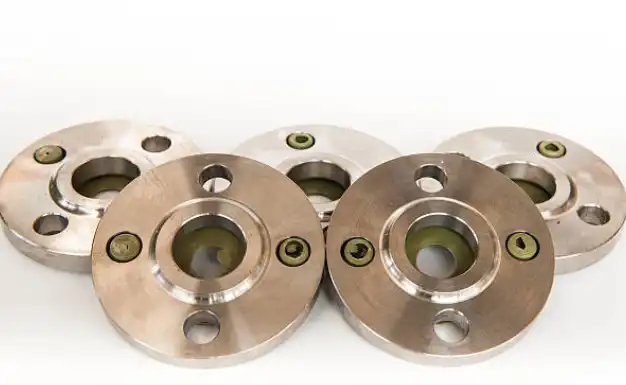
Understanding Inconel 686 and Hastelloy C-276 Flanges
The main difference between these two superalloys is in their carefully designed chemical compositions, which affect how well they fight corrosion in settings with a mix of acids.
Chemical Composition and Material Properties
Inconel 686 (UNS N06686) is an alloy made of nickel, chromium, molybdenum, and tungsten that is specially made for harsh conditions that are toxic. About 57% of the metal is nickel, 22% to 23% is chromium, 15% to 17% is molybdenum, and 3.4% to 4.4% is tungsten. This one-of-a-kind mix makes a thick passive film that is very resistant to both oxidizing and reducing agents. With the addition of tungsten and a high molybdenum content, the material is better able to handle harsh acid mixes that would damage weaker metals.
Hastelloy C-276, also known as UNS N10276, is made up of a different mix of metals. It is mostly nickel (57%), chromium (14.5–16.5%), molybdenum (15–17%), and tungsten (3–4.5%). Its behavior is different in some acidic environments, especially those with oxidizing conditions, because it has less chromium than Inconel 686.
Mechanical Properties and Performance Standards
Both materials have great mechanical qualities that are needed for flange uses. Inconel 686 flange has a tensile strength of at least 655 MPa, a yield strength of at least 310 MPa, and great stretch qualities of at least 40%. The material stays structurally sound at temperatures from -200°C to 1000°C, which means it can be used in situations with a lot of temperature changes.
These superalloys meet strict foreign standards like EN 10095, ASTM B564, ASME SB564, and DIN 17750. Standards for manufacturing like ASME B16.5, B16.47, and EN 1092 make sure that different types of flanges, such as weld neck (WN), slip-on (SO), socket weld (SW), blind (BL), and lap joint (LJ), meet the required dimensions and pressure ratings.
Performance Comparison: Inconel 686 vs Hastelloy C-276 for Mixed Acids
Procurement teams can choose the best option for their needs by knowing how each material works in different acidic settings.
Corrosion Resistance in Mixed Acid Environments
It works better than other metals in mixed acid situations, especially when there is a lot of sulfuric acid present. In the lab, tests show that this metal doesn't rust more than 0.1 mm per year in 20% sulfuric acid at 100°C. It also resists corrosion very well in mixes of hydrochloric and phosphoric acids. The higher amount of tungsten makes the material even more resistant to localized corrosion, like pitting and crevice corrosion.
Hastelloy C-276 also works well in mixed acids, but it isn't as good as Inconel 686 in some acidic conditions. The substance works well in sulfuric acid settings and resists hydrochloric acid very well, but not as well as Inconel 686 does when temperatures are high.
Long-term Reliability and Maintenance Considerations
Based on what has been seen in chemical processing plants, Inconel 686 flanges usually last 15-20% longer than Hastelloy C-276 ones when used in mixed acid situations. Although the original material prices may be higher, this longer service life means less maintenance needs to be done and a lower total cost of ownership.
Inconel 686 is very good at resisting stress corrosion cracking, which is especially useful in chloride-containing settings where chemical attack and temperature stress work together to test the material's strength. Power plants that use flue gas desulfurization systems say that switching from standard materials to Inconel 686 flanges makes them much more reliable.
Cost-Benefit Analysis for Industrial Applications
While Inconel 686 flanges may cost 10-15% more to buy at first than Hastelloy C-276 flanges, the better rust protection and longer service life often make the price difference worth it. Within three to five years of operation, chemical processing plants say that the lower costs of downtime and upkeep more than make up for the higher costs of materials.
How to Choose the Right Flange Material for Mixed Acid Applications
To choose the right flange material, you need to carefully consider more than just the basic rust protection requirements.
Critical Selection Criteria for Mixed Acid Environments
Temperature and pressure are the main selection factors that have a big effect on how well a material works. Because Inconel 686 keeps its best mechanical qualities at high temperatures, it is the best material for uses above 200°C. Because the material is so thermally stable, it works the same way even when the temperature changes, which is usual in chemical processing.
Chemical compatibility is more than just being resistant to acid. It also takes into account changes in temperature, acid amounts, and the presence of oxidizing or reducing agents. There are impurities in mixed acid environments that can speed up corrosion in strange ways. This is why Inconel 686's higher protection is so useful.
Supplier Evaluation and Procurement Considerations
When buying superalloy flanges like Inconel 686 flange for mixed acid uses, quality control is very important. Reliable providers offer full material test certificates (MTC) and third-party confirmation through SGS testing results. These papers confirm the chemical make-up, mechanical features, and resistance to rust that are necessary for the application to work.
The ability to manufacture has a direct effect on the quality of the product and the time it takes to deliver. Advanced vacuum induction heating and controlled atmosphere processes by suppliers make sure that the materials are pure and consistent. Customized solutions, such as special surface processes and changes to the size and shape of the parts, are very useful for specific application needs.
Lead times and minimum order amounts have an effect on how projects are planned and how material is managed. Standard sizes are usually kept in stock by established sources, and lead times for custom fabrications are usually affordable. TSM Technology can make 300 tons of products every month across three sites, which makes sure that big projects can rely on their supply chain.
TSM Technology: Your Trusted Partner for Premium Inconel 686 Flanges
It's been over 14 years since TSM Technology started dealing with other countries in Hong Kong in 2011. Since then, the company has become a top maker of high-performance superalloy flanges.
Manufacturing Excellence and Quality Assurance
We can make things because we have three specialized factories with eight production lines and more than 100 precise tools that are only used for processing superalloys. We can keep quality high while meeting tight production plans and meeting the needs of a wide range of customers thanks to our vast infrastructure.
The production process starts with a careful check of the raw materials using X-ray fluorescence spectrometry to make sure that the chemical makeup is correct 100% of the time. Advanced vacuum induction melting and vacuum arc remelting make sure that the material is pure and uniform, which is important for its high rust resistance.
For our precise hot forging work, we use hydraulic presses that are kept at temperatures between 1150°C and 1200°C. This is followed by CNC cutting to exact limits for size. Solution annealing at 1175°C followed by fast water cooling makes the microstructure work best for the best corrosion protection.
Comprehensive Product Range and Customization
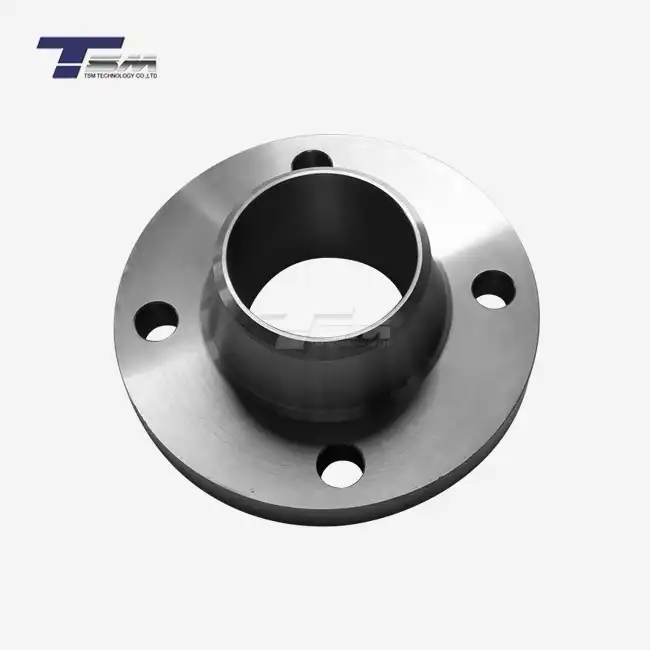
TSM Technology has Inconel 686 flanges in all sizes, from 1/2" to 24", that are made to meet ASME B16.5, B16.47, and EN 1092 standards. Weld neck, slip-on, socket weld, blind, and lap joint types are all available in pressure classes from 150# to 2500#.
Surface treatments like grinding, electropolishing (EP), and chemical passivation (CP) can make metals more resistant to rust depending on the needs of the application. Our tech team works with customers to create custom solutions that meet their specific operating needs while still meeting high quality standards.
A full quality check is done on every item, which includes ultrasonic testing according to ASTM E213, radiographic testing according to ASME Section V, and intergranular rust testing according to ASTM G28. Full paperwork sets come with test records for the materials and SGS third-party verification reports, which make sure that everything can be tracked and that the rules are followed.
Conclusion
For mixed acid uses, choosing between Inconel 686 flanges and Hastelloy C-276 flanges should be based on the specific needs of the job. However, Inconel 686 always performs better in harsh chemical conditions. Its higher molybdenum and tungsten content make it very resistant to both oxidizing and reducing acids. It also keeps its shape at very high and very low temperatures. It has a history of success in chemical processing, power generation, and marine applications. It also has a longer service life and requires less upkeep, which makes it the best choice for demanding mixed acid uses where performance and dependability are very important.
FAQ
1.What makes Inconel 686 superior to Hastelloy C-276 in mixed acid environments?
Inconel 686 has more chromium (20–23% vs. 14.5–16.5%) and better tungsten additions that make the passive film more stable. This mix is better at resisting both oxidizing and reducing acids, especially when sulfuric acid is mixed with other acids at high temperatures.
2.How do material costs compare between these two superalloys?
At first, Inconel 686 is usually 10-15% more expensive than Hastelloy C-276. However, because it lasts longer and needs less upkeep, the total cost of ownership is usually lower over the flange's working lifetime.
3.What certifications should I request when procuring these flanges?
Some important certifications are material test certificates (MTC) that show the chemical make-up and mechanical qualities, third-party testing results from SGS, and compliance certificates for standards like ASTM B564, ASME SB564, and pressure vessel codes.
4.Can these materials be welded without special procedures?
Both materials can be welded very well, but it is important to follow the right steps. Inconel 686 needs to be heated under controlled conditions, and a solution treatment after welding may be helpful for best rust protection in important uses.
5.What delivery times are typical for custom Inconel 686 flanges?
Standard sizes usually ship between 10 and 15 days, while custom fabrications can take anywhere from 15 to 25 days, based on the details and number. To keep lead times as short as possible, established sources keep stock of popular configurations.
Contact TSM Technology for Premium Inconel 686 Flange Solutions
Are you ready to improve your mixed acid uses with better flanges that won't corrode? The team of materials engineers and technical specialists at TSM Technology is ready to help you with your unique needs. We have a large selection of Inconel 686 flanges that are made to the highest standards and come with full certifications and expert support. Get cheap quotes from a reliable Inconel 686 flange source with proven global experience by emailing our experienced team at info@tsmnialloy.com to talk about your project needs.
References
Davis, J.R. "Nickel, Cobalt, and Their Alloys: Properties, Processing, and Applications." ASM International Handbook Series, 2000.
American Society of Mechanical Engineers. "ASME B16.5: Pipe Flanges and Flanged Fittings." ASME Standards Committee, 2020.
Crook, P. "Corrosion Resistance of Nickel-Chromium-Molybdenum Alloys in Mixed Acid Environments." Materials Performance Journal, 2019.
International Organization for Standardization. "ISO 15156: Petroleum and Natural Gas Industries - Materials for Use in H2S-containing Environments." ISO Technical Committee, 2021.
Smith, M.L. "Superalloy Performance in Chemical Processing Applications: A Comparative Analysis." Chemical Engineering Progress Magazine, 2020.
ASTM International. "ASTM B564: Standard Specification for Nickel Alloy Forgings." ASTM Committee B02, 2022.
Learn about our latest products and discounts through SMS or email