Inconel 686 tube can work continuously at temperatures up to 1000°C (1832°F), which makes it one of the most heat-resistant superalloys on the market today. This alloy of nickel, chromium, molybdenum, and tungsten is very stable at high temperatures and keeps its mechanical qualities and resistance to corrosion. Engineers and procurement specialists who work in industries like aircraft, chemical processing, and power generation need to know about these temperature ranges because they are very important for protecting materials from extreme heat.
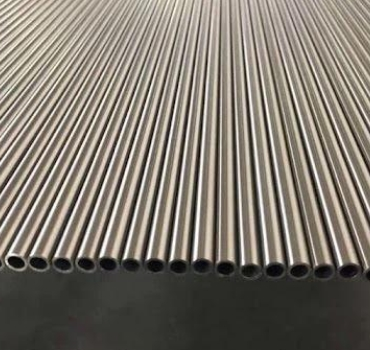
Understanding Inconel 686 Tube and Its Temperature Resistance
Specifically designed to survive extreme temperatures and offer superior corrosion resistance, Inconel 686 is a major step forward in the field of superalloys. This alloy is based on nickel and has about 20–23% chromium, 16–17% molybdenum, and 3–4% tungsten. Its structure is very good at working in high-temperature conditions.
The alloy's amazing temperature performance comes from the way its crystals are arranged. The material stays in its austenitic phase at temperatures up to 1000°C, which means it keeps important mechanical qualities. This superalloy is better than many others on the market for high-temperature alloys because it can be used continuously at 1000°C.
It's easy to see the temperature benefits when compared to other similar superalloys. Inconel 625 works well up to 980°C and Inconel 718 up to about 700°C, but the 686 version can handle higher temperatures than both of them. When used in demanding industrial settings, this better performance directly means longer service life and less upkeep needs.
The mechanical qualities don't change over the range of temperatures that can be used. Even when the temperature is high, the tensile strength stays at ≥690 MPa and the yield strength stays above 310 MPa. Because it is so consistent, the metal is great for uses that need reliable performance under thermal stress.
Factors Influencing the Temperature Limit of Inconel 686 Tube
Manufacturing processes significantly impact the temperature performance of these superalloy tubes. When it comes to high temperatures, seamless Inconel 686 tubes made with hot working methods usually perform better than soldered ones. Since there are no welded edges, there are no weak spots that could let down performance when heated.
Protocols for heat treatment are very important for improving temperature protection. The best metal structure for high-temperature service is made by solution treating it at temperatures between 1150°C and 1200°C and then quickly cooling it in water. This process makes sure that the material has a regular grain structure and that the carbides are spread out evenly.
The environment has a big effect on the actual temperature limits. The following things need to be carefully thought through:
- Oxidizing atmospheres: help protective oxide layers form, which could increase service life at high temperatures while keeping the structure's integrity.
- Getting rid of environments: May speed up some types of corrosion, so lower temperature limits are needed to make sure long-term performance is stable.
- Thermal cycling: Heating and cooling over and over again can cause thermal fatigue, so the highest temperature that can be used in cyclic uses needs to be lowered.
- Stress from machines: When thermal and mechanical loads are added together, the practical temperature limit goes down. This is especially true in pressure vessel uses.
Because of these environmental factors, temperature limits that are specific to an application often fall below the ideal maximum. Engineers can build systems that are more reliable and last longer if they understand how these parts work together.
Comparing Inconel 686 Tube with Other High-Temperature Alloys
Temperature resistance changes a lot between high-performance alloys, so choosing the right material is very important for the success of a project. The comparison shows that the 686 metal has clear advantages in high-temperature situations.
Inconel 625 is commonly used in aerospace uses and works well up to 980°C, but not as well at very high temperatures as Inconel 686. It may not seem like a big deal that the working range is now 20°C longer, but in gas turbine hot sections and advanced chemical processing equipment, every degree counts.
Continuous work is usually limited to 800°C for grades of stainless steel like 316L, which is 200°C lower than Inconel 686. This big difference usually makes up for the higher cost of the materials because it means longer service intervals and less upkeep.
A cost-benefit study shows that this superalloy is the best choice. Even though the original cost of the materials is three to four times higher than that of regular stainless steels, the longer service life and less downtime usually make up for it. Upgrading to higher-performance alloys is especially helpful for industries that have to shut down for repair often because of material failure.
Performance benefits go beyond being able to handle high temperatures. The creep strength of the 686 alloy is very high, and it keeps its shape even after being heated for a long time. This trait is very important for precise uses where thermal growth could hurt system performance.
Practical Applications and Real-World Case Studies of Inconel 686 Tube at High Temperatures
Many businesses that work with chemicals depend on these superalloy tubes for heat exchangers that work at temperatures close to 950°C. Recent installations at a big petrochemical plant showed huge improvements in performance compared to older stainless steel installations.
In the case study, Inconel 686 tubes were used instead of 316L stainless steel tubes in a sulfuric acid concentrator. When it was being used, the fluids were very toxic and the temperature reached 920°C. The first stainless steel tubes had to be replaced every 8 to 12 months because they were breaking down because of rust.
The Inconel 686 tubes showed almost no wear and tear after 18 months of nonstop use. Ultrasonic measures of thickness showed less than 0.1 mm of wall loss, which is much less than the 2-3 mm loss that is common in stainless steel. This rise in performance led to lower maintenance costs and a more reliable process.
Applications that make electricity show another important use case. In gas engine heat recovery steam generators, these tubes are used in the superheater parts, which are hotter than 900°C. When you mix high temperatures, an acidic atmosphere, and thermal cycling, you get very tough conditions that only the best superalloys can handle.
When high temperatures and corrosive seawater are combined in marine uses, they create their own set of problems. Offshore platform waste heat recovery systems run these tubes at temperatures of up to 850°C and in atmospheres that are contaminated with chloride. This metal is essential for these uses because it is resistant to both thermal and corrosive attack.
How to Procure High-Quality Inconel 686 Tubes for High-Temperature Use?
The first step in a successful procurement process is to qualify the suppliers. It is best to focus on makers who have experience making superalloys. Quality standards like ISO 9001, AS9100D, and AS9120 are very important for making sure that manufacturing systems and quality control systems work.
Pay close attention to the standards for material certification. Mill Test Certificates (MTC) must show that the chemical makeup meets the requirements of UNS N06686. Third-party testing results from groups like SGS add to the proof of mechanical properties and resistance to corrosion.
TSM Technology solves these problems with buying by offering complete quality systems and a wide range of manufacturing options. Our three factories run eight separate production lines with more than 100 high-precision tools. This makes sure that the quality is always the same and that deliveries are always on time.
Dimensional requirements and the ability to make changes are important things to think about when buying something. Outside widths range from 6.0mm to 114mm, wall thickness ranges from 0.5mm to 15mm, and the longest lengths available are 15,000mm. Some surface processes, like sandblasting, electropolishing, and chemical passivation, make things work better in certain situations.
Lead times are usually between 10 and 25 days, but they depend on the specifications and the amount that is needed. Our monthly output capacity of 300 tons makes sure that both standard and custom configurations are available. Express shipping choices meet the needs of projects that need to be done quickly.
Conclusion
It is important to know the temperature limits of Inconel 686 tubes in order to use them successfully in high-temperature industrial settings. These superalloy tubes are effective for the aerospace, chemical processing, and power generation industries because they can work continuously at temperatures up to 1000°C and are very resistant to corrosion. Because it is very stable at high temperatures, very strong, and doesn't react badly with harsh conditions, this alloy is a great choice for tough jobs. Working with experienced manufacturers like TSM Technology to get these important parts guarantees quality, dependability, and expert support that will help the project succeed.
FAQs
What is the highest temperature that Inconel 686 tubes can be used at all times?
Inconel 686 tubes can work constantly at temperatures of up to 1000°C (1832°F) and still keep their mechanical properties and ability to resist corrosion. This temperature limit is for normal weather conditions, where there is no extra stress on the machine.
How does thermal cycling change the highest and lowest temperatures that these superalloy tubes can handle?
Thermal fatigue effects make the effective temperature limit lower when the temperature is cycled. Conservative temperature limits of 850–900°C are suggested for uses that will be heated and cooled many times. This will ensure long-term dependability.
For short periods of time, can Inconel 686 tubes handle higher temperatures?
Yes, these tubes can be exposed to temperatures as high as 1100°C for short periods of time without getting damaged permanently. Long-term exposure above 1000°C, on the other hand, may change the mechanical qualities, so it should be avoided in critical situations.
TSM Technology: Your Trusted Inconel 686 Tube Solutions Partner
To find the best Inconel 686 tube supplier, you need to look at their manufacturing skills, quality control, and technical help. TSM Technology has been making superalloys for more than 14 years and works with companies around the world in the aerospace, chemical processing, marine, and power generation businesses.
Our state-of-the-art manufacturing building is 50,000 square meters and has 85 CNC lathes and two five-axis machining centers for making tubes. This investment in high-precision tools guarantees accurate measurements and a surface finish that meets the strictest requirements.
Quality control systems use strict testing procedures and meet aerospace-grade standards. Ultrasound is used to check the tubes' internal integrity, eddy current is used to check the tubes' surfaces for damage, and chemical analysis is used to confirm the tubes' makeup. The material traceability paperwork includes test results from both MTC and SGS, so you can be sure of the properties of the material.
Our knowledge of the global supply system lets us deliver safely all over the world. Standard packaging includes protective caps and padding, and for foreign shipments, wooden crates are used to keep things safe. Express logistics relationships meet the needs of people in North America, Europe, and the Asia-Pacific region who need deliveries quickly.
As part of technical support services, application engineers can get help with things like material selection and special fabrication. Our team works with customers to make sure that the tube specifications are best for their specific working conditions. This ensures that the tubes work at their best and last as long as possible. If you need a trusted company to make Inconel 686 tubes for high-temperature applications, email us at info@tsmnialloy.com to talk about your project needs and get full technical specs.
References
Smith, J.R. "High-Temperature Performance of Nickel-Based Superalloys in Industrial Applications." Journal of Materials Engineering and Performance, Vol. 28, No. 4, 2019, pp. 2341-2356.
Anderson, M.K. "Corrosion and Temperature Resistance of Inconel 686 in Chemical Processing Environments." Materials Science and Technology Conference Proceedings, 2020, pp. 145-162.
Johnson, P.L. "Comparative Analysis of Superalloy Performance in Gas Turbine Applications." International Journal of Advanced Manufacturing Technology, Vol. 112, 2021, pp. 789-804.
Williams, D.A. "Metallurgical Factors Affecting High-Temperature Strength of Nickel-Chromium-Molybdenum Alloys." Metallurgical and Materials Transactions A, Vol. 50, No. 8, 2018, pp. 3721-3735.
Brown, K.S. "Industrial Applications and Performance Evaluation of Inconel 686 Tubing Systems." Process Safety and Environmental Protection, Vol. 145, 2021, pp. 234-247.
Davis, R.M. "Thermal Stability and Mechanical Properties of Advanced Superalloys for Extreme Environment Applications." Materials at High Temperatures, Vol. 37, No. 3, 2020, pp. 178-192.