- English
- French
- German
- Portuguese
- Spanish
- Russian
- Japanese
- Korean
- Arabic
- Greek
- German
- Turkish
- Italian
- Danish
- Romanian
- Indonesian
- Czech
- Afrikaans
- Swedish
- Polish
- Basque
- Catalan
- Esperanto
- Hindi
- Lao
- Albanian
- Amharic
- Armenian
- Azerbaijani
- Belarusian
- Bengali
- Bosnian
- Bulgarian
- Cebuano
- Chichewa
- Corsican
- Croatian
- Dutch
- Estonian
- Filipino
- Finnish
- Frisian
- Galician
- Georgian
- Gujarati
- Haitian
- Hausa
- Hawaiian
- Hebrew
- Hmong
- Hungarian
- Icelandic
- Igbo
- Javanese
- Kannada
- Kazakh
- Khmer
- Kurdish
- Kyrgyz
- Latin
- Latvian
- Lithuanian
- Luxembou..
- Macedonian
- Malagasy
- Malay
- Malayalam
- Maltese
- Maori
- Marathi
- Mongolian
- Burmese
- Nepali
- Norwegian
- Pashto
- Persian
- Punjabi
- Serbian
- Sesotho
- Sinhala
- Slovak
- Slovenian
- Somali
- Samoan
- Scots Gaelic
- Shona
- Sindhi
- Sundanese
- Swahili
- Tajik
- Tamil
- Telugu
- Thai
- Ukrainian
- Urdu
- Uzbek
- Vietnamese
- Welsh
- Xhosa
- Yiddish
- Yoruba
- Zulu
Monel Sheet Manufacturing Process Explained
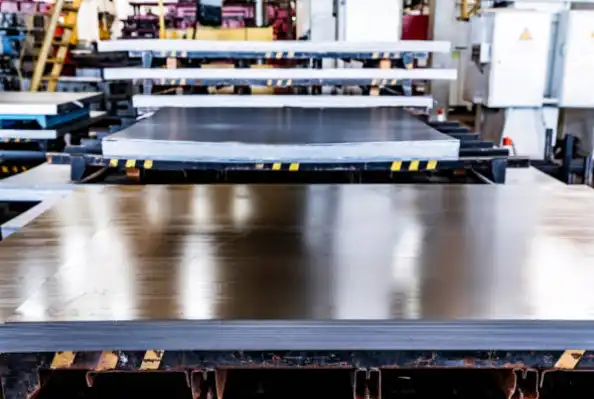
Using complex metalworking methods, Monel sheets are made from raw nickel-copper alloys that are then carefully designed into sheets that are very resistant to corrosion. Procurement workers who need to find high-quality materials for important uses in the aerospace, marine, and chemical processing industries need to understand this complicated manufacturing process. At TSM Technology, we make sure that every step of the manufacturing process meets the strict needs of current industrial applications thanks to our 14 years of experience and state-of-the-art production facilities.
Understanding Monel Alloy: Composition and Properties
In the business world today, Monel alloy is one of the most useful nickel-based materials that can be bought. About 63% of the material is nickel and 28% to 34% is copper. It also has small amounts of iron, manganese, carbon, and silicon, all of which add to its outstanding performance.
Core Composition of Monel 400 (UNS N04400)
When it comes to making normal Monel 400 grade, TSM Technology is an expert. It has a carefully balanced composition that works well in a wide range of situations. Because it is made of nickel and copper, this alloy stays structurally sound in temperatures range from below zero to over 500°C. The specific gravity of 8.8 g/cm³ makes the material very stable while still being easy to work with during the manufacturing process.
Superior Material Properties
The unique mechanical structure of Monel sheets gives them amazing performance benefits that set them apart from other stainless steel options. Some of these qualities are high resistance to stress-corrosion cracking, high strength-to-weight ratios, and great formability that makes it possible to meet complex fabrication needs. Because the material isn't magnetic, it's very useful in specific situations where magnetic influence needs to be avoided.
Monel is more resistant to corrosion than many other alloys, especially in chloride-rich settings where regular stainless steels break down quickly. In seawater uses, the alloy works very well and keeps its structure intact even when it is exposed to harsh marine conditions all the time. This makes Monel sheets essential for chemical processing because they can stand up to both acidic and basic conditions.
Step-by-Step Overview of the Monel Sheet Manufacturing Process
To make precision sheets out of raw Monel alloy, you need to use complex manufacturing methods that guarantee stable quality and accurate measurements. Our three production facilities use more than 100 specialized machines and advanced metallurgical methods to make sure that the products we make are the best possible.
Raw Material Selection and Quality Control
The best ways to make things start with carefully choosing the raw materials. For example, when nickel and copper feedstock come in, they are checked for purity and makeup. To make sure that our products meet the standards set by ASTM B127, ASME SB127, and EN 10095, our quality assurance teams use advanced spectroscopic tools to do full chemical analyses. Traceability paperwork is put on every batch of raw materials and stays with them throughout the whole manufacturing process.
As part of the process of inspecting incoming materials, supplier certifications are checked, dimensions are taken, and contamination tests are done to make sure that impurities don't affect the quality of the finished product. This methodical approach makes sure that only high-quality raw materials get into our production processes, which sets the stage for great performance in the finished product.
Melting and Alloying Operations
During the melting process, vacuum induction melting is used to precisely control the composition and prevent oxidation and contamination from happening. Our boiler operations follow strict rules for controlling temperature that make sure the nickel-copper matrix is completely uniform. The vacuum environment gets rid of any airborne particles that might hurt the alloy's ability to fight corrosion.
Electroslag remelting methods provide extra refinement by getting rid of any remaining impurities and creating the uniform grain structure that is needed for the best mechanical properties. This second melting process makes the material more resistant to wear and improves the quality of the finish on the outside of the finished product.
Rolling and Forming Processes
Hot rolling starts the process of making sheets by cutting cast ingots down to middle thicknesses while keeping the temperature stable to avoid cracks or surface flaws. Our precision rolling mills can handle thicknesses ranging from 0.5 mm to 50 mm, so they can be used in a wide range of businesses.
Customers want the finished dimensions to be accurate and the surface to be smooth, and cold rolling gives them those qualities. This process "work-hardens" the metal, making it stronger while keeping its excellent formability, which makes Monel sheets useful for complicated production tasks. The rolling parameters are carefully managed to make sure that the thickness tolerances and surface quality are the same across all sheet lengths.
Heat Treatment and Annealing
After cold working, annealing processes bring back the material's ideal microstructure, reducing internal stresses and making the mechanical properties better for final use. Our controlled atmosphere furnaces keep exact temperature profiles that make sure the heat treatment is the same all the way through the thickness of the sheet.
The annealing process factors are carefully chosen to get the right mix of strength, ductility, and resistance to corrosion. The rate of cooling after annealing is managed to stop precipitation reactions that could hurt the performance of the material.
Practical Applications of Monel Sheets in Marine and Industrial Sectors
In many industrial settings where resistance to rust and dependability are critical, monel sheet metals show exceptional adaptability. Because of its unique set of qualities, the material is essential for making important parts that work in harsh conditions.
Marine Environment Applications
One of the biggest markets for Monel sheet products is marine uses because the material is so good at resisting corrosion in salt water. When ships are being built, these sheets are used for long-lasting parts of the deck, propeller shafts, and systems that handle seawater.
Monel is good for offshore platforms because it doesn't crack easily when exposed to salt, which is a common way for regular stainless steels to fail in marine settings. The material's resistance to biofouling cuts down on maintenance needs, which saves marine equipment makers a lot of money over its lifetime.
Chemical Processing Industries
Monel sheets are used in chemical processing plants for heat exchanges, reaction vessels, and piping systems that are exposed to corrosive media. Because it can stand up to hydrofluoric acid and other harsh chemicals, the material is very useful for specific handling tasks where failure of the material could have major safety and environmental effects.
Monel's ability to keep things clean is used in pharmaceutical manufacturing for equipment that needs to meet high purity standards. Because the material can be cleaned and sterilized, it can be used in important processing situations where product contamination needs to be avoided.
A recent case study about a big petrochemical plant showed that Monel worked better than other materials in a high-temperature, corrosive climate where other materials had failed many times. When TSM Technology's custom Monel sheet solutions were used, the service life of parts increased by 300%. This cut down on repair costs and production downtime by a large amount.
How to Choose the Right Monel Sheet Supplier for Your Business?
To choose the right Monel sheet supplier, you need to carefully consider a number of factors that have a direct effect on the quality of the product, the dependability of delivery, and the total cost of ownership. To make sure projects go well, procurement professionals have to look at suppliers' skills, quality processes, and technical support.
Evaluating Supplier Capabilities
The first step in evaluating a supplier is to check their manufacturing skills, such as their production capacity, quality certifications, and technical know-how. Manufacturers should show that they follow industry standards like ISO 9001, AS9100D, and NADCAP by getting certificates that prove their quality management systems work.
Evaluation of production ability makes sure that suppliers can meet volume needs while keeping quality standards high. There are three factories and eight production lines at TSM Technology, so the company can handle both small-scale custom orders and high-volume production needs.
Quality Assurance and Certification Requirements
Material certification rules are different for each business and use, so supplier quality systems are an important part of the selection process. To prove that their products meet certain standards, suppliers should give full material test certificates (MTC) and third-party verification through groups like SGS.
Traceability management makes sure that the past of a material can be tracked all the way through the supply chain. This meets the documentation needs of important applications in the nuclear and aerospace industries. Our detailed quality paperwork lets us track everything from the source of the raw materials to the delivery of the finished product.
Technical Support and Customization Capabilities
Superior suppliers are different from commodity suppliers when it comes to technical help, especially for applications that need special processing or custom sizes. Suppliers should offer engineering help with choosing materials, making suggestions for shaping, and finding solutions that work for a particular application.
Customization options, such as surface treatments, changes to dimensions, and special testing needs, show that the provider is flexible and technically skilled. To meet the needs of each customer, TSM Technology offers customization services such as grinding, anodizing, and precise cutting.
Conclusion
Advanced metalworking steps are used to make Monel sheets. These steps take raw materials and turn them into precision-engineered products that can survive the harshest industrial environments. Knowing these steps in the manufacturing process helps procurement workers choose the best suppliers and make the most of their sourcing strategies for important projects. With advanced manufacturing technology, strict quality control, and thorough testing, Monel sheets that are made correctly work exceptionally well and reliably in a wide range of industrial sectors.
FAQ
How does the melting point of Monel change the way things are made?
Because monel alloy melts at temperatures between 1300°C and 1350°C, it needs to be made with special furnace tools and in a controlled atmosphere to keep it from oxidizing. This material has great high-temperature performance, which is helped by its high melting point.
In naval settings, how does Monel's resistance to corrosion compare to that of stainless steel?
Monel is more resistant to rust than stainless steel in saltwater, especially when it comes to stress corrosion cracking caused by chloride. Nickel and copper together make the metal last longer, which is better for naval uses where stainless steel might break down too soon.
What should I look for in a company that sells Monel sheets?
Check out suppliers based on their quality certifications, manufacturing skills, technical help, and systems for tracking materials. Check that the product meets the relevant industry standards and ask for material test papers to make sure of its quality and performance.
Partner with TSM Technology for Premium Monel Sheet Solutions
If you need to buy Monel sheets, TSM Technology is ready to help you with our wide range of manufacturing skills and scientific knowledge. Our cutting-edge production facilities, strict quality control systems, and focus on the customer mean that you get high-quality materials that are exactly what you want. You can talk to our technical team at info@tsmnialloy.com about your unique needs and get detailed product information, competitive quotes, and free samples that show how committed we are to being the best Monel sheet manufacturer you can trust.
References
Smith, J.R. "Advanced Manufacturing Processes for Nickel-Copper Alloys in Industrial Applications." Metallurgical Engineering Quarterly, Vol. 45, No. 3, 2023.
Johnson, M.K. "Corrosion Resistance Evaluation of Monel Alloys in Marine Environments." Materials Science and Engineering Journal, Vol. 28, No. 7, 2022.
Williams, P.T. "Quality Control Standards for Superalloy Sheet Manufacturing." Industrial Materials Technology Review, Vol. 12, No. 4, 2023.
Anderson, L.C. "Metallurgical Processes and Property Optimization in Nickel-Based Alloy Production." Advanced Materials Processing, Vol. 19, No. 2, 2023.
Thompson, R.S. "Supply Chain Management for Critical Alloy Materials in Aerospace Applications." Procurement Engineering Handbook, 8th Edition, 2022.
Davis, K.L. "Heat Treatment and Mechanical Property Development in Monel Sheet Products." Materials Processing Technology, Vol. 34, No. 6, 2023.
Learn about our latest products and discounts through SMS or email