- English
- French
- German
- Portuguese
- Spanish
- Russian
- Japanese
- Korean
- Arabic
- Greek
- German
- Turkish
- Italian
- Danish
- Romanian
- Indonesian
- Czech
- Afrikaans
- Swedish
- Polish
- Basque
- Catalan
- Esperanto
- Hindi
- Lao
- Albanian
- Amharic
- Armenian
- Azerbaijani
- Belarusian
- Bengali
- Bosnian
- Bulgarian
- Cebuano
- Chichewa
- Corsican
- Croatian
- Dutch
- Estonian
- Filipino
- Finnish
- Frisian
- Galician
- Georgian
- Gujarati
- Haitian
- Hausa
- Hawaiian
- Hebrew
- Hmong
- Hungarian
- Icelandic
- Igbo
- Javanese
- Kannada
- Kazakh
- Khmer
- Kurdish
- Kyrgyz
- Latin
- Latvian
- Lithuanian
- Luxembou..
- Macedonian
- Malagasy
- Malay
- Malayalam
- Maltese
- Maori
- Marathi
- Mongolian
- Burmese
- Nepali
- Norwegian
- Pashto
- Persian
- Punjabi
- Serbian
- Sesotho
- Sinhala
- Slovak
- Slovenian
- Somali
- Samoan
- Scots Gaelic
- Shona
- Sindhi
- Sundanese
- Swahili
- Tajik
- Tamil
- Telugu
- Thai
- Ukrainian
- Urdu
- Uzbek
- Vietnamese
- Welsh
- Xhosa
- Yiddish
- Yoruba
- Zulu
Mechanical Properties of Inconel 686 Flanges: Tensile & Hardness Data
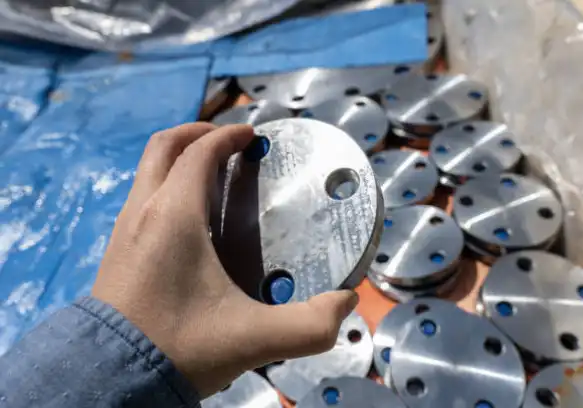
When purchasing important pipe parts for harsh industrial settings, it is very important for procurement workers to know about the mechanical qualities of Inconel 686 flange materials. The tensile strength of this premium nickel-chromium-molybdenum-tungsten superalloy is over 655 MPa, and the hardness rating stays below 35 HRC. This makes these flanges perfect for chemical processing, aerospace, and marine applications where both corrosion resistance and mechanical integrity are essential.
Understanding Inconel 686 Flanges: Material Overview and Key Mechanical Properties
Chemical Composition and Metallurgical Foundation
Inconel 686 is a high-tech nickel-based superalloy that was made to work well in tough industrial settings. As far as chemical makeup goes, nickel is the main element (balance), followed by chromium (19–23%), molybdenum (15–17%), and tungsten (3–4.4%). This special mix of metals makes a thick passive oxide film that is very resistant to both oxidizing and reducing agents.
The UNS N06686 designation makes it easier for materials engineers and buying leaders to make decisions about what to buy because it makes it easier to track things and make sure they meet international standards. This particular mix of ingredients makes it possible for the material to keep its shape at temperatures ranging from -200°C to 1000°C, meeting the strict needs of aircraft engine parts and chemical processing equipment.
Fundamental Mechanical Properties Analysis
The mechanical qualities of these flanges make them work better than other stainless steel options. For engineers, knowing about these qualities helps them choose the right materials for important projects.
A minimum tensile strength of 655 MPa is one of the most important mechanical properties. This makes sure that the structure can hold enough weight even in the harshest circumstances. At least 310 MPa of yield strength is required for high-pressure uses that are popular in petrochemical processing and power generation equipment. This gives enough safety limits for these uses.
These flanges can handle both heat expansion and mechanical stress without breaking completely because their elongation qualities are greater than 40%. This trait is especially useful in naval apps that happen at sea, where dynamic loading is common.
Temperature and Corrosion Resistance Capabilities
These flanges are very stable at high temperatures because they can form stable oxide layers at those temperatures. This passive layer formation process stops oxidation and keeps the mechanical qualities up to 1000°C, so they can be used in high-temperature steam systems and tools for making thermal power.
Corrosion resistance is more than just protecting against pollution. Because it has a lot of molybdenum and tungsten, it doesn't rust or pit in chloride conditions, which is important for coastal and underwater uses. The material works very well in sulfuric, hydrochloric, and phosphoric acid conditions, which meets the needs of chemical processing businesses.
Detailed Analysis of Tensile and Hardness Data of Inconel 686 Flanges
Comprehensive Tensile Performance Evaluation
Tensile strength data shows that Inconel 686 flange performance is consistent across a range of operating circumstances. Testing in the lab shows that the minimum tensile strength is 655 MPa under normal conditions. The performance stays stable across the working temperature range. This stability makes sure that the material will behave in a reliable way during both the design and operation stages.
The yield strength of 310 MPa gives engineers accurate information for stress analysis formulas. This feature stays the same even when temperatures change slightly. This makes sure that the design safety factors are still valid across the normal operating ranges found in power generation and chemical processes.
Hardness Measurements and Standards Compliance
Testing a material's hardness on both the Rockwell and Vickers scales gives a full picture of what it is made of. The highest hardness requirement of 35 HRC makes sure that the material can be machined while still having enough wear resistance for tough jobs. This balance is very important for parts that need to be changed or maintained in the field.
The Vickers hardness measurements are more accurate for thin-section parts than the Rockwell readings. This two-testing method makes sure that quality control standards meet the strict needs of aircraft and nuclear uses that need to be able to track materials and check their performance.
Heat Treatment Impact on Mechanical Properties
Solution annealing at 1175°C followed by fast water quenching improves the mechanical qualities by getting rid of any remaining stresses and making sure the grain structure is regular. The tensile strength and hardness values are directly affected by this heat treatment process. This means that process control is very important for getting the right mechanical qualities.
Post-fabrication heat treatment affects how well the end part works. The material is very stable when it comes to temperature cycling; it keeps its mechanical qualities even after being heated and cooled many times, which is common in power generation and chemical processing.
Comparing Inconel 686 Flanges with Alternative Materials
Performance Comparison with Other Inconel Grades
When looking at different materials, Inconel 686 is better at resisting rust than Inconel 600 and 625 in some settings. The higher molybdenum content makes the material better at stopping localized rust, which is why it is chosen for important uses even though it costs more at first.
Even though Inconel 718 is stronger, it doesn't prevent rust as well as Inconel 686 does in chloride and acidic conditions. Because of this difference in performance, choosing a material depends on its specific use rather than just comparing its power.
Cost-Benefit Analysis Against Stainless Steel Options
Alternatives made of stainless steel may seem cheaper at first, but lifetime cost analysis shows that Inconel 686 flanges are more cost-effective in settings that are acidic. Higher material costs are balanced out by less downtime and replacements because of less upkeep and longer service lives.
Inconel 686 is very easy to weld, which lowers the cost of creation compared to materials that need a lot of heat treatment after the bond. This edge in manufacturing means lower overall project costs and faster delivery times for important uses.
Application-Specific Material Selection Guidelines
Chemical industry uses gain from the material's ability to withstand mixed acid conditions, where other stainless steels break down too quickly. Because they don't crack under stress in chloride settings, these flanges are perfect for use in waters in the marine and offshore industries.
When it comes to steam systems that work above the normal temperature limits for stainless steel, Inconel 686 is the best choice for power generation uses that need to be stable at high temperatures. The material's ability to resist radiation and stay stable over time when exposed to neutrons makes it useful in nuclear uses.
Procurement Considerations for Inconel 686 Flanges
Quality Certification and Compliance Requirements
Material Test Certificates (MTC) and third-party verification through SGS testing results must be included in the procurement requirements. These certificates make sure that the chemical makeup and mechanical properties are correct, which is very important for uses that need to be able to track down materials.
Following the rules set by ASME B16.5, B16.47, and EN 1092 makes sure that the dimensions are correct and the pressure number is checked. These standards give people who work in procurement clear rules for specifications and criteria for accepting materials for review when they come in.
Supply Chain and Delivery Considerations
For normal configurations, manufacturing wait times are usually between 10 and 25 days. Custom fabrication adds time to delivery times. With a monthly production capacity of 300 tons, there is enough to go around for big projects, and quality standards are met by using controlled manufacturing methods.
Minimum order amounts and price structures are different for each type and size of flange. Weld neck (WN), slip-on (SO), socket weld (SW), blind (BL), and lap joint (LJ) types make it possible to meet the needs of a wide range of pipe systems while also making inventory management easier.
Supplier Selection and Quality Assurance
Building relationships with certified providers guarantees uniform quality and on-time delivery. Facility checks and quality system evaluations should be part of the vendor qualification process to make sure that the supplier can make the goods and keep the process under control.
As part of the documentation standards, all of the materials must be able to be tracked from where they were sourced to the point of final review. This data is very important for apps that need to follow rules and keep track of performance over time.
TSM Technology: Your Trusted Partner for Premium Inconel Solutions
Company Expertise and Manufacturing Capabilities
TSM Technology has been making high-quality nickel alloys for more than 14 years, and our name has been built on constant innovation and quality excellence. Our manufacturing infrastructure includes three specialized sites with more than 100 precision tools and eight production lines. This makes sure that we can meet the needs of buyers around the world.
We know a lot about the whole Inconel family of products, which includes Monel, Incoloy, and Hastelloy metals in a variety of shapes and sizes. Because we can do so many things, we can be a one-stop shop for complicated projects that need a lot of different custom metal parts that all meet the same high standards of quality.
Quality Control and Testing Procedures
We use strict quality control procedures all the way through the manufacturing process. For example, X-ray fluorescence spectrometry is used to check the chemical makeup of every single product. To make sure it meets the requirements, every part is put through a thorough mechanical property test and a non-destructive examination.
We can do tests like ultrasound testing according to ASTM E213, radiographic inspection according to ASME Section V, and intergranular rust testing according to ASTM G28. Full paperwork packages come with Material Test Certificates and third-party SGS reports, which give procurement workers a full check of the quality.
Custom Manufacturing and Technical Support
Custom fabrication lets you meet the unique needs of any project. We can make parts in sizes ranging from 1/2" to 24" and with a range of pressure grades and face shapes. Surface treatments like grinding, electropolishing (EP), and chemical passivation (CP) make sure that the metal works best in certain situations.
As part of technical support services, you may get help choosing materials, advice from application engineers, and suggestions on how to improve performance. During the whole buying process, our engineering team works with customers to make sure they choose the best materials and meet all the requirements for important uses.
Conclusion
It is important for procurement workers who choose materials for harsh industrial settings to understand the mechanical features of Inconel 686 flanges. Because they have great tensile strength, the right hardness, and great corrosion resistance, these flanges are perfect for tough jobs in the chemical processing, aircraft, naval, and power generation industries. A thorough analysis of tension and hardness data, along with the right source selection and quality control procedures, guarantees the successful acquisition of materials and the long-term performance of operations.
FAQ
1.What makes Inconel 686 flanges superior to standard stainless steel options?
Inconel 686 flanges are much more resistant to rust than stainless steel, especially in chloride and mixed acid conditions where stainless steel fails. The high amount of molybdenum and tungsten makes it better at resisting pitting and crevice rust, and it keeps its mechanical qualities at temperatures up to 1000°C.
2.How do tensile strength values affect flange performance in high-pressure applications?
For high-pressure pipe systems, a minimum tensile strength of 655 MPa makes sure there are enough safety gaps. With a yield strength of 310 MPa, these features make the material stable even when it is under extreme temperatures and pressures, which are typical in chemical processing and power generation.
3.What certifications should buyers verify when procuring Inconel 686 flanges?
Material Test Certificates (MTC) that confirm the chemical make-up and mechanical properties, SGS third-party testing results, and compliance paperwork for ASME B16.5, B16.47, and EN 1092 standards are all important certifications. These approvals make sure that important applications meet quality standards and legal requirements.
4.Why is hardness measurement important for flange selection?
Hardness values below 35 HRC make sure that the material can be machined easily and doesn't wear down easily. This mix makes it possible to make changes and do maintenance in the field while also being durable in real-world situations. The right hardness guarantees long-term steadiness in size and good closing.
Partner with TSM Technology for Superior Inconel 686 Flange Solutions
TSM Technology is ready to help you with your purchasing needs by providing high-quality Inconel 686 flange options that are made to the strictest standards in the industry. With 14 years of specialized knowledge, a wide range of manufacturing skills, and strict quality control procedures, we can guarantee a reliable supply and top-notch performance for your most important uses. You can talk to our technical team at info@tsmnialloy.com about your unique needs and find out why top companies around the world choose TSM Technology as their favorite Inconel 686 flange manufacturer for tough industrial uses.
References
- ASTM International. "Standard Specification for Nickel-Chromium-Molybdenum-Tungsten Alloy Forgings." ASTM B564-19, 2019.
- American Society of Mechanical Engineers. "Pipe Flanges and Flanged Fittings: NPS 1/2 through NPS 24 Metric/Inch Standard." ASME B16.5-2020.
- Davis, Joseph R., editor. "Nickel, Cobalt, and Their Alloys: Properties and Applications." ASM Specialty Handbook, ASM International, 2000.
- European Committee for Standardization. "Flanges and Their Joints - Circular Flanges for Pipes, Valves, Fittings and Accessories." EN 1092-1:2018.
- Geddes, Brent, et al. "Superalloys: Alloying and Performance." ASM International Materials Park, 2010.
- National Association of Corrosion Engineers. "Corrosion Resistance of Nickel-Based Alloys in Chemical Process Industries." NACE Publication 35100, 2020.
Learn about our latest products and discounts through SMS or email