To cut and machine K500 Monel bar properly, you need to know how its unique precipitation-hardened nickel-copper makeup works and use specific techniques to deal with problems caused by work hardening. To get exact size specs and keep the surface integrity of this high-performance metal, you need to carefully choose the tools you use, make sure the cutting settings are adjusted, and follow the right heat treatment methods. Engineers and buying workers who learn these skills can use this better material to its full potential in tough marine, aircraft, and chemical processing jobs where regular metals don't meet the standards for performance.
Understanding the Properties and Challenges of Monel K500 Bars
Monel K500 is different from other nickel-copper alloys because it can precipitation-harden. This is made possible by adding titanium and aluminum to the normal nickel-copper structure. This mechanical improvement makes a material whose tensile strength is between 1100 and 1350 MPa, which is much higher than Monel 400's performance.
Unique Material Characteristics
The texture of the metal makes it harder to machine in certain ways that need careful thought. During cutting processes, especially when the wrong speeds and passes are used, work hardening happens quickly. The material tends to produce too much heat during cutting, which can damage the tool and cause measurements to be off. By understanding these patterns of behavior, machinists can come up with good plans that always work.
Chemical Composition Impact
The chemical makeup of about 63% nickel, 30% copper, and small amounts of aluminum and titanium makes it very resistant to rust, but it also makes it harder to machine. These alloying elements create intermetallic precipitates when the metal ages, which makes it harder and requires specific ways to cut it.
Best Practices for Cutting Monel K500 Bars Effectively
For the best cutting results with Monel K500, you need to do a lot of planning ahead and pay close attention to the process factors. Because of how the material is made, it needs to be machined in a way that is very different from how steel or aluminum is usually machined.
Pre-Machining Preparation
When it comes to cutting, heat treatment is very important. Solution annealing at 1800°F (980°C) and then quickly cooling can briefly lower hardness, making it easier to work with in complicated ways. However, this method needs to be followed by age hardening to recover the mechanical properties. Customers can choose the best starting conditions for their individual uses because TSM Technology offers bars in a number of different heat treatment states, such as solution-treated and age-hardened.
Tool Selection and Cutting Parameters
For most K500 Monel bar tasks, carbide tools with positive rake angles work really well. For light drilling and cutting, high-speed steel tools are still useful. In production settings, the following factors have worked well:
Turning Operations: Surface speeds of 100 to 150 SFM and feed rates of 0.005 to 0.015 inches per turn keep output high and prevent work hardening. It is important to have sharp tools because dull cutting edges make work harder faster and require more cutting force.
Drilling Applications: Slower speeds (50-80 SFM) and steady feed rates keep the drill from moving and make sure the quality of the hole. Peck drilling helps get rid of chips and keeps holes from getting too hot.
Milling Considerations: When compared to regular milling, climb milling lowers work hardening, but it also makes the machine more rigid. Surface speeds should stay low, around 80 to 120 SFM on average, based on the cutter width.
These factors are starting points that need to be changed depending on the part geometry, machine capabilities, and manufacturing systems. Consistent chip removal and the right amount of flood cooling application are still very important for all processes.
Cutting Fluid Selection
Effective cutting fluids serve multiple functions when machining K500 Monel bar. Water-soluble synthetic coolants provide excellent heat dissipation and chip evacuation properties. Straight cutting oils offer superior lubricity for challenging operations but require enhanced ventilation systems. The coolant should reach the cutting zone effectively, necessitating high-pressure delivery systems for optimal results.
Machining Techniques to Enhance Performance and Efficiency
Advanced machining strategies can significantly improve productivity while maintaining quality standards when working with precipitation-hardened nickel-copper alloys. These techniques focus on minimizing work hardening while achieving required surface finishes and dimensional accuracy.
Fixture Design and Workholding
Rigid workholding prevents vibration and chatter that can accelerate tool wear and compromise surface finish. Custom fixtures should distribute clamping forces evenly to prevent distortion, particularly important given the material's high strength characteristics. Magnetic workholding systems prove ineffective due to the alloy's non-magnetic properties, requiring mechanical clamping solutions.
Multi-Operation Strategies
Sequencing operations to minimize handling and setup time while maintaining surface integrity of the K500 monel bar requires careful planning. Rough machining should remove maximum material efficiently while leaving adequate stock for finishing operations. Semi-finishing passes establish near-final dimensions, allowing finishing cuts to focus on surface quality and tight tolerances.
Post-Machining Heat Treatment
Components machined in the solution-treated condition require age hardening to achieve specified mechanical properties. The standard aging cycle involves heating to 1100°F (593°C) for 16 hours, followed by controlled cooling. This process develops the precipitation-hardened microstructure responsible for the alloy's superior strength characteristics. Stress relief treatments may be necessary for complex geometries to prevent distortion during service.
Comparative Insights: Monel K500 vs Other Alloys in Machining and Application
Knowing how K500 Monel bar stacks up against other materials helps purchasing workers make smart choices based on the needs of the application and the ability to make the product.
Performance Against Monel 400
The solution-strengthened structure of Monel 400 makes it easier to machine, but the precipitation-hardening of K500 gives it almost twice as much yield strength. For jobs that need better mechanical performance, this strength benefit often explains the more difficult cutting. Since both metals have about the same level of rust protection, power needs should be the main factor in choosing which one to use.
Comparison with Stainless Steel and Inconel
When it comes to salt conditions, K500 Monel works better than 316 stainless steel, and it's also easier to machine than most Inconel types. The material can be worked with because its work hardening rate is mild, falling between that of stainless steel and that of superalloys like Inconel 718. For less challenging tasks, stainless steel is a cheaper option than exotic superalloys, and K500 is a better value than exotic superalloys when resistance to high temperatures is not needed.
Strategic Procurement Tips for Monel K500 Bars
Successful procurement of K500 Monel bar requires understanding quality standards, supplier capabilities, and market dynamics that affect availability and pricing.
Supplier Qualification and Standards Compliance
Reputable suppliers maintain certifications including ASTM B865, ASME SB865, and EN 10095 standards. TSM Technology's AS9100D aerospace certification ensures consistent quality control throughout production, while ISO 9001 compliance guarantees systematic quality management. Material test certificates (MTC) and third-party verification from SGS provide documented proof of chemical composition and mechanical properties.
Inventory Planning and Custom Sizing
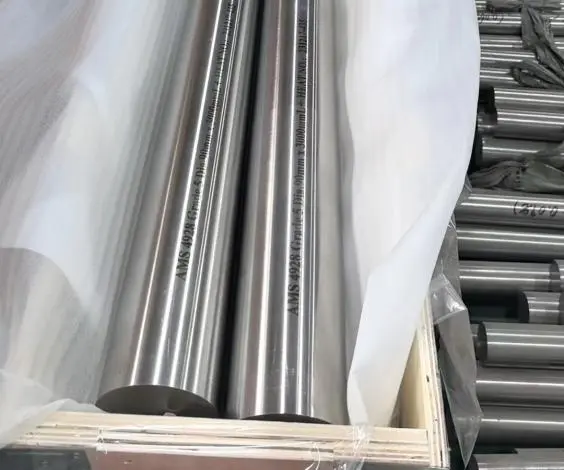
The standard diameter range of 5-300 mm with lengths from 3000-6000 mm covers most applications, though custom dimensions may require extended lead times. TSM Technology's 300-ton monthly capacity and 10-25 day delivery schedule support both immediate needs and planned inventory management. Strategic buyers often maintain safety stock of common sizes while coordinating custom orders well in advance of production requirements.
TSM Technology - Your Trusted K500 Monel Bar Manufacturer
TSM Technology stands as a premier nickel alloy specialist with fourteen years of dedicated experience in superalloy production. Our comprehensive manufacturing capabilities span three factories equipped with eight production lines and over 100 machines, ensuring consistent supply of high-quality materials to demanding industries worldwide.
Manufacturing Excellence and Quality Assurance
Our 50,000㎡ modern facility features dedicated production lines optimized specifically for Monel K500 processing. Advanced vacuum induction melting ensures chemical homogeneity while eliminating impurities that could compromise performance. Precision machining using 85+ CNC lathes and 5-axis machining centers achieves ±0.01mm dimensional tolerance, meeting the exacting requirements of aerospace, marine, and chemical processing applications.
Every bar undergoes comprehensive testing including ultrasonic examination per ASTM E2375 protocols, radiographic inspection for internal integrity, and corrosion testing following ASTM G28 and G48 standards. Chemical composition analysis confirms compliance with UNS N05500 specifications, while mechanical testing validates tensile strength, yield strength, and elongation properties.
Global Supply Chain and Customer Support
Our international trading experience, beginning in 2011, has established reliable supply networks serving 70+ countries. Strategic partnerships with certified suppliers ensure high-purity nickel-copper alloy inputs, while localized logistics hubs enable rapid delivery to regional markets. Emergency shipment capabilities provide 72-hour response times from coastal warehouses, supporting urgent project requirements.
Conclusion
Successfully machining K500 Monel bar requires understanding its unique precipitation-hardened characteristics and implementing specialized techniques that minimize work hardening while achieving required quality standards. The material's superior strength and corrosion resistance justify the additional complexity compared to conventional alloys, particularly in demanding aerospace, marine, and chemical processing applications. Proper tool selection, optimized cutting parameters, and effective heat management enable consistent results that meet tight tolerances and surface finish requirements. Strategic procurement from qualified suppliers ensures material traceability and compliance with industry standards, supporting quality assurance throughout the manufacturing process.
FAQ
1.What is the main difference between Monel K500 and Monel 400 in terms of machining?
Monel K500 exhibits greater work hardening tendency due to its precipitation-hardened structure, requiring more careful speed and feed selection compared to solution-strengthened Monel 400. However, K500 provides nearly double the yield strength, making the additional machining complexity worthwhile for high-stress applications.
2.Can heat treatment improve the machinability of K500 Monel bars?
Solution annealing can temporarily reduce hardness and improve machinability for complex operations. However, subsequent age hardening is required to restore the material's characteristic strength properties. Most applications benefit from machining in the age-hardened condition using appropriate cutting parameters.
3.How do I select the right cutting tools and parameters for machining K500 bars?
Carbide tools with positive rake angles work best for most operations, using conservative surface speeds of 100-150 SFM for turning and 80-120 SFM for milling. Sharp tools are essential, as dull cutting edges accelerate work hardening. Adequate flood coolant and consistent feeds help maintain optimal cutting conditions.
Partner with TSM Technology for Superior K500 Monel Bar Solutions
Ready to enhance your manufacturing processes with premium-quality materials? TSM Technology combines fourteen years of specialized expertise with state-of-the-art production capabilities to deliver K500 Monel bar that meets your exact specifications. Our AS9100D aerospace certification and comprehensive quality control ensure consistent performance for your most demanding applications. Whether you need standard dimensions or custom sizing, our experienced team provides technical support throughout your procurement process. Contact us at info@tsmnialloy.com to discuss your requirements with our materials specialists and discover why leading manufacturers worldwide trust TSM Technology as their preferred K500 Monel bar supplier.
References
Davis, J.R. "Nickel, Cobalt, and Their Alloys." ASM International Materials Handbook, Volume 2: Properties and Selection of Nonferrous Alloys and Special-Purpose Materials.
Smith, William F. "Machining Characteristics of Precipitation-Hardened Nickel-Copper Alloys." Journal of Manufacturing Science and Engineering, American Society of Mechanical Engineers.
Thompson, Robert A. "Heat Treatment Effects on Monel K500 Machinability." Materials Science and Technology Conference Proceedings, ASM International.
Anderson, Carl E. "Tool Wear Mechanisms in Nickel-Based Superalloy Machining." International Journal of Machine Tools and Manufacture, Elsevier Science.
Wilson, Mark P. "Corrosion-Resistant Alloys for Marine Applications." NACE International Corrosion Conference Technical Papers.
Brown, Sarah L. "Precipitation Hardening in Nickel-Copper Alloys: Microstructure and Properties." Metallurgical and Materials Transactions A, The Minerals, Metals & Materials Society.