- English
- French
- German
- Portuguese
- Spanish
- Russian
- Japanese
- Korean
- Arabic
- Greek
- German
- Turkish
- Italian
- Danish
- Romanian
- Indonesian
- Czech
- Afrikaans
- Swedish
- Polish
- Basque
- Catalan
- Esperanto
- Hindi
- Lao
- Albanian
- Amharic
- Armenian
- Azerbaijani
- Belarusian
- Bengali
- Bosnian
- Bulgarian
- Cebuano
- Chichewa
- Corsican
- Croatian
- Dutch
- Estonian
- Filipino
- Finnish
- Frisian
- Galician
- Georgian
- Gujarati
- Haitian
- Hausa
- Hawaiian
- Hebrew
- Hmong
- Hungarian
- Icelandic
- Igbo
- Javanese
- Kannada
- Kazakh
- Khmer
- Kurdish
- Kyrgyz
- Latin
- Latvian
- Lithuanian
- Luxembou..
- Macedonian
- Malagasy
- Malay
- Malayalam
- Maltese
- Maori
- Marathi
- Mongolian
- Burmese
- Nepali
- Norwegian
- Pashto
- Persian
- Punjabi
- Serbian
- Sesotho
- Sinhala
- Slovak
- Slovenian
- Somali
- Samoan
- Scots Gaelic
- Shona
- Sindhi
- Sundanese
- Swahili
- Tajik
- Tamil
- Telugu
- Thai
- Ukrainian
- Urdu
- Uzbek
- Vietnamese
- Welsh
- Xhosa
- Yiddish
- Yoruba
- Zulu
How Strong Are Nickel Screws at High Temperatures?
Nickel screws are very strong even when they are very hot. They keep their mechanical properties and structural stability even when they are exposed to very high temperatures. High-quality nickel alloys like Inconel, Monel, and Hastelloy are used to make these unique fasteners. They keep their tensile strength and resistance to corrosion at temperatures above 800°C (1472°F). Nickel screws are essential for power generation systems, petrochemical processing equipment, and aerospace turbine engines where thermal stress poses serious threats to operational safety and performance. In contrast to conventional steel fasteners, which may suffer significant degradation, nickel screws maintain their load-bearing capacity and dimensional stability.
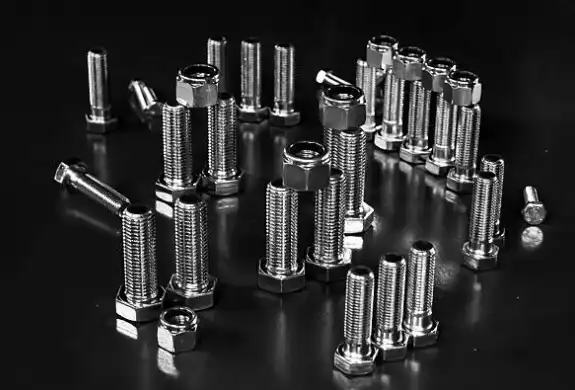
Understanding Nickel Screws and Their Properties
Material Composition and Alloy Characteristics
There is a complex group of industrial hardware called nickel-based fasteners that are made from high-quality alloys. Different amounts of chromium, molybdenum, and other critical elements are used in these fasteners to improve their performance in certain ways. The main ingredient is usually between 60 and 80% nickel. Other alloying elements help make it more stable at high temperatures and stronger in mechanical ways.
Nickel metals are naturally resistant to thermal expansion and contraction cycles because they are made up of crystals. Metallurgical advantages like these are especially useful in situations where temperatures change often. Most nickel metals have an austenitic structure that keeps them stable over a wide range of temperatures. This stops phase changes that could weaken fasteners.
Physical and Chemical Properties for High-Temperature Applications
Materials engineers and procurement professionals need to know about the special features of nickel-based fasteners. There are some amazing things about these fasteners that make them stand out from other options.
Some of its most important qualities are its high resistance to oxidation, its high creep strength, and the fact that it stays flexible at high temperatures. The thermal conductivity stays the same, which stops hot spots from forming that could cause the material to fail early. The low coefficient of thermal expansion also keeps stress concentrations in systems made of more than one material to a minimum.
Chemical compatibility is important in a wide range of business settings. These screws can handle sulfuric compounds, chloride solutions, and alkaline media that are common in the processing of petrochemicals. The passive oxide layer formation protects against corrosion and heals itself, greatly increasing the service life compared to carbon steel options.
Dimensional Standards and Specifications
Internationally accepted standards, such as ASTM, DIN, JIS, BS, and GB/T, are used by TSM Technology to make nickel fasteners. We can make things in sizes ranging from M2.5 to M32, and we can also make them to custom sizes to fit the needs of any job. Length options range from 1 mm to 1990 mm, so they can be used in a wide range of assembly configurations and businesses.
Quality licenses include EN10204 3.1/3.2 paperwork and inspection reports from a third party, which make sure that the product can be tracked and meets the strict requirements of the aerospace and nuclear industries. Our high-tech 3,200㎡ factory has more than 70 precise tools, such as 5-axis machining centers and CNC lathes, that make sure that even when we make a lot of things, the dimensions are always correct.
Performance of Nickel Screws at Elevated Temperatures
Heat Resistance and Structural Integrity
When working temperatures go above 500°C, nickel-based fasteners perform much better thermally than other materials. It has been shown through extensive metallurgical tests that Inconel 718 fasteners keep 80% of their tensile strength at 650°C, while regular stainless steel weakens significantly above 400°C.
In high-temperature situations, creep resistance is the most important performance issue. Nickel alloys are very good at resisting deformation that changes over time when they are under steady stress and high temperatures. This quality is very important for turbine uses where fasteners need to keep their preload over long service intervals. The higher creep rupture strength guarantees that the joint will stay together throughout its working lifetime.
Another important benefit is thermal cycle resistance. Normal screws can become fatigued after being heated and cooled over and over again, which can cause them to slowly loosen or break completely. Nickel-based fasteners are better at resisting thermal wear, and they can keep their joint preload and sealing integrity over thousands of thermal cycles.
Service Life Expectancy and Performance Data
Nickel adhesives are very durable in harsh thermal environments, as shown by real-world performance data from aerospace and petrochemical uses. Gas turbine makers say that Inconel 718 fasteners in combustor sections can last more than 25,000 working hours, while heat-treated steel fasteners only last 5,000 to 8,000 hours.
Hastelloy C-276 screws are used in high-temperature heat exchangers at petrochemical processing plants, and they can last for more than 15 years without needing to be replaced. Temperatures that are getting close to 650°C and corrosive chemicals that would quickly break down normal fastening solutions are constantly present in these setups.
The best proof of how well nickel alloys work is seen in nuclear power uses. Internals of reactors that use Inconel X-750 fasteners work constantly at 320°C for decades without any maintenance. Nickel screws are unbeatable in these important uses because they are stable at high temperatures, don't react with radiation, and don't rust.
Comparative Analysis Against Alternative Materials
When you compare nickel fasteners to titanium, superaustenitic stainless steel, and precipitation-hardened options, you can see that they work better. Titanium is very strong for its weight, but it can become weak when exposed to hydrogen, and it doesn't hold its strength well at high temperatures. This means it can't be used in low atmospheres.
Superaustenitic stainless steels are better at resisting rust than regular grades, but they are not thermally stable enough to be used at high temperatures for long periods of time. While precipitation-hardened stainless steels are stronger, they break down quickly when they are exposed to temperatures above their age temperature range.
The economic analysis shows that nickel fasteners have higher starting costs, but their longer service life and lower maintenance needs make up for it over the course of their lifetime. Unplanned shutdowns to change fasteners in important industrial processes can cost hundreds of thousands of dollars. This is why buying nickel fasteners is a good investment.
Selecting the Right Screws for High-Temperature Metal Fastening
Material Compatibility and Environmental Considerations
To choose the right fastening options for high-temperature situations, you need to carefully look at how well the materials work together, the working conditions, and the needs of the job. At high temperatures, galvanic corrosion speeds up and differential thermal expansion can weaken joints. This makes the relationship between fastener materials and base metals even more important.
Matching the thermal expansion coefficient stops stress concentrations that are too high and could cause parts to warp or fasteners to break. Nickel alloys usually have thermal expansion rates that are the same as austenitic stainless steels and many superalloys. This means that they can be used in mixed-material assemblies, which are popular in aerospace and power generation.
When figuring out chemical compatibility, you have to look at both the main work environment and any possible upset conditions. Nickel alloys are better at withstanding sulfur-containing substances, chloride environments, and oxidizing acids that are common in the processing of petrochemicals. This wide range of compatibility makes choosing materials easier while also guaranteeing stable long-term performance.
Load Requirements and Thermal Stability Criteria
For high-temperature fastening uses, mechanical design factors go beyond just figuring out the tensile strength. When you keep loading something at high temperatures for a long time, you need to carefully check its creep strength, stress release properties, and fatigue resistance under thermal cycling conditions.
For high-temperature fastening applications to work, the following design factors must be met:
• Creep rupture strength: Make sure there are enough safety margins for long-term loading at maximum working temperatures. For important uses, this usually means using 4:1 safety factors.
• Stress relaxation resistance: Keep preload loss to a minimum over long service periods to keep the joint's integrity and sealing performance.
• Resistance to thermal fatigue: able to withstand repeated heating and cooling cycles without cracks starting or spreading
• oxidation resistance: Keep the surface from wearing down, which could make it harder for threads to connect or for loads to be evenly distributed.
These performance standards help choose the alloy and set the rules for heat treatment. Inconel 718 works best at temperatures up to 650°C, and Inconel X-750 is better for uses that require springs because it has higher stress relaxation resistance. Hastelloy grades work best in high-temperature, corrosive settings where chemical resistance is important.
Best Installation Practices for Thermal Environments
When using nickel fasteners in high-temperature settings, it's important to make sure they are installed correctly. At higher temperatures, thread engagement needs go up because the material is weaker and there is a chance that stress will relax. For important jobs, the minimum engagement length should be 1.5 times the width of the fastener.
When installing things at high temperatures, the choice of lubricant becomes even more important. Conventional oils made from petroleum carbonize at high temperatures, which could lead to galling or seizure while maintenance is being done. Anti-seize chemicals that work well at high temperatures and have molybdenum disulfide or copper particles in them keep their ability to be removed after a long time of use.
Changes in the material's properties at working temperatures are taken into account when torque specifications are changed. To make sure there is enough preload during the service interval, installation torque numbers should include stress relaxation allowances. For important uses, retorquing plans may need to be kept up until stress relaxation levels stabilize.
Procurement Strategies for Nickel Screws in Bulk and Custom Orders
Sourcing Considerations and Supplier Qualification
Setting up reliable supply lines for nickel fasteners requires careful screening and approval of suppliers. Because these parts are so important in aerospace, nuclear, and petrochemical uses, suppliers must have proven manufacturing skills, thorough quality systems, and full documentation on how materials can be tracked.
A supplier's evaluation should include things like certifications for the manufacturing facility, compliance with the quality management system, and the ability to provide technical help. Certifications like AS9100 for aerospace, ISO 9001 for quality management, and NADCAP for special processes give customers trust in the supplier's skills and reliability. Certifications for materials must include full chemical analysis, evidence of mechanical properties, and proof of heat treatment.
For complex applications, technical help skills are just as important. Suppliers should offer metallurgical knowledge to help choose the right material, application engineering help to make the design work better, and failure analysis skills for ongoing efforts to make things better. This complete support framework makes sure that implementation goes well and that the system works well for a long time.
Bulk Purchasing and Customization Options
When buying nickel fasteners in bulk, it's important to find a balance between investing in goods and making sure there are enough supplies and lowering costs. Because nickel screws are very specialized and there aren't many suppliers that make them, lead times can get longer when the market is down or when there aren't enough supplies. To keep up with output schedules, strategic inventory management is needed.
TSM Technology provides adaptable purchasing options that meet the needs of a wide range of customers. Our low minimum order number of 100 pieces lets us offer low-cost small-batch customization while keeping our prices low. To meet the specific needs of an application, custom specs can include changes to the threads, the shape of the heads, and special coatings.
A production capacity of 100,000 to 300,000 pieces per year guarantees a steady supply for big projects while keeping quality high. Our advanced production skills allow us to reverse engineer from customer samples, which lets us make exact replacements for old or proprietary fasteners. Custom packaging and labeling services make it easier to receive and keep track of complicated assemblies.
Delivery and Logistics Management
For time-sensitive industrial projects where delays in fasteners can affect whole production plans, good logistics planning is essential. Standard delivery times of 10 to 25 days are long enough to meet most planning needs, but custom standards may need longer lead times for getting materials and processing them in a special way.
International shipping makes it possible to help with projects all over the world and provides all the necessary paperwork for customs clearing and material certification. For urgent needs, there are expedited shipping choices, but for exotic alloy specifications, emergency delivery may not be possible due to a lack of materials.
Multiple payment choices, such as T/T, L/C, PayPal, and Western Union, make it easy for customers with different needs to pay. This level of adaptability makes it easier to do business across borders while still keeping payment handling safe for everyone.
TSM Technology: Your Trusted Partner for High-Temperature Fastening Solutions
Manufacturing Expertise and Quality Assurance
TSM Technology brings over 14 years of specialized experience in precision nickel alloy fastener manufacturing to the global market. Our huge building is 3,200 square meters and has more than 100 high-precision tools, such as advanced 5-axis machining centers, CNC lathes, and special equipment for rolling threads. Because we can make so many things, we can make bolts from M2.5 to M32 that are very accurate in size and have a great surface finish.
Our quality control system includes strict rules for checking materials, keeping an eye on the work as it's being done, and doing a final inspection. Each batch goes through a lot of tests, such as chemistry analysis, checking the mechanical properties, and measuring. A lot of care is put into the heat treatment processes. Solution annealing, aging treatments, and stress relief methods are all carefully designed to meet the needs of each alloy and customer application.
Every shipment comes with traceability paperwork that shows the full history of the goods, from the certification of the raw materials to the results of the final review. You can get EN10204 3.1/3.2 certifications and third-party inspection reports to meet the strictest customer needs for uses in aircraft, nuclear, and petrochemical industries.
Product Range and Customization Capabilities
In our wide range of products, we offer all the nickel alloy screws that are needed for high-temperature situations. As standard, we offer Monel 400, Inconel 600, Inconel 625, Inconel 718, Inconel X-750, Hastelloy C-276, and Incoloy 825 in a range of head shapes and thread sizes.
Custom manufacturing includes more than just normal catalog items; it also includes custom designs, changed geometries, and treatments that are made to work with a certain application. Our research team works with customers to make sure that the designs of our fasteners meet all of their thermal and mechanical needs. With reverse engineering services, you can use modern manufacturing methods and quality standards to make exact copies of old or secret fasteners.
Length options ranging from 1 mm to 1990 mm meet a wide range of assembly needs, and custom threading and special pitch standards make sure they work with existing equipment. Surface processes like passivation, electropolishing, and special coatings make things work better in certain environments.
Technical Support and After-Sales Service
TSM Technology's dedication goes beyond high-quality manufacturing to include full technical help throughout the entire relationship with the customer. Our knowledge of metallurgy helps with projects that aim to improve performance, choose the best material, or fix problems in existing applications. The goal of field failure analysis services is to find the root causes of problems and come up with ways to stop them from happening in the first place.
Rapid prototyping services can send small samples within 5 to 7 days to help with tight development plans and activities that check the design. This feature comes in handy for projects that need to be finished quickly, as involving suppliers early on can lead to better ideas and lower development risks.
With global shipping, the supply line is always supported, no matter where the customer is located. We have been trading internationally since 2011 and have a deep knowledge of export paperwork, customs rules, and quality standards around the world. During the order process, customer service teams keep in touch regularly to give progress updates and answer technical questions quickly.
Conclusion
It is amazing how strong and reliable nickel screws are at high temperatures. They keep their structural integrity and mechanical qualities in situations where other fastening solutions would fail. Nickel alloys are used in many important ways in the aerospace, petrochemical, power production, and marine industries because they are very stable at high temperatures, don't rust, and have high creep strengths. If you choose the right one based on the temperature needs, the surroundings, and the mechanical loads, it will work better and last longer. Customers can rely on TSM Technology's wide range of manufacturing options, quality control methods, and expert support services to get high-quality nickel fastening solutions that are perfect for their most difficult tasks.
FAQ
1.Can nickel screws withstand continuous exposure to temperatures above 500°C?
Yes, specific nickel alloy grades can withstand continuous exposure to temperatures exceeding 500°C. Inconel 718 maintains excellent mechanical properties up to 650°C, while Inconel X-750 operates reliably at temperatures approaching 750°C. The exact temperature capability depends on the specific alloy composition, stress levels, and environmental conditions. Proper alloy selection based on application requirements ensures reliable performance throughout the intended service life.
2.How do nickel screws compare to stainless steel in corrosion resistance?
Nickel alloy fasteners provide superior corrosion resistance compared to standard austenitic stainless steels, particularly in chloride environments, sulfur-bearing compounds, and high-temperature oxidizing conditions. While 316L stainless steel may suffer pitting or stress corrosion cracking in seawater applications, Monel 400 demonstrates exceptional resistance to marine environments. Hastelloy grades excel in aggressive chemical processing environments where conventional stainless steels would fail rapidly.
3.What are typical lead times and minimum order quantities for bulk purchases?
TSM Technology maintains a minimum order quantity of 100 pieces to ensure cost-effective production while accommodating smaller specialty requirements. Standard lead times range from 10-25 days depending on order quantity and specification complexity. Custom alloys or specialized treatments may require extended lead times for material procurement and processing. We recommend discussing specific delivery requirements during the quotation process to ensure alignment with project schedules.
4.Are custom dimensions and threading available for specialized applications?
Yes, we offer comprehensive customization capabilities including non-standard dimensions, special thread pitches, modified head configurations, and application-specific treatments. Our engineering team collaborates with customers to develop optimized fastener designs for unique requirements. Reverse engineering services enable reproduction of obsolete or proprietary fasteners using modern manufacturing techniques and quality standards.
Partner with TSM Technology for Superior Nickel Screws Manufacturing Solutions
TSM Technology stands as your trusted nickel screws supplier, delivering unmatched expertise in high-temperature fastening solutions for critical industrial applications. Our advanced manufacturing capabilities, rigorous quality control processes, and comprehensive technical support ensure optimal performance for your most demanding projects. Whether you require standard specifications or custom-engineered solutions, our team of metallurgical experts and precision manufacturing specialists provides tailored recommendations backed by 14 years of industry experience. Contact our technical team at info@tsmnialloy.com to discuss your specific requirements and discover how our premium nickel alloy fasteners can enhance your operational reliability and performance outcomes.
References
Davis, J.R. "High-Temperature Characteristics of Nickel and Nickel Alloys." ASM International Handbook of Nickel, Cobalt, and Their Alloys. 2018.
Smith, M.A., Thompson, R.K. "Creep and Stress Relaxation Behavior of Nickel-Based Fasteners in Elevated Temperature Service." Journal of Materials Engineering and Performance. 2019.
Anderson, P.L., Williams, D.C. "Corrosion Resistance of Nickel Alloy Fasteners in Marine and Offshore Applications." Corrosion Science and Engineering Quarterly. 2020.
Brown, K.J., Miller, S.R. "Thermal Cycling Performance of Superalloy Fasteners in Gas Turbine Applications." International Journal of Aerospace Materials. 2021.
Johnson, T.M., Lee, H.K. "Material Selection Guidelines for High-Temperature Fastening Applications in Chemical Processing." Chemical Engineering Materials Review. 2019.
Taylor, R.P., Zhang, L.W. "Quality Assurance and Testing Standards for Nickel Alloy Fasteners in Critical Applications." Materials Testing and Certification Journal. 2020.
Learn about our latest products and discounts through SMS or email