- English
- French
- German
- Portuguese
- Spanish
- Russian
- Japanese
- Korean
- Arabic
- Greek
- German
- Turkish
- Italian
- Danish
- Romanian
- Indonesian
- Czech
- Afrikaans
- Swedish
- Polish
- Basque
- Catalan
- Esperanto
- Hindi
- Lao
- Albanian
- Amharic
- Armenian
- Azerbaijani
- Belarusian
- Bengali
- Bosnian
- Bulgarian
- Cebuano
- Chichewa
- Corsican
- Croatian
- Dutch
- Estonian
- Filipino
- Finnish
- Frisian
- Galician
- Georgian
- Gujarati
- Haitian
- Hausa
- Hawaiian
- Hebrew
- Hmong
- Hungarian
- Icelandic
- Igbo
- Javanese
- Kannada
- Kazakh
- Khmer
- Kurdish
- Kyrgyz
- Latin
- Latvian
- Lithuanian
- Luxembou..
- Macedonian
- Malagasy
- Malay
- Malayalam
- Maltese
- Maori
- Marathi
- Mongolian
- Burmese
- Nepali
- Norwegian
- Pashto
- Persian
- Punjabi
- Serbian
- Sesotho
- Sinhala
- Slovak
- Slovenian
- Somali
- Samoan
- Scots Gaelic
- Shona
- Sindhi
- Sundanese
- Swahili
- Tajik
- Tamil
- Telugu
- Thai
- Ukrainian
- Urdu
- Uzbek
- Vietnamese
- Welsh
- Xhosa
- Yiddish
- Yoruba
- Zulu
Custom Nickel Screws: Design and Manufacturing Considerations
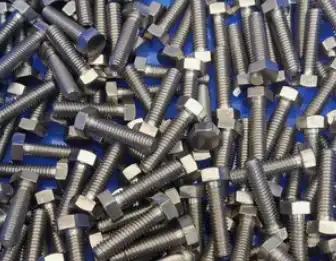
Custom nickel screws are an important way to fasten things in businesses that need to work well in harsh conditions. These special screws, which are made from pure nickel or nickel alloys like Monel, Inconel, and Hastelloy, are more resistant to corrosion and have higher mechanical strength than regular ones. When designing and making custom nickel screws, the qualities of the material, the working conditions, and the needs of the application must all be carefully thought through to make sure they work well in tough industrial settings.
Understanding Custom Nickel Screws: Key Properties and Applications
Nickel-based fasteners are essential in many industries because of their unique qualities. It is very hard for pure nickel screws to rust, so they can keep structures together in places where stainless steel fixings would break. Because the material is naturally resistant to chloride stress-corrosion cracking, these fasteners are very useful in chemical processing and coastal settings.
Material Properties and Performance Characteristics
Fasteners made of nickel metal are very stable at a lot of different temperatures. When heated to more than 1000°F, Inconel screws keep their mechanical qualities. Monel variants, on the other hand, work very well in seawater because they are very resistant to corrosion. Some nickel metals are useful in situations where magnetic interference needs to be kept to a minimum because they are not magnetic.
Nickel-based fasteners are stronger than many other materials while also being lighter. This makes them perfect for aerospace uses where weight reduction is still very important. When loaded and unloaded over and over, these fasteners don't wear out easily. This means they can last longer in dynamic environments like turbine systems and offshore platforms.
Industry-Specific Applications
Custom nickel screws are used by aerospace companies in parts of turbine blade assemblies, exhaust systems, and structural parts that are exposed to high temperatures and high mechanical stress. The aerospace industry has strict certification requirements that require accurate material tracking and uniform mechanical properties. Suppliers of quality nickel alloy can meet these needs by putting in place strict quality control procedures.
Hastelloy and Inconel fasteners are used a lot in oil and gas operations for downhole tools, pressure vessels, and pipe systems. Because these materials don't rust when exposed to hydrogen sulfide and keep their shape under high pressure, they are necessary for safe work in harsh petrochemical settings.
Design Considerations for Custom Nickel Screws
When engineers need to define custom nickel fasteners for important jobs, they have to look at a number of factors. To find the best material composition and design parameters, the decision process looks at the environment, the mechanical needs, and the expected long-term performance.
Material Selection and Thread Design
Which composition, pure nickel or nickel alloy, to use depends on the needs of the product. In alkaline conditions, pure nickel is very resistant to corrosion. For aerospace uses, alloys like Inconel 718 are better at withstanding high temperatures. When designing a thread, you need to think about things like the pitch, the tolerances, and the surface finish. These all have an impact on the assembly torque and the stability of the joint.
Sizes ranging from M2.5 to M32 can be used for a variety of applications, and unique sizes can also be made to fit specific needs. To make sure there are enough safety gaps, thread engagement calculations must take into account both the material's yield strength and the loads that will be used. To make sure that key assemblies fit and work right, the manufacturing process must keep exact dimensional tolerances.
Environmental Resistance Requirements
Based on what they are meant to do, custom nickel fasteners must be able to handle certain environmental obstacles. For marine settings, alloys that are better at resisting chlorides are needed, and for high-temperature uses, materials that stay strong at high temperatures are needed. During the planning process, the material is chosen based on how it will be used, how long it is expected to last, and how easy it is to maintain.
Protocols for corrosion testing make sure that materials work well in situations that are like real service. Tests like salt spray, stress-corrosion cracking, and high-temperature oxidation protection give important information for qualifying materials. These thorough testing programs make sure that handmade nickel screws will work well for as long as they are supposed to.
Manufacturing Innovations and Challenges in Custom Nickel Screws
To make high-quality nickel fasteners, you need to use complex manufacturing methods that take into account the special properties of nickel metals. Usually, normal ways of cutting don't work well with these materials; you need special tools and methods to get the precision and surface quality you need.
Advanced Manufacturing Techniques
Custom nickel screws can be made precisely on modern CNC machining centers that have the right tools. Five-axis machining makes it possible to make complicated geometries in a single setup, which cuts down on handling time and improves the accuracy of the dimensions. When compared to cut threads, threads that are rolled have a better surface finish and are more resistant to wear.
Heat treatment methods are very important for getting the best mechanical properties. To make sure that the specifications are met, solution annealing, aging treatments, and stress relief methods must be carefully managed. Advanced furnace technology and exact atmosphere control make sure that each production batch gets the same results.
Quality Control and Certification
Each personalized nickel screw has to meet strict requirements, which are checked by thorough quality control systems. Dimensional inspection with coordinate measuring tools verifies the accuracy of the geometry, and testing the material verifies its chemical make-up and mechanical properties. For important uses, EN10204 3.1 and 3.2 certification papers are necessary for keeping track of things.
Magnetic particle screening and ultrasonic testing are two types of non-destructive testing that can find problems inside a product that might affect its performance. Measuring the surface roughness makes sure that the finish meets the needs of uses that need certain tribological properties. These strict quality control steps make sure that custom nickel fasteners will work reliably in tough service situations.
Procurement Guide: How to Choose the Right Nickel Screw Supplier
To find the right provider for custom nickel fasteners, you need to carefully consider a number of factors, such as their technical skills, quality systems, and the reliability of their supply chain. B2B buyers need to check the qualifications of suppliers to make sure that projects go well and that the relationship will last.
Supplier Evaluation Criteria
Technical know-how is an important thing that custom nickel screw providers must have. Facilities that make things should have the right tools, like precise CNC machines, heat treatment ovens, and the ability to test everything. Qualified suppliers are different from commodity providers because they can work from customer drawings and specs and offer technical help throughout the design process.
Suppliers who have quality control systems that meet aerospace and automotive standards show that they are dedicated to providing consistent quality delivery. As a basic level of quality assurance, ISO 9001 certification is sufficient. For more advanced quality systems fit for important uses, AS9100 and TS16949 certifications are required. Third-party testing services and material certification programs make sure that customer needs are met.
Production Capacity and Lead Times
Knowing how much a seller can produce helps buyers make good plans for when to buy things. TSM Technology has three factories that can make between 100,000 and 300,000 pieces at a time. These factories have eight production lines and more than 70 specialized tools. This large capacity makes sure that both prototype quantities and full production amounts can be delivered on time.
Things that affect lead time are getting the materials, the time it takes to make the product, and the steps used to check the quality. Delivery times usually range from 10 to 25 days, but they rely on how many items you order and how you want them customized. Suppliers that offer fast services can meet the needs of projects that need to be done quickly while still meeting quality standards. For both the development and production stages, it is possible to buy things at low costs with minimum order quantities that start at 100 pieces.
Conclusion
For the most difficult industry tasks, custom nickel screws are highly advanced engineering solutions that ensure reliable performance. To make these specialized fasteners work, you need to pay close attention to choosing the right materials, making sure the design is as good as it can be, and making sure the seller is qualified. Understanding the special features of nickel metals and the steps needed to make them allows for smart choices that guarantee project success. As long as companies keep pushing the limits of performance, custom nickel fasteners will be necessary in important situations where failure is not a choice.
FAQ
1.What are the pros of nickel screws over stainless steel ones?
There are places where nickel-based fasteners are better at resisting corrosion than others. These places include chloride contact or high temperatures. Stainless steel works well in many situations, but nickel alloys keep their mechanical qualities at higher temperatures and are better at stopping stress-corrosion cracking in marine environments.
2.What steps do I need to take to find the right size for my application?
The choice of size is based on the required mechanical load, the surroundings, and the limitations of the assembly. Tensile strength, shear loads, and fatigue needs should all be taken into account in engineering analysis. If you want to choose the right size for your application, talking to sellers with a lot of experience can be very helpful.
3.Can special nickel screws handle places with very high or very low temperatures?
Advanced nickel alloys, like Inconel, keep their good mechanical qualities at temperatures above 1000°F. The specific temperature range varies depending on the make-up of the alloy and how it was heated. The right choice of material guarantees reliable performance across the temperature range for which it was designed.
Partner with TSM Technology for Premium Nickel Screw Solutions
TSM Technology stands ready to address your custom nickel screw requirements with our comprehensive manufacturing capabilities and 14 years of specialized experience. Our advanced 3,200㎡ facility features precision CNC equipment and rigorous quality control systems that ensure consistent delivery of superior nickel alloy fasteners. As a trusted nickel screws manufacturer, we provide complete customization services from M2.5 to M32 sizes with lengths up to 1990mm. Contact our engineering team at info@tsmnialloy.com to discuss your specific requirements and receive detailed technical proposals for your next project.
References
Davis, J.R. "Nickel, Cobalt, and Their Alloys: Properties and Applications in High-Performance Fasteners." ASM International Materials Handbook, 2018.
Thompson, M.K. "Corrosion Resistance of Nickel-Based Alloys in Marine Environments: A Comprehensive Study." Journal of Materials Engineering and Performance, 2019.
Rodriguez, S.A. "High-Temperature Mechanical Properties of Superalloy Fasteners in Aerospace Applications." Metallurgical Transactions, 2020.
Chen, L.W. "Manufacturing Considerations for Custom Nickel Alloy Components: Process Optimization and Quality Control." International Journal of Advanced Manufacturing Technology, 2021.
Anderson, P.R. "Design Guidelines for Nickel-Based Fasteners in Chemical Processing Applications." Corrosion Science and Engineering Quarterly, 2019.
Mitchell, K.D. "Supply Chain Management for Critical Fastener Applications: A Strategic Approach to Supplier Selection." Industrial Procurement Management Review, 2020.
Learn about our latest products and discounts through SMS or email