- English
- French
- German
- Portuguese
- Spanish
- Russian
- Japanese
- Korean
- Arabic
- Greek
- German
- Turkish
- Italian
- Danish
- Romanian
- Indonesian
- Czech
- Afrikaans
- Swedish
- Polish
- Basque
- Catalan
- Esperanto
- Hindi
- Lao
- Albanian
- Amharic
- Armenian
- Azerbaijani
- Belarusian
- Bengali
- Bosnian
- Bulgarian
- Cebuano
- Chichewa
- Corsican
- Croatian
- Dutch
- Estonian
- Filipino
- Finnish
- Frisian
- Galician
- Georgian
- Gujarati
- Haitian
- Hausa
- Hawaiian
- Hebrew
- Hmong
- Hungarian
- Icelandic
- Igbo
- Javanese
- Kannada
- Kazakh
- Khmer
- Kurdish
- Kyrgyz
- Latin
- Latvian
- Lithuanian
- Luxembou..
- Macedonian
- Malagasy
- Malay
- Malayalam
- Maltese
- Maori
- Marathi
- Mongolian
- Burmese
- Nepali
- Norwegian
- Pashto
- Persian
- Punjabi
- Serbian
- Sesotho
- Sinhala
- Slovak
- Slovenian
- Somali
- Samoan
- Scots Gaelic
- Shona
- Sindhi
- Sundanese
- Swahili
- Tajik
- Tamil
- Telugu
- Thai
- Ukrainian
- Urdu
- Uzbek
- Vietnamese
- Welsh
- Xhosa
- Yiddish
- Yoruba
- Zulu
Monel 400 Sheet vs Plate: Key Differences in Thickness, Processing and Applications
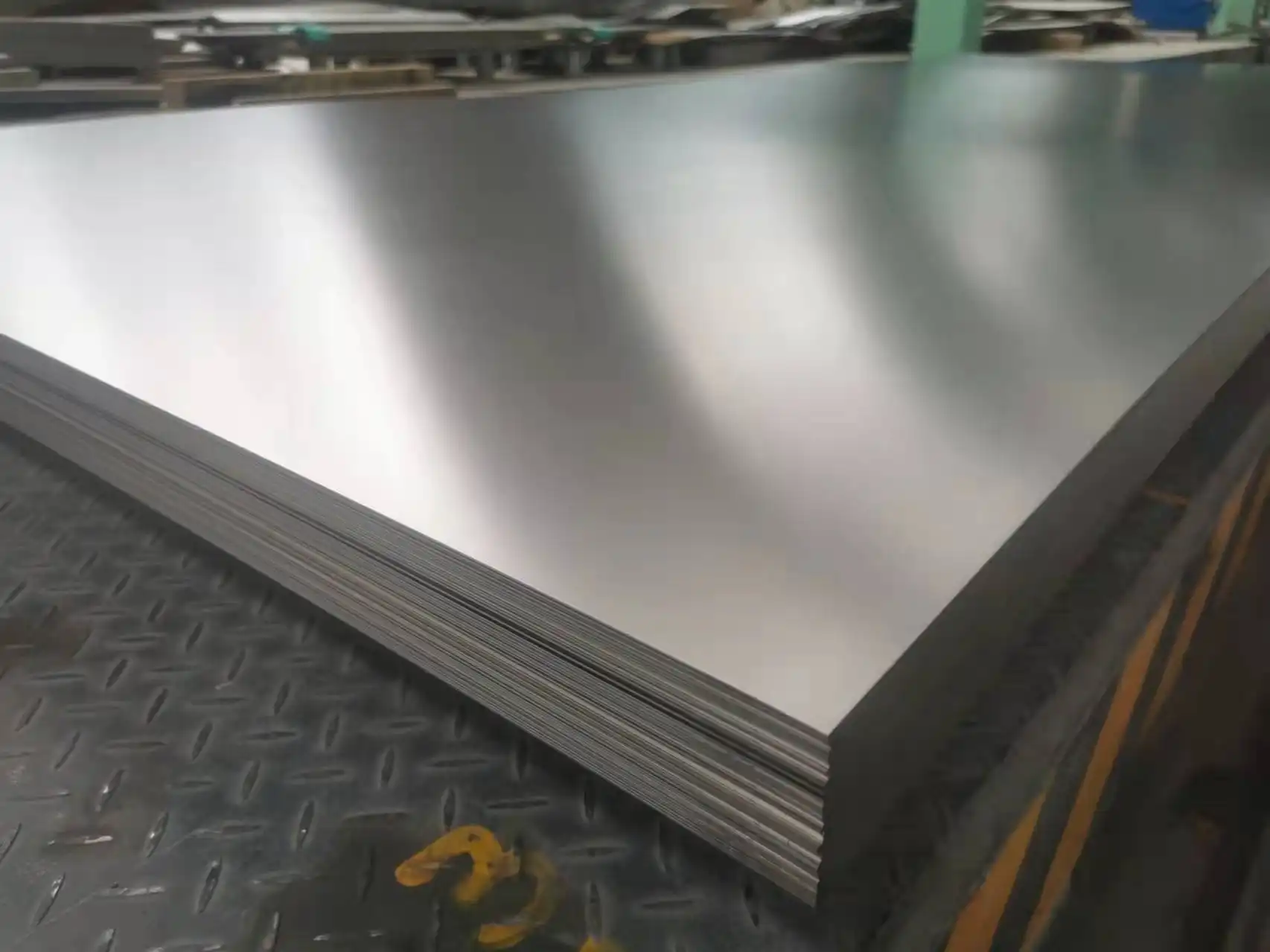
When you compare Monel 400 Sheet with Monel 400 plate, thickness seems like the obvious difference. Yet processing, bending, weight, and end use also matter. Both forms use the same nickel-copper alloy, UNS N04400. The form you order changes how easily you can fabricate a part and how much material you need.
This guide helps you compare sheet and plate for marine, chemical, and industrial projects. You will also learn what to confirm before requesting a quotation.
What Are Monel 400 Sheet and Plate?
Monel 400 is a solid-solution nickel-copper alloy. It contains at least 63% nickel, with copper typically ranging from 28% to 34%. Its resistance to seawater and many chemical environments makes it useful for demanding equipment.
Sheet and plate are flat-rolled product forms. Neither name represents a different alloy grade. Both may follow ASTM B127, which covers nickel-copper alloy plate, sheet, and strip.
If you need a general overview of the alloy, read our Monel 400 sheet properties and applications guide. The comparison below focuses on purchasing and fabrication decisions.
Monel 400 Sheet vs Plate: Key Differences at a Glance
| Comparison | Monel 400 Sheet | Monel 400 Plate |
|---|---|---|
| Thickness | Generally thinner flat-rolled material | Generally thicker flat-rolled material |
| Typical processing | Often cold rolled for thinner, controlled gauges | Often hot rolled for heavier sections |
| Bending and forming | Usually easier to form at the same alloy condition | Requires greater forming force as thickness increases |
| Weight | Lower weight per unit area at smaller gauges | Greater weight per unit area at larger gauges |
| Common parts | Linings, covers, formed housings, thin components | Heavy supports, thick equipment parts, machined blanks |
| Ordering focus | Gauge, finish, surface condition, flatness | Thickness, flatness, edge condition, machining allowance |
How Thick Is Monel 400 Sheet Compared With Plate?
In metal distribution, some suppliers use 3/16 inch (about 4.76 mm) as a practical dividing line. Material below that point may be called sheet, while thicker stock may be called plate.
That convention is not a universal definition for every specification or seller. Always check the wording in your purchase order and the latest applicable standard.
Understand TSM Technology’s Published Size Information
Our Monel 400 Sheet lists a broad 0.1–100 mm thickness range across offered flat forms. It also separately describes cold-rolled sheet up to 5 mm thick.
The broad range should not imply that we supply every size as cold-rolled sheet. If your design needs a thick section, check our Monel 400 Plate page and request confirmation for your exact dimensions.
Why Thickness Matters Beyond Product Names
Thickness changes more than a product label. It directly affects part weight, forming force, machining time, and potential material waste.
A thin corrosion-resistant liner has different needs from a thick pump mounting plate. You should select a thickness that meets the mechanical design, not simply the lowest available price.
How Do Rolling and Processing Methods Differ?
Both sheet and plate begin with suitable nickel-copper alloy stock. Producers then use controlled rolling and finishing steps to reach the ordered dimensions and material condition.
Cold-Rolled Monel 400 Sheet
Cold rolling reduces thickness without reheating the material to a hot-working temperature. It can provide controlled gauges and a more consistent finish.
Cold work can also raise strength and hardness while reducing ductility. If you plan substantial forming, confirm whether your order needs an annealed condition.
To understand the broader production route, see our Monel sheet manufacturing process article.
Hot-Rolled Monel 400 Plate
Hot rolling is commonly used for heavier flat sections. It allows large thickness reductions while the alloy is at an elevated working temperature.
A hot-rolled surface may require additional cleaning or finishing. Your drawing may also call for machining allowance on thicker pieces.
Do not assume all plate is hot rolled or all sheet is cold rolled. Ask the supplier to identify the actual manufacturing route and delivery condition.
Annealing, Surface Finish, and Flatness
Annealing can help restore ductility after cold work. Surface finishing may involve cleaning, grinding, or polishing, depending on the project.
Thin sheet can be sensitive to distortion during handling and fabrication. Thick plate may need closer checks for flatness and usable machining stock.
Specify the surface and dimensional requirements rather than relying on informal labels such as “premium finish.”
Which Form Is Easier to Cut, Bend, Weld, and Machine?
Monel 400 is workable, but its fabrication behavior differs from ordinary carbon steel. The best process depends on thickness, condition, tooling, and the final part.
Cutting and Machining
You can cut sheet into blanks for covers or formed parts. Thick plate may need heavier cutting equipment and more machining to reach its final shape.
Monel 400 can work harden during machining. Use suitable tooling, consistent feeds, and a process plan that avoids unnecessary rubbing.
Bending and Forming
Thinner, suitably annealed sheet generally needs less forming force than thick plate. It is often more practical for bent covers, liners, and shaped components.
Bending becomes harder as thickness grows. Tool radius, rolling direction, material condition, and springback all deserve review.
Welding and Assembly
You can weld Alloy 400 using appropriate qualified procedures and compatible filler materials. Joint preparation and heat input differ between thin and thick sections.
Thin sheet may need careful distortion control. Heavy plate joints may require more preparation, multiple weld passes, and suitable inspection planning.
Where Is Monel 400 Sheet Used?
Sheet works well when you need a relatively thin barrier or a part that must take a formed shape. Its corrosion resistance makes it attractive in several industries.
- Marine equipment: protective covers, formed panels, and selected seawater-system parts.
- Chemical processing: corrosion-resistant liners, enclosures, and fabricated equipment sections.
- Industrial equipment: guards, housings, and formed components exposed to demanding conditions.
- Heat-transfer equipment: selected formed or fabricated parts when the design and service conditions permit.
These are application examples, not universal approvals. Design pressure, loading, chemical concentration, and fabrication requirements still control selection.
For environmental limitations, review our guide to Monel 400 Corrosion Resistance In Seawater And Chemical Environments.
Where Is Monel 400 Plate Used?
Plate is often more suitable when the finished part needs greater section thickness or substantial machining stock. Engineers may choose it for robust industrial components.
- Pump and valve hardware: thick machined blanks and equipment components.
- Marine machinery: mounting parts, heavy supports, and selected seawater-service hardware.
- Chemical plants: equipment parts where corrosion resistance and section thickness both matter.
- Fabricated assemblies: thicker parts that require welding, drilling, or extensive machining.
Plate does not automatically provide the correct strength for every load. Check the required mechanical properties, product condition, and design code.
How to Choose the Right Form for Your Project
Start with your drawing and service requirements. Then compare the full cost of acquiring and fabricating each form.
| Project requirement | Likely starting point | What to verify |
|---|---|---|
| Thin formed cover or liner | Sheet | Gauge, bend radius, finish, flatness |
| Thick machined block or support | Plate | Stock thickness, machining allowance, condition |
| Welded equipment panel | Depends on design | Joint design, distortion, welding procedure |
| Corrosive seawater service | Either form | Water chemistry, flow, crevices, operating temperature |
| Tight dimensional tolerance | Either form | Actual mill tolerance and finishing options |
Check ASTM B127 and Material Documentation
ASTM B127 covers rolled nickel-copper alloy plate, sheet, and strip. You should identify UNS N04400 and the required standard edition on your order.
Ask for a material test certificate showing relevant chemistry and mechanical test results. Confirm the applicable tests, tolerances, and delivery condition.
If you have an aerospace or another regulated application, check whether additional specifications and approvals apply. ASTM B127 alone may not cover every requirement.
Provide a Complete RFQ
You can help your supplier quote more accurately by sending a clear request:
- Alloy grade: Monel 400 / UNS N04400.
- Product form: sheet or plate.
- Thickness, width, length, and quantity.
- Delivery condition, surface finish, and tolerances.
- Applicable standard and certificate requirements.
- Any cutting, machining, or fabrication needs.
- Destination and requested delivery schedule.
Can TSM Technology Supply Both Monel 400 Sheet and Plate?
TSM Technology supplies nickel alloys and special metals to industrial buyers. Our product listings include Monel 400 sheet and plate, with customized dimensions and processing requests subject to confirmation.
The sheet listing mentions cold rolling, hot rolling, annealing, and several surface finish options. It also provides published ranges that need confirmation for individual orders.
We recommend sending your actual drawing or dimensional list. Our team can review available product forms, finishing requests, documentation, and quotation details.
Frequently Asked Questions
Are Monel 400 sheet and plate made from different alloys?
No. Both use Alloy 400, UNS N04400. Product form, processing condition, thickness, and finish may differ.
Is 5 mm Monel 400 always sheet or always plate?
No. Some suppliers use a practical thickness boundary near 4.76 mm, but product naming varies. Confirm the specified form and standard.
Does plate resist corrosion better than sheet?
Not simply because it is thicker. Corrosion performance mainly depends on alloy chemistry, environment, surface condition, and equipment design.
Which form is better for bending?
Thin, suitably annealed sheet is usually the more practical starting point. Confirm the required bend radius and fabrication method.
What should I include in a Monel 400 quotation request?
Specify UNS N04400, product form, dimensions, condition, standard, quantity, and certificates. Add drawings when tolerances or processing matter.
Need Monel 400 Sheet or Plate for Your Project?
Send your drawing, size, quantity, and material standard for a tailored quotation.
Compare our Monel 400 Sheet and Monel 400 Plate listings, then send your specifications to info@tsmnialloy.com. We can review your requested dimensions and supply requirements.
References
- ASTM International. ASTM B127-25, Standard Specification for Nickel-Copper Alloy Plate, Sheet, and Strip.
- Special Metals Corporation. MONEL Alloy 400. Technical Bulletin.
- Special Metals Corporation. Nickel Alloy Handbook.
- ASM International. ASM Handbook, Volume 14A: Metalworking—Bulk Forming.
- ASM International. ASM Handbook, Volume 14B: Metalworking—Sheet Forming.
- Davis, J. R., ed. Nickel, Cobalt, and Their Alloys. ASM International, 2000.
Learn about our latest products and discounts through SMS or email