- English
- French
- German
- Portuguese
- Spanish
- Russian
- Japanese
- Korean
- Arabic
- Greek
- German
- Turkish
- Italian
- Danish
- Romanian
- Indonesian
- Czech
- Afrikaans
- Swedish
- Polish
- Basque
- Catalan
- Esperanto
- Hindi
- Lao
- Albanian
- Amharic
- Armenian
- Azerbaijani
- Belarusian
- Bengali
- Bosnian
- Bulgarian
- Cebuano
- Chichewa
- Corsican
- Croatian
- Dutch
- Estonian
- Filipino
- Finnish
- Frisian
- Galician
- Georgian
- Gujarati
- Haitian
- Hausa
- Hawaiian
- Hebrew
- Hmong
- Hungarian
- Icelandic
- Igbo
- Javanese
- Kannada
- Kazakh
- Khmer
- Kurdish
- Kyrgyz
- Latin
- Latvian
- Lithuanian
- Luxembou..
- Macedonian
- Malagasy
- Malay
- Malayalam
- Maltese
- Maori
- Marathi
- Mongolian
- Burmese
- Nepali
- Norwegian
- Pashto
- Persian
- Punjabi
- Serbian
- Sesotho
- Sinhala
- Slovak
- Slovenian
- Somali
- Samoan
- Scots Gaelic
- Shona
- Sindhi
- Sundanese
- Swahili
- Tajik
- Tamil
- Telugu
- Thai
- Ukrainian
- Urdu
- Uzbek
- Vietnamese
- Welsh
- Xhosa
- Yiddish
- Yoruba
- Zulu
Monel 400 Seamless Pipe Availability in Standard and Custom Wall Thicknesses
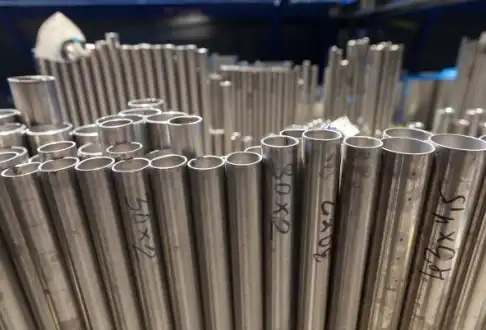
There are both standard and special wall thickness choices for Monel 400 seamless pipes, so they can be used in a wide range of industries, such as aircraft, marine, and chemical processing. With its high resistance to corrosion and high mechanical strength, this nickel-copper alloy pipe gives sourcing teams a wide range of options, from 0.5 mm wall thicknesses in standard forms to fully personalized ones. The manufacturing possibilities of Monel 400 seamless pipe allow for precise control of dimensions, which ensures optimal performance in harsh settings where structural integrity cannot be sacrificed.
Understanding Monel 400 Seamless Pipes
Chemical Composition and Manufacturing Excellence
Monel 400 is a high-quality nickel-copper combination that is made up of about 67% nickel and 23% copper, with iron, manganese, and other elements added in a controlled way. This special mix of chemicals makes them very resistant to rust, especially in saltwater, where other materials fail. The seamless production process gets rid of the need for welded joins. This makes the pipe wall's grain structure regular, which makes it better at handling pressure.
Advanced drawing methods are used in TSM Technology's factories to make seamless pipes with outside sizes from 6.0 mm to 324 mm. Through 5-axis CNC machining, our production method guarantees dimensional accuracy of ±0.05 mm, meeting the strict needs of aircraft and nuclear uses. When compared to welded options, the seamless building method is more reliable. This makes it perfect for use in critical situations on offshore bases and in chemical processing plants.
Mechanical Properties and Performance Standards
When it comes to mechanical properties, Monel 400 seamless pipe is very consistent across a wide range of temperatures. These pipes can handle very high practical loads because their minimum tensile strength is 517 MPa and their minimum yield strength is 172 MPa when they are annealed. The material is very flexible and can stretch no more than 35%, which lets for complicated setups without affecting the strength of the structure.
The temperature range for operation goes from cryogenics to 480°C constant, and up to 800°C for short periods of time. Due to its wide working range, Monel 400 can be used in many different situations, ranging from high-temperature chemical reactors to systems for liquid natural gas. The alloy's thermal conductivity makes it good for heat exchangers because it transfers heat efficiently while still being resistant to rust.
Availability of Standard vs Custom Wall Thicknesses
Standard Wall Thickness Configurations
The normal wall thickness choices for Monel 400 seamless tubes are based on the requirements set out in ASTM B165, ASME SB165, and EN 10095. These sizes range from 0.5 mm for high-precision equipment to 30 mm for heavy-duty industry systems. Standard sizes make it easy to get what you need right away from stock and save you money on answers for common problems.
Shorter lead times and reasonable prices are possible because standard designs are easy to make. At all three of our manufacturing sites, TSM Technology keeps a collection of popular standard sizes that can be quickly sent to projects that need to be done right away. Standard standards also make the certification process easier because these setups go through regular qualification tests and keep performance records up to date.
Custom Wall Thickness Advantages
Custom wall thickness solutions are used when normal choices don't meet the specific engineering needs. When you custom-size the wall measurements of a Monel 400 seamless tube, you can get the best pressure ratings, weight savings, and rust protection for your application. Offshore energy systems, nuclear cooling circuits, and specialized chemical processing equipment all benefit from custom designs.
As part of the customization process, a thorough technical study is carried out to find the best wall thickness based on the conditions of use, safety concerns, and government rules. Our engineering team works with clients to look at things like stress estimates, corrosion rates, and the effects of temperature expansion. Custom production can go up to lengths of 12000 mm, which means that big installations can be done without any gaps.
Modern production methods allow for exact control over unique measurements while keeping the integrity of the seamless construction. Ultrasonic testing, x-ray examination, and dimensional proof are all part of quality control methods that make sure the work meets the needs of the project. Most of the time, custom orders have longer lead times, but they work best for certain uses.
Comparing Monel 400 Seamless Pipes to Other Alloy Pipes
Performance Comparison with Alternative Alloys
When choosing a material, it's common to need to do a full comparison between Monel 400 and other nickel-based metals. When compared to Inconel 625, Monel 400 has more copper, which makes it more resistant to reducing acids and seawater. While Inconel can handle higher temperatures, Monel 400 is better at being machinized and welded, which are both important for making complex parts.
While Hastelloy C-276 works better in chemical conditions that are very corrosive, it is not as strong as Monel 400 when used in structural uses. Copper in Monel 400 seamless pipe makes it more galvanic compatible in marine settings. This lowers the risk of electrolytic corrosion when mixed with other metals that are common in offshore systems.
Even though stainless steel options are cheaper, they can't work as well as Monel 400 in places where chloride is present. Stress corrosion cracking resistance in seawater applications strongly benefits Monel 400, especially in high-stress systems like marine heat exchangers and connections for pipelines under the sea.
Seamless vs. Welded Construction Benefits
With seamless construction, there are no heat-affected zones like there are in soldered pipes. This means that the pipe wall has the same mechanical properties all the way through. In situations where the product needs to work reliably under changing loads or high or low temperatures, this stability is very important. Welded seams are often weak spots where rust can start or where the metal can break under stress.
When it comes to manufacturing standards, seamless methods are better than welded building. Since there are no horizontal joints, the pressure values are higher and the resistance to fatigue is better. These benefits are especially important in nuclear uses where the dependability of parts has a direct effect on safety margins and operating availability.
Procurement Insights: How to Source Monel 400 Seamless Pipes Efficiently?
Supplier Evaluation Criteria
For procurement strategies to work, suppliers need to be carefully evaluated based on their production skills, quality systems, and transport trustworthiness. The AS9100D certification from TSM Technology shows that their quality control systems are up to aircraft standards and can be used in any industry. Our three sites run eight production lines with more than 100 machines each. This gives us the support and capacity flexibility that big projects need.
Certification compliance is a very important part of the evaluation process, especially for nuclear, aircraft, and medicine uses. Suppliers need to show that they can provide full paperwork packages that include Material Test Certificates (MTC), SGS test results, and EN10204 3.1/3.2 certifications. Applications that use Monel 400 seamless pipe often need to be able to track back to the sources of the raw materials, which means that providers need to have thorough quality recording systems.
When you look at production ability, you should also look at how well you can handle emergencies for important uses. TSM Technology keeps backup stock on hand 24 hours a day, seven days a week. This means that vital parts can be replaced within 48 hours. This ability to respond quickly is very important for remote sites and nuclear plants, where the costs of downtime rise very quickly.
Cost Optimization Strategies
Understanding what causes costs makes it easier to negotiate purchases and plan budgets. The main cost factor is the cost of raw materials, which is affected by changes in the nickel and copper markets. Long-term supply deals can keep prices stable and help providers make the best use of their production schedules and inventory management.
Due to the setup and processing needed for seamless manufacturing, minimum order numbers have a big effect on unit prices. You can get big savings and keep your inventory efficient by combining needs from different projects or working with other procurement teams. Custom standards usually need higher minimum numbers because they need special tools and setup.
Planning for lead times has an effect on both costs and schedules for projects. Standard configurations have faster lead times and cheaper prices, but unique designs need more time to be made. Getting involved with providers early on in the planning stages of a project helps keep costs low and delivery on time.
Applications and Benefits of Monel 400 Seamless Pipes in B2B Industries
Marine and Offshore Engineering Solutions
Marine settings have their own problems that need materials that can handle being exposed to salt water all the time, changing pressures, and mechanical loads. As shown by ASTM G48 testing methods, Monel 400 seamless tube performs very well in these tough conditions, with corrosion rates below 0.025 mm/year in seawater settings.
Offshore platform uses benefit from Monel 400's resistance to stress corrosion cracks caused by chloride, which is a common way for other materials to fail in marine settings. The material can be used with cathodic protection systems, which lets it be part of larger methods for managing rust. TSM Technology's CathoShield line has galvanic separation flanges that add extra safety while keeping the structure's integrity.
Monel 400 is used in shipbuilding for its strength and resistance to rust. It is used in important systems like ballast systems, marine exhaust components, and seawater cooling circuits. The seamless construction gets rid of places where rust could start and keeps the performance steady throughout the vessel's service life.
Chemical and Petrochemical Processing
Chemical working settings need materials that can handle a wide range of corrosive media while still staying structurally sound when temperature and pressure change. At working temperatures of 50°C, Monel 400 is very resistant to sulfuric acid concentrations of up to 85%. This makes it a good choice for acid recovery systems and chemical reactors.
The material works better than most other alloys in hydrofluoric acid settings, which lets it be used in fluorine chemistry and the production of semiconductors. TSM Technology's OrbiWeld Ready tube preparation improves orbital welding compatibility, which makes installation easier in pharmaceutical processing skids that need to meet high standards for purity.
Monel 400 is resistant to sour gas conditions that contain hydrogen sulfide, which is useful for petrochemical plant uses. Expert metallurgy advice on the right welding settings makes sure that the joint qualities are just right and that the corrosion resistance stays high in the heat-affected areas.
Nuclear and Power Generation Applications
For nuclear power uses, materials must meet strict legal standards and work reliably over a long period of time. Low-cobalt versions of Monel 400 with less than 150ppm cobalt meet the standards of IAEA NS-G-2.14 for nuclear coolant systems. It can be used in safety-critical nuclear applications because it fully meets the requirements of RCC-M Appendix ZG and 10CFR50 Appendix B.
The thermal conductivity and corrosion resistance of Monel 400 make it a good material for power production equipment like steam generators and heat exchanges. The material's ability to handle thermal cycles makes sure that the plant will work reliably for a long time with little upkeep needed.
Conclusion
The fact that Monel 400 seamless pipe comes in both standard and special wall thicknesses gives procurement workers a lot of options for tough industrial uses. This nickel-copper alloy is perfect for sea, chemical, and nuclear settings because it is very resistant to corrosion, very strong, and very easy to make. TSM Technology has a wide range of industrial skills, quality certifications, and global compliance paperwork that helps with efficient purchasing and ensures long-lasting performance. Knowing the benefits of seamless building, being able to make custom specifications, and using the right source evaluation criteria can help you make the best material selection choices that balance cost with performance needs.
FAQ
1.What is the maximum operating temperature for Monel 400 seamless pipes?
Monel 400 seamless pipes can work constantly at temperatures of up to 480°C (896°F), and they can be exposed to temperatures of up to 800°C (1472°F) for short periods of time. With these temperature limits, the material can still be used in most industrial settings while still having good mechanical qualities and resistance to rust.
2.Can Monel 400 pipes be customized to non-standard dimensions?
Yes, unique manufacturing is possible for wall thicknesses between 0.5 and 30 mm, outside diameters between 6.0 and 324 mm, and lengths up to 12,000 mm. Custom specs need a lot of technical research and usually mean longer lead times, but they give the best performance for particular uses.
3.How does the ability of Monel 400 to prevent rust in salt water compare to that of stainless steel?
Monel 400 does much better than stainless steel in saltwater, where it has rust rates below 0.025 mm/year compared to much higher rates for stainless steel grades. The combination of nickel and copper makes it more resistant to stress corrosion cracks caused by chloride.
Partner with TSM Technology for Your Monel 400 Seamless Pipe Requirements
TSM Technology stands ready to support your procurement needs with comprehensive Monel 400 seamless pipe solutions available in both standard and custom wall thicknesses. Our 14 years of specialized manufacturing experience, combined with AS9100D certification and global compliance capabilities, ensures reliable delivery of high-quality materials for your most difficult uses. Contact our technical experts at info@tsmnialloy.com to discuss your specific requirements and receive competitive quotations. As a trusted Monel 400 seamless pipe manufacturer, we provide free samples, complete documentation packages, and rapid prototyping services to support your project success.
References
Davis, J.R. "ASM Specialty Handbook: Nickel, Cobalt, and Their Alloys." ASM International Materials Park, 2000.
Friend, W.Z. "Corrosion of Nickel and Nickel-Base Alloys." John Wiley & Sons Chemical Engineering Series, 1980.
Rebak, R.B. "Nickel Alloys for Corrosive Environments." Advanced Materials & Processes Technology Information Analysis Center, 2000.
Sedriks, A.J. "Corrosion of Stainless Steel and Nickel Alloys." ASM International Handbook Committee, 1996.
Smith, G.D. "Nickel-Copper Alloys for Seawater Service." Materials Performance in Marine Environments, NACE International, 1994.
Tuthill, A.H. "Guidelines for the Use of Copper Alloys in Seawater." Materials Performance Standards Committee, Copper Development Association, 1987.
Learn about our latest products and discounts through SMS or email