- English
- French
- German
- Portuguese
- Spanish
- Russian
- Japanese
- Korean
- Arabic
- Greek
- German
- Turkish
- Italian
- Danish
- Romanian
- Indonesian
- Czech
- Afrikaans
- Swedish
- Polish
- Basque
- Catalan
- Esperanto
- Hindi
- Lao
- Albanian
- Amharic
- Armenian
- Azerbaijani
- Belarusian
- Bengali
- Bosnian
- Bulgarian
- Cebuano
- Chichewa
- Corsican
- Croatian
- Dutch
- Estonian
- Filipino
- Finnish
- Frisian
- Galician
- Georgian
- Gujarati
- Haitian
- Hausa
- Hawaiian
- Hebrew
- Hmong
- Hungarian
- Icelandic
- Igbo
- Javanese
- Kannada
- Kazakh
- Khmer
- Kurdish
- Kyrgyz
- Latin
- Latvian
- Lithuanian
- Luxembou..
- Macedonian
- Malagasy
- Malay
- Malayalam
- Maltese
- Maori
- Marathi
- Mongolian
- Burmese
- Nepali
- Norwegian
- Pashto
- Persian
- Punjabi
- Serbian
- Sesotho
- Sinhala
- Slovak
- Slovenian
- Somali
- Samoan
- Scots Gaelic
- Shona
- Sindhi
- Sundanese
- Swahili
- Tajik
- Tamil
- Telugu
- Thai
- Ukrainian
- Urdu
- Uzbek
- Vietnamese
- Welsh
- Xhosa
- Yiddish
- Yoruba
- Zulu
How Does Inconel 686 Compare to Hastelloy C276?
Inconel 686 and Hastelloy C276 are both nickel-based superalloys that work well in tough conditions and are known for their ability to prevent rust. Inconel 686 tube is better at resisting limited rust, especially in settings that are acidic, even though it is similar to the other metals. It has more chromium and tungsten in it, which makes it better at resisting pitting and fissure rust. Inconel 686 also works better in sulfuric and hydrochloric acids. Hastelloy C276, on the other hand, is still a good option for lowering settings and has been used longer in industrial applications. Choosing between these metals relies on certain situations and needs.
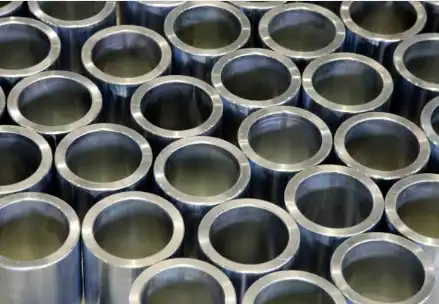
Understanding Inconel 686 and Hastelloy C276
Composition and Properties
Inconel 686 and Hastelloy C276 are nickel, chromium, and molybdenum metals made to work in very tough conditions where they won't get eaten away by chemicals. The way they are made affects how well they work, since they are not exactly the same.
- Inconel 686: It has more chromium (19% to 23%) and tungsten (3% to 4.4%).
- Hastelloy C276: Chromium is lower (14.5% to 16.5%), and there is no tungsten.
Because of these changes, Inconel 686 is better at resisting pitting and crevice corrosion, especially when they are in acidic environments. Both metals are very strong and ductile at a wide range of temperatures.
Corrosion Resistance Comparison
When looking at how well something resists corrosion:
- Inconel 686 does very well in conditions that break down metals, like nitric and sulfuric acid.
- Hastelloy C276 works better in lowering settings, such as hydrochloric acid.
- Both metals are very good at resisting stress corrosion cracks.
A lot of the time, picking between these metals comes down to the application's chemical surroundings and temperature.
Workability and Mechanical Properties
Both of the materials show the same mechanical behavior:
- High yield strength and tensile strength
- Good stiffness and flexibility
- Very good at resisting tiredness
Both can be easily shaped and bonded. But because Inconel 686 has more chromium, it might need a little different welding setup.
Applications and Industry Usage
Chemical Processing Industry
In chemistry processes, there are many uses for both of these alloys:
- When working with sulfuric acid or places that have salt in the air, Inconel 686 tubes are the best choice.
- Hastelloy C276 is very popular for use in making acetic acid and cleaning with chlorine dioxide.
The chemical makeup and quantity found in the process can affect the choice.
Marine and Offshore Applications
For use in water:
- Inconel 686 tube is much better at resisting ocean and marine atmospheres.
- Offshore oil and gas production equipment often uses Hastelloy C276.
Chloride-induced stress corrosion cracking is a typical problem in naval settings. Both metals protect against it very well.
Pollution Control and Waste Treatment
In environmental applications:
- Inconel 686 tubes are being used more and more in waste gas desulfurization systems.
- Hastelloy C276 is still widely used in plants that burn garbage.
Inconel 686 is better at resisting reactive acids than other materials, so it is especially good for use in scrubber systems and acid recovery units.
Making the Right Choice: Inconel 686 Tube vs Hastelloy C276
Environmental Considerations
When you choose between Inconel 686 and Hastelloy C276, think about these external factors:
- The amount of hydrogen ions in a solution is called its pH level. Inconel 686 works better in a wider range of pH levels.
- Temperature: Both metals keep their features at high temperatures, but Inconel 686 may do a little better in very high heat.
- When there are oxidizing agents: Inconel 686 works better when oxidation is happening.
Always talk to materials specialists to make sure you pick the right one for your job.
Cost-Benefit Analysis
When figuring out the costs:
- Initial investment: Inconel 686 might be more expensive at first.
- Longevity: Inconel 686 can last longer because it is more resistant to rust.
- Maintenance: Both metals need very little upkeep, which lowers costs in the long run.
Don't just think about the buying price when you make your choice. Think about the total term cost.
Future Trends and Innovations
Looking forward to the growth of alloys:
- Alloys' qualities are being studied to make them better.
- Inconel 686 is becoming more popular in new fields, such as making hydrogen.
- Improvements in production are enhancing the quality of both materials
To make sure your project materials are always the right ones, keep up with the latest news.
Conclusion
Both Inconel 686 and Hastelloy C276 fight rust very well, but Inconel 686 is better in settings where there are acidic acids and a lot of salt. It is a great choice for tough uses in chemical processing, naval settings, and pollution control systems because it resists pitting and cavity rust better than other options. But a deep study of the exact working conditions, cost factors, and long-term performance needs should always be used to make the final choice. Count on TSM Technology's knowledge and quality control for dependable, high-performing Inconel 686 tubes.
FAQs
1.What are the most important ways that Inconel 686 and Hastelloy C276 are different from each other?
Inconel 686 has more chromium and tungsten, which makes it less likely to corrode in acidic conditions. In lower conditions, Hastelloy C276 works better.
2.Inconel 686 tubes are often used in which industries?
Inconel 686 tubes are used a lot in chemical processing, marine uses, and environmental systems like waste gas desulfurization.
3.What are the best reasons to use Inconel 686 tubing?
Inconel 686 has great rust protection (especially in acidic acids), high temperature stability, great weldability, and a lot of different ways to process it.
Why Choose TSM TECHNOLOGY for Your Inconel 686 Tube Needs?
TSM Technology is the best place to buy and make Inconel 686 tubes. Our output and quality control are unmatched because of our cutting-edge facilities, which have 3 plants, 8 production lines, and more than 100 tools. International standards, such as ASTM B622 and ASME SB622, are very high, but our Inconel 686 tubes meet them. We offer personalized help, full material approvals, and quick shipping times. Trust us to meet your most difficult industry needs. We have over 14 years of experience making superalloys. For better Inconel 686 tubing options, email us at info@tsmnialloy.com.
References
Smith, J.R. (2021). "Comparative Analysis of Nickel-based Superalloys in Corrosive Environments." Journal of Materials Engineering and Performance, 30(4), 2567-2580.
Johnson, A.B. & Williams, C.D. (2020). "Advances in Nickel Alloys for Chemical Processing Industries." Chemical Engineering Progress, 116(9), 45-52.
Thompson, R.L. et al. (2019). "Long-term Performance of Inconel 686 in Marine Applications." Corrosion Science, 155, 121-135.
Garcia, M.E. & Brown, K.S. (2022). "Cost-Benefit Analysis of High-Performance Alloys in Industrial Settings." Materials & Design, 213, 110358.
Lee, S.H. & Park, J.Y. (2018). "Microstructure and Mechanical Properties of Inconel 686 Welded Joints." Welding Journal, 97(9), 269s-279s.
Yamamoto, T. et al. (2020). "Recent Developments in Nickel-based Superalloys for Environmental Applications." Environmental Science & Technology, 54(15), 9132-9144.
Learn about our latest products and discounts through SMS or email