- English
- French
- German
- Portuguese
- Spanish
- Russian
- Japanese
- Korean
- Arabic
- Greek
- German
- Turkish
- Italian
- Danish
- Romanian
- Indonesian
- Czech
- Afrikaans
- Swedish
- Polish
- Basque
- Catalan
- Esperanto
- Hindi
- Lao
- Albanian
- Amharic
- Armenian
- Azerbaijani
- Belarusian
- Bengali
- Bosnian
- Bulgarian
- Cebuano
- Chichewa
- Corsican
- Croatian
- Dutch
- Estonian
- Filipino
- Finnish
- Frisian
- Galician
- Georgian
- Gujarati
- Haitian
- Hausa
- Hawaiian
- Hebrew
- Hmong
- Hungarian
- Icelandic
- Igbo
- Javanese
- Kannada
- Kazakh
- Khmer
- Kurdish
- Kyrgyz
- Latin
- Latvian
- Lithuanian
- Luxembou..
- Macedonian
- Malagasy
- Malay
- Malayalam
- Maltese
- Maori
- Marathi
- Mongolian
- Burmese
- Nepali
- Norwegian
- Pashto
- Persian
- Punjabi
- Serbian
- Sesotho
- Sinhala
- Slovak
- Slovenian
- Somali
- Samoan
- Scots Gaelic
- Shona
- Sindhi
- Sundanese
- Swahili
- Tajik
- Tamil
- Telugu
- Thai
- Ukrainian
- Urdu
- Uzbek
- Vietnamese
- Welsh
- Xhosa
- Yiddish
- Yoruba
- Zulu
ASTM B127 Monel 400 Sheet Specifications Explained
When selecting materials for marine, chemical, and industrial applications, engineers need clear specifications before making a purchasing decision. Monel 400 Sheet is a popular nickel-copper alloy material known for its excellent corrosion resistance and reliable performance in demanding environments.
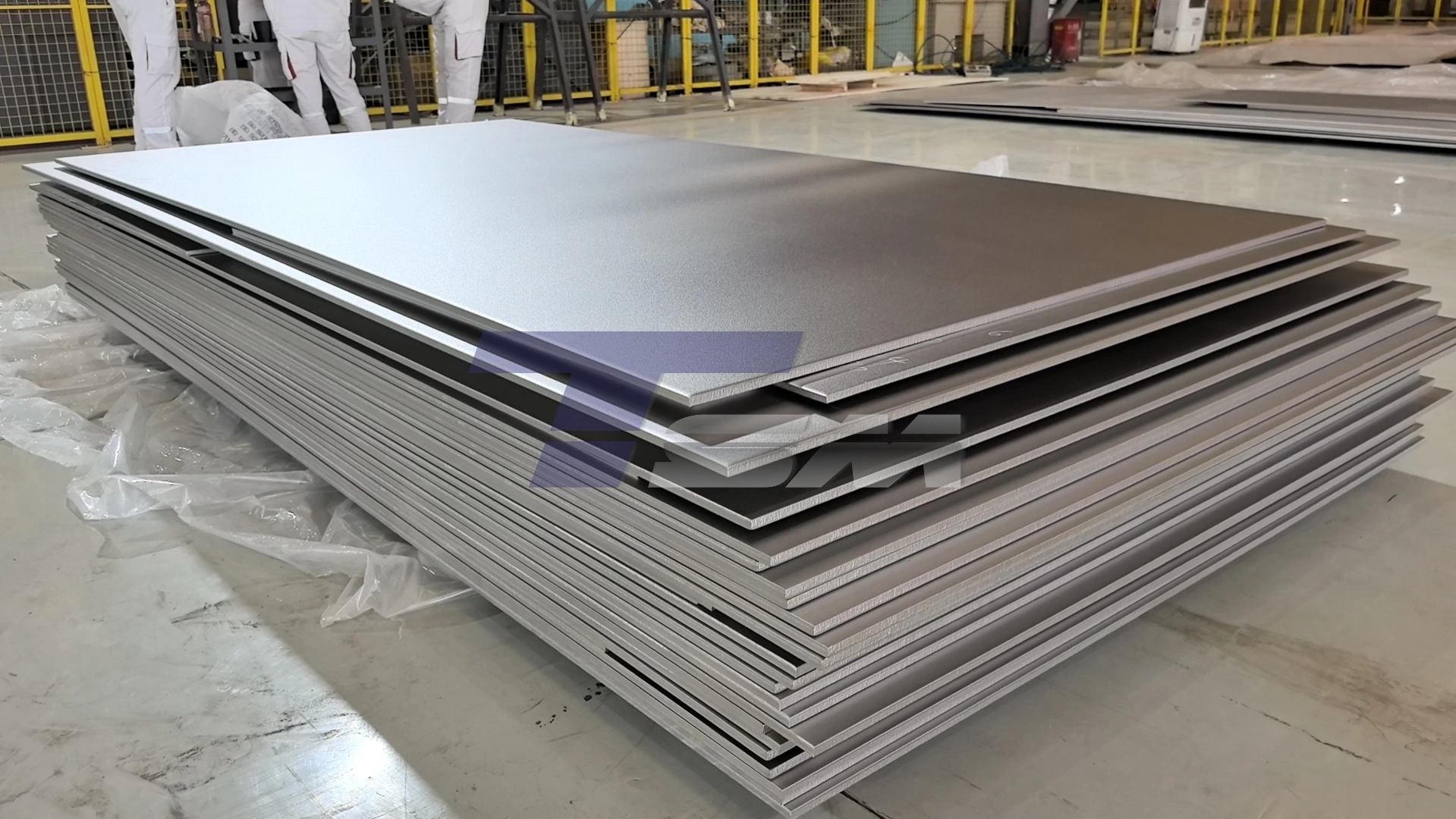
For many industrial projects, ASTM standards provide important guidance for material quality, chemical composition, mechanical properties, and testing requirements. ASTM B127 Monel 400 Sheet is one of the key specifications used for nickel-copper alloy plate, sheet, and strip products.
Understanding ASTM B127 specifications helps engineers, buyers, and distributors choose the right material for their applications. In this guide, I will explain the main requirements of ASTM B127 Monel 400 Sheet, including material characteristics, production considerations, testing requirements, and supplier selection.
What Is ASTM B127 Monel 400 Sheet?
ASTM B127 is a standard specification developed for nickel-copper alloy plate, sheet, and strip materials. It covers products made from Monel 400 (UNS N04400).
Monel 400 is a nickel-copper alloy that contains a high percentage of nickel and copper. This combination provides excellent resistance to seawater, salt solutions, and many chemical environments.
A Monel 400 Sheet manufactured according to ASTM B127 requirements is commonly selected for applications that require:
· High corrosion resistance
· Good mechanical strength
· Long service life
· Stable performance in harsh environments
Typical industries using ASTM B127 Monel 400 Sheet include:
· Marine engineering
· Chemical processing
· Oil and gas
· Heat exchanger manufacturing
· Industrial equipment production
Chemical Composition Requirements of Monel 400 Sheet
The chemical composition of Monel 400 is one of the main reasons for its excellent corrosion resistance.
The alloy mainly consists of:
· Nickel (Ni): balance with approximately 63% minimum
· Copper (Cu): approximately 28%–34%
· Iron (Fe): controlled amount
· Manganese (Mn): controlled amount
· Carbon (C): limited amount
· Silicon (Si): limited amount
The high nickel content improves corrosion resistance, while copper enhances performance in seawater and reducing chemical environments.
This unique composition allows Monel 400 Sheet to perform better than many conventional materials in chloride-rich conditions.
For buyers, confirming chemical composition through a material test certificate (MTC) is an important step when purchasing ASTM B127 material.
Mechanical Properties of ASTM B127 Monel 400 Sheet
|
Mechanical Property |
Typical Description |
Importance |
|---|---|---|
|
Tensile Strength |
Provides good resistance to tensile loads |
Helps components withstand mechanical stress during service |
|
Yield Strength |
Indicates the stress at which permanent deformation begins |
Helps engineers evaluate load-bearing capacity |
|
Elongation |
Offers good ductility, depending on material condition |
Supports forming, bending, and fabrication operations |
|
Hardness |
Varies depending on thickness and material condition |
Helps assess resistance to indentation and wear |
Note: Actual mechanical properties of ASTM B127 Monel 400 Sheet depend on product thickness, material condition, and applicable specification requirements. Buyers and engineers should confirm tensile strength, yield strength, elongation, and hardness requirements with the supplier and verify them against the relevant ASTM B127 standard before production.
ASTM B127 Monel 400 Sheet Size and Dimension Requirements
ASTM B127 covers nickel-copper alloy sheets, plates, and strips in different sizes.
The final dimensions depend on manufacturing capability and customer requirements.
Common factors include:
· Thickness
· Width
· Length
· Surface finish
· Edge condition
A professional Monel 400 Sheet supplier can provide customized sizes according to project requirements.
Before ordering, buyers should confirm:
· Required thickness tolerance
· Sheet dimensions
· Quantity
· Delivery condition
· Inspection requirements
Correct specifications help reduce processing problems during fabrication.
Manufacturing Process of Monel 400 Sheet
The manufacturing process directly affects product quality and performance.
A typical Monel 400 Sheet production process includes:
Hot Rolling
Hot rolling helps produce thicker sheets and improves material processing efficiency.
Cold Rolling
Cold rolling improves:
· Thickness accuracy
· Surface quality
· Dimensional control
Heat Treatment
Solution annealing is an important process for nickel alloys.
It helps:
· Restore material properties
· Improve ductility
· Reduce internal stress
Surface Treatment
Different applications may require different surface conditions.
Common surface finishes include:
· Mill finish
· Polished surface
· Customer-required finish
A reliable Monel 400 Sheet manufacturer should control each production stage to ensure consistent quality.
Testing and Quality Requirements for ASTM B127 Monel 400 Sheet
Quality inspection is essential for industrial alloy materials.
Before shipment, ASTM B127 Monel 400 Sheet may require inspection and documentation based on customer requirements.
Common quality documents include:
Material Test Certificate (MTC)
An MTC provides information about:
· Chemical composition
· Mechanical properties
· Heat number
· Product information
Dimensional Inspection
Dimensional inspection confirms:
· Thickness accuracy
· Width and length
· Product tolerance
Surface Inspection
Surface checks help ensure the sheet meets appearance and application requirements.
For critical industries, complete traceability is an important factor when selecting a supplier.
Applications of ASTM B127 Monel 400 Sheet
Because of its corrosion resistance and mechanical performance, Monel 400 Sheet is used in many industries.
Marine Applications
Seawater is highly corrosive due to chloride content.
Monel 400 Sheet is commonly selected for:
· Marine equipment
· Pump components
· Valve parts
· Seawater systems
Its seawater resistance makes it suitable for long-term marine service.
Chemical Processing Equipment
Chemical environments often require materials that can resist aggressive media.
Monel 400 is used in equipment exposed to:
· Hydrofluoric acid
· Alkali solutions
· Salt solutions
Oil and Gas Industry
Oil and gas systems may operate under difficult conditions.
Monel 400 Sheet can be considered for components requiring corrosion resistance and mechanical reliability.
ASTM B127 Monel 400 Sheet vs Other Nickel Alloy Materials
Different nickel alloys provide different advantages.
Compared with some other nickel alloys, Monel 400 offers:
Advantages:
· Excellent seawater resistance
· Good resistance to hydrofluoric acid
· Good mechanical properties
· Good weldability
However, material selection depends on the specific environment.
For applications involving extreme temperatures or highly oxidizing chemicals, engineers may evaluate other nickel alloys.
The correct alloy choice should always match the operating conditions.
How to Choose a Reliable Monel 400 Sheet Supplier?
Choosing the right supplier is important for project success.
A professional supplier should provide:
Complete Material Documentation
Buyers should look for:
· ASTM compliance
· Material certificates
· Product traceability
Stable Manufacturing Capability
A reliable manufacturer should have:
· Professional production equipment
· Quality control procedures
· Experienced technical teams
Industry Experience
Experience with nickel alloys helps suppliers understand customer requirements and application challenges.
TSM Nialloy focuses on nickel alloy materials and provides solutions for customers requiring corrosion-resistant products.
Why Choose TSM Nialloy for ASTM B127 Monel 400 Sheet?
TSM Technology Co., Ltd. specializes in nickel alloy materials and supplies products for industrial applications requiring high corrosion resistance.
With professional manufacturing experience, TSM Nialloy focuses on:
· Stable product quality
· Strict quality control
· Material traceability
· Technical support
Our Monel 400 Sheet products are suitable for customers in marine, chemical processing, oil and gas, and industrial sectors.
We understand that every project has different requirements. Our team can support customers with material information, product selection, and supply solutions.
If you are looking for a reliable Monel 400 Sheet manufacturer or need ASTM B127 Monel 400 Sheet information, please contact us.
|
Contact us: info@tsmnialloy.com |
Conclusion
ASTM B127 Monel 400 Sheet is a reliable material specification for nickel-copper alloy sheets used in demanding industrial environments.
Its excellent corrosion resistance, stable mechanical properties, and seawater performance make it a preferred choice for marine and chemical applications.
Before purchasing, engineers should review material specifications, testing requirements, dimensions, and supplier capability.
Choosing the right Monel 400 Sheet supplier helps ensure reliable performance and long-term project value.
References
1. ASTM B127 — Standard Specification for Nickel-Copper Alloy Plate, Sheet, and Strip
2. ASME Boiler and Pressure Vessel Code Section II — Materials Specifications
3. ASM Specialty Handbook: Nickel, Cobalt, and Their Alloys
4. ASM Handbook Volume 13A — Corrosion: Fundamentals, Testing, and Protection
5. Nickel Institute — Nickel Alloy Properties and Corrosion Resistance Information
6. Schweitzer, P. A. — Corrosion Resistance Tables: Metals, Plastics, Nonmetallics and Coatings
Learn about our latest products and discounts through SMS or email